
In the Levant Twenty Fifth Impression
Charles Dudley Warner
THE CLASSIC COLLECTION · 1904
"Studies in the South and West, with Comments on Canada" by Charles Dudley Warner is a collection of essays written during the late 19th century. This work aims to provide insights into the cultural and social landscapes of the Southern and Western United States, with particular focus on the transition following the Civil War. Warner seeks to elucidate the developing sentiments, trends, and identities within these regions to foster a greater understanding among Americans, informed by his own observations during his travels. At the start of this collection, Warner reflects on his impressions of the South, particularly Louisiana, after a visit in 1885. He describes a region striving to move past the alienation of the Civil War and to embrace a future centered around national unity, commerce, and education. Warner notes the South’s reconciliation with the past, the resilience of its people, and the emerging loyalty to the Union, highlighting discussions around economic recovery and race relations, particularly regarding the African American community. His observations suggest that while the shadows of the past still linger, the South is focused on rebuilding its identity and societal structures amid the lingering complexities of race and regional differences.
Introduction adapted from the source catalogue; source summaries may be automatically generated.
Free to read · English · 135,392 words · No account needed
MAKE TIME FOR A GOOD BOOK
On by default. Untick to stop anonymous reading totals. Each page counts after 10 seconds in view. How this works.
Anonymous counting is on unless you have switched it off.
It is believed that, with this education and with diversified industry, the social question will settle itself, as it does the world over. Society cannot be made or unmade by legislation. In New Orleans the street-ears are free to all colors; at the Exposition white and colored people mingled freely, talking and looking at what was of common interest.
We who live in States where hotel-keepers exclude Hebrews cannot say much about the exclusion of negroes from Southern hotels. There are prejudices remaining. There are cases of hardship on the railways, where for the same charge perfectly respectable and nearly white women are shut out of cars while there is no discrimination against dirty and disagreeable white people. In time all this will doubtless rest upon the basis it rests on at the North, and social life will take care of itself. It is my impression that the negroes are no more desirous to mingle socially with the whites than the whites are with the negroes. Among the negroes there are social grades as distinctly marked as in white society. What will be the final outcome of the juxtaposition nobody can tell; meantime it must be recorded that good-will exists between the races.
I had one day at the Exposition an interesting talk with the colored woman in charge of the Alabama section of the exhibit of the colored people. This exhibit, made by States, was suggested and promoted by Major Burke in order to show the whites what the colored people could do, and as a stimulus to the latter. There was not much time—only two or three months—in which to prepare the exhibit, and it was hardly a fair showing of the capacity of the colored people. The work was mainly women’s work—embroidery, sewing, household stuffs, with a little of the handiwork of artisans, and an exhibit of the progress in education; but small as it was, it was wonderful as the result of only a few years of freedom. The Alabama exhibit was largely from Mobile, and was due to the energy, executive ability, and taste of the commissioner in charge. She was a quadroon, a widow, a woman of character and uncommon mental and moral quality. She talked exceedingly well, and with a practical good-sense which would be notable in anybody. In the course of our conversation the whole social and political question was gone over. Herself a person of light color, and with a confirmed social prejudice against black people, she thoroughly identified herself with the colored race, and it was evident that her sympathies were with them. She confirmed what I had heard of the social grades among colored people, but her whole soul was in the elevation of her race as a race, inclining always to their side, but with no trace of hostility to the whites. Many of her best friends were whites, and perhaps the most valuable part of her education was acquired in families of social distinction. “I can illustrate,” she said, “the state of feeling between the two races in Mobile by an incident last summer. There was an election coming off in the City Government, and I knew that the reformers wanted and needed the colored vote. I went, therefore, to some of the chief men, who knew me and had confidence in me, for I had had business relations with many of them [she had kept a fashionable boarding-house], and told them that I wanted the Opera-house for the colored people to give an entertainment and exhibition in. The request was extraordinary. Nobody but white people had ever been admitted to the Opera-house. But, after some hesitation and consultation, the request was granted. We gave the exhibition, and the white people all attended. It was really a beautiful affair, lovely tableaux, with gorgeous dresses, recitations, etc., and everybody was astonished that the colored people had so much taste and talent, and had got on so far in education. They said they were delighted and surprised, and they liked it so well that they wanted the entertainment repeated—it was given for one of our charities—but I was too wise for that. I didn’t want to run the chance of destroying the impression by repeating, and I said we would wait a while, and then show them something better. Well, the election came off in August, and everything went all right, and now the colored people in Mobile can have anything they want. There is the best feeling between the races. I tell you we should get on beautifully if the politicians would let us alone. It is politics that has made all the trouble in Alabama and in Mobile.” And I learned that in Mobile, as in many other places, the negroes were put in minor official positions, the duties of which they were capable of discharging, and had places in the police.
Your reading position is saved on this browser. Take it to another device with a library code. Reading pages adapt to text, rather than matching a printed edition.
Charles Dudley Warner
Charles Dudley Warner
Charles Dudley Warner
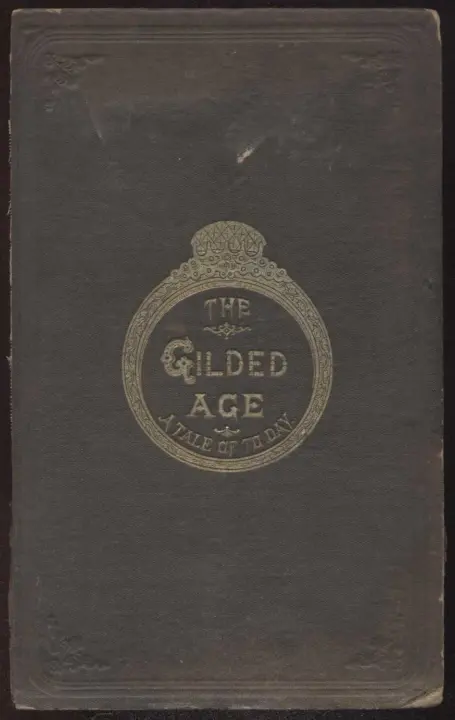
Mark Twain & Charles Dudley Warner
BEHIND THE BOOK
This eBook is for the use of anyone anywhere in the United States and most other parts of the world at no cost and with almost no restrictions whatsoever. You may copy it, give it away or re-use it under the terms of the Project Gutenberg License included with this eBook or online at www.gutenberg.org. If you are not located in the United States, you will have to check the laws of the country where you are located before using this eBook. Read the source licence.
The original source file, including credits and licence, is retained by this library. Request an original-format copy at no charge. Please include the book title and Project Gutenberg identifier #52290.
KEEP YOUR CURIOSITY GOING
Wilfrid Scawen Blunt
Wilfrid Scawen Blunt

E. W. (Edgar Watson) Howe

David Patterson (Spirit) Hatch

David Patterson (Spirit) Hatch

David Patterson (Spirit) Hatch