
In the Levant Twenty Fifth Impression
Charles Dudley Warner
THE CLASSIC COLLECTION · 1904
"Studies in the South and West, with Comments on Canada" by Charles Dudley Warner is a collection of essays written during the late 19th century. This work aims to provide insights into the cultural and social landscapes of the Southern and Western United States, with particular focus on the transition following the Civil War. Warner seeks to elucidate the developing sentiments, trends, and identities within these regions to foster a greater understanding among Americans, informed by his own observations during his travels. At the start of this collection, Warner reflects on his impressions of the South, particularly Louisiana, after a visit in 1885. He describes a region striving to move past the alienation of the Civil War and to embrace a future centered around national unity, commerce, and education. Warner notes the South’s reconciliation with the past, the resilience of its people, and the emerging loyalty to the Union, highlighting discussions around economic recovery and race relations, particularly regarding the African American community. His observations suggest that while the shadows of the past still linger, the South is focused on rebuilding its identity and societal structures amid the lingering complexities of race and regional differences.
Introduction adapted from the source catalogue; source summaries may be automatically generated.
Free to read · English · 135,392 words · No account needed
MAKE TIME FOR A GOOD BOOK
On by default. Untick to stop anonymous reading totals. Each page counts after 10 seconds in view. How this works.
Anonymous counting is on unless you have switched it off.
While we still waited, the doctor and two other colored men called me into the next chamber, and wanted to be assured that it was my own name I had written on the register, and that I had no unfriendly intentions in being present. Their doubts at rest, all was ready.
The doctor squatted on one side of the altar, and his wife, a stout woman of darker hue, on the other.
“Commençons,” said the woman, in a low voice. All the colored people spoke French, and French only, to each other and in the ceremony.
The doctor nodded, bent over, and gave three sharp raps on the floor with a bit of wood. (This is the usual opening of Voudoo rites.) All the others rapped three times on the floor with their knuckles. Anyone coming in to join the circle afterwards, stooped and rapped three times. After a moment’s silence, all kneeled and repeated together in French the Apostles’ Creed, and still on their knees, they said two prayers to the Virgin Mary.
The colored woman at the side of the altar began a chant in a low, melodious voice. It was the weird and strange “Dansé Calinda.” A tall negress, with a bright, good-natured face, entered the circle with the air of a chief performer, knelt, rapped the floor, laid an offering of candles before the altar, with a small bottle of brandy, seated herself beside the singer, and took up in a strong, sweet voice the bizarre rhythm of the song. Nearly all those who came in had laid some little offering before the altar. The chant grew, the single line was enunciated in stronger pulsations, and other voices joined in the wild refrain,
“Dansé Calinda, boudoum, boudoum
Dansé Calinda, boudoum, boudoum!”
bodies swayed, the hands kept time in soft patpatting, and the feet in muffled accentuation. The Voudoo arose, removed his slippers, seized a bottle of brandy, dashed some of the liquid on the floor on each side of the brown bowl as a libation, threw back his head and took a long pull at the bottle, and then began in the open space a slow measured dance, a rhythmical shuffle, with more movement of the hips than of the feet, backward and forward, round and round, but accelerating his movement as the time of the song quickened and the excitement rose in the room. The singing became wilder and more impassioned, a strange minor strain, full of savage pathos and longing, that made it almost impossible for the spectator not to join in the swing of its influence, while the dancer wrought himself up into the wild passion of a Cairene dervish. Without a moment ceasing his rhythmical steps and his extravagant gesticulation, he poured liquid into the basin, and dashing in brandy, ignited the fluid with a match. The liquid flamed up before the altar. He seized then a bunch of candles, plunged them into the bowl, held them up all flaming with the burning brandy, and, keeping his step to the maddening “Calinda,” distributed them lighted to the devotees. In the same way he snatched up dishes of apples, grapes, bananas, oranges, deluged them with burning brandy, and tossed them about the room to the eager and excited crowd. His hands were aflame, his clothes seemed to be on fire; he held the burning dishes close to his breast, apparently inhaling the flame, closing his eyes and swaying his head backward and forward in an ecstasy, the hips advancing and receding, the feet still shuffling to the barbaric measure.
Your reading position is saved on this browser. Take it to another device with a library code. Reading pages adapt to text, rather than matching a printed edition.
Charles Dudley Warner
Charles Dudley Warner
Charles Dudley Warner
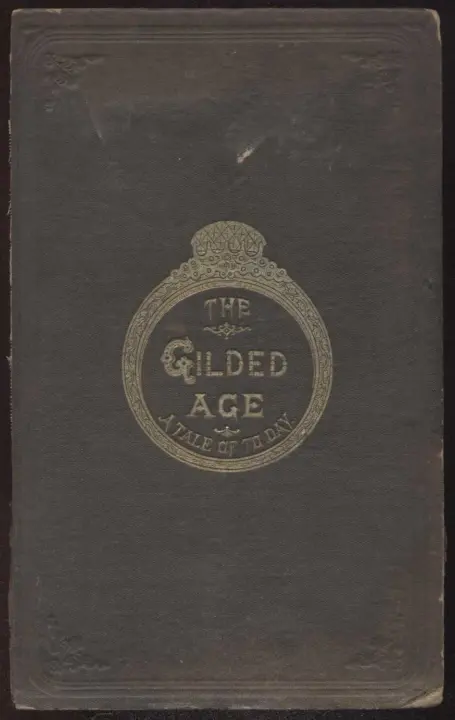
Mark Twain & Charles Dudley Warner
BEHIND THE BOOK
This eBook is for the use of anyone anywhere in the United States and most other parts of the world at no cost and with almost no restrictions whatsoever. You may copy it, give it away or re-use it under the terms of the Project Gutenberg License included with this eBook or online at www.gutenberg.org. If you are not located in the United States, you will have to check the laws of the country where you are located before using this eBook. Read the source licence.
The original source file, including credits and licence, is retained by this library. Request an original-format copy at no charge. Please include the book title and Project Gutenberg identifier #52290.
KEEP YOUR CURIOSITY GOING
Wilfrid Scawen Blunt
Wilfrid Scawen Blunt

E. W. (Edgar Watson) Howe

David Patterson (Spirit) Hatch

David Patterson (Spirit) Hatch

David Patterson (Spirit) Hatch