
In the Levant Twenty Fifth Impression
Charles Dudley Warner
THE CLASSIC COLLECTION · 1904
"Studies in the South and West, with Comments on Canada" by Charles Dudley Warner is a collection of essays written during the late 19th century. This work aims to provide insights into the cultural and social landscapes of the Southern and Western United States, with particular focus on the transition following the Civil War. Warner seeks to elucidate the developing sentiments, trends, and identities within these regions to foster a greater understanding among Americans, informed by his own observations during his travels. At the start of this collection, Warner reflects on his impressions of the South, particularly Louisiana, after a visit in 1885. He describes a region striving to move past the alienation of the Civil War and to embrace a future centered around national unity, commerce, and education. Warner notes the South’s reconciliation with the past, the resilience of its people, and the emerging loyalty to the Union, highlighting discussions around economic recovery and race relations, particularly regarding the African American community. His observations suggest that while the shadows of the past still linger, the South is focused on rebuilding its identity and societal structures amid the lingering complexities of race and regional differences.
Introduction adapted from the source catalogue; source summaries may be automatically generated.
Free to read · English · 135,392 words · No account needed
MAKE TIME FOR A GOOD BOOK
On by default. Untick to stop anonymous reading totals. Each page counts after 10 seconds in view. How this works.
Anonymous counting is on unless you have switched it off.
Canada is really two countries, separated from each other by the vast rocky wilderness between the lakes and James Bay. For a thousand miles west of Ottawa, till the Manitoba prairie is reached, the traveller on the line of the railway sees little but granite rock and stunted balsams, larches, and poplars—a dreary region, impossible to attract settlers. Copper and other minerals there are; and in the region north of Lake Superior there is no doubt timber, and arable land is spoken of; but the country is really unknown. Portions of this land, like that about Lake Nipigon, offer attractions to sportsmen. Lake navigation is impracticable about four months in the year, so that Canada seems to depend for political and commercial unity upon a telegraph wire and two steel rails running a thousand miles through a region where local traffic is at present insignificant.
The present government of Canada is an evolution on British lines, modified by the example of the republic of the United States. In form the resemblances are striking to the United States, but underneath, the differences are radical. There is a supreme federal government, comprehending a union of provinces, each having its local government. But the union in the two countries was brought about in a different way, and the restrictive powers have a different origin. In the one, power descends from the Crown; in the other, it originates with the people. In the Dominion Government all the powers not delegated to the provinces are held by the Federal Government. In the United States, all the powers not delegated to the Federal Government by the States are held by the States. In the United States, delegates from the colonies, specially elected for the purpose, met to put in shape a union already a necessity of the internal and external situation. And the union expressed in the Constitution was accepted by the popular vote in each State. In the provinces of Canada there was a long and successful struggle for responsible government. The first union was of the two Canadas, in 1840; that is, of the provinces of Upper and Lower Canada—Ontario and Quebec—with Parliaments sitting sometimes in Quebec and sometimes in Toronto, and at last in Ottawa, a site selected by the Queen. This Government was carried on with increasing friction. There is not space here to sketch the politics of this epoch. Many causes contributed to this friction, but the leading ones were the antagonism of French and English ideas, the superior advance in wealth and population of Ontario over Quebec, and the resistance of what was called French domination. At length, in 1863-64, the two parties, the Conservatives and the Liberals (or, in the political nomenclature of the day, the “Tories” and the “Grits”—i. e., those of “clear grit”), were so evenly divided that a dead-lock occurred, neither was able to carry on the government, and a coalition ministry was formed. Then the subject of colonial confederation was actively agitated. Nova Scotia and New Brunswick contemplated a legislative union of the maritime provinces, and a conference was called at Charlottetown, Prince Edward Island, in the summer of 1864. Having in view a more comprehensive union, the Canadian Government sought and obtained admission to this conference, which was soon swallowed up in a larger scheme, and a conference of all the colonies was appointed to be held at Quebec in October. Delegates, thirty-three in number, were present from all the provinces, probably sent by the respective legislatures or governments, for I find no note of a popular election. The result of this conference was the adoption of resolutions as a basis of an act of confederation. The Canadian Parliament adopted this scheme after a protracted debate. But the maritime provinces stood out. Meantime the Civil War in the United States, the Fenian invasion, and the abrogation of the reciprocity treaty fostered a spirit of Canadian nationality, and discouraged whatever feeling existed for annexation to the United States. The colonies, therefore, with more or less willingness, came into the plan, and in 1867 the English Parliament passed the British North American Act, which is the charter of the Dominion. It established the union of the provinces of Canada, Nova Scotia, and New Brunswick, and provided for the admission to the union of the other parts of British North America; that is, Prince Edward Island, the Hudson Bay Territory, British Columbia, and Newfoundland, with its dependency Labrador. Nova Scotia was, however, still dissatisfied with the terms of the union, and was only reconciled on the granting of additional annual subsidies.
Your reading position is saved on this browser. Take it to another device with a library code. Reading pages adapt to text, rather than matching a printed edition.
Charles Dudley Warner
Charles Dudley Warner
Charles Dudley Warner
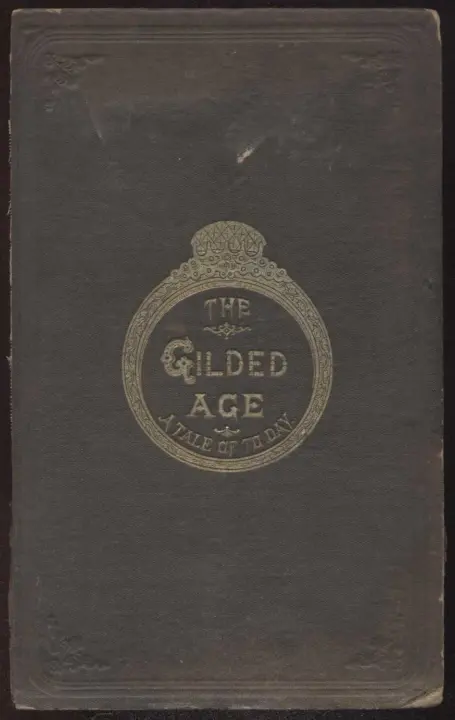
Mark Twain & Charles Dudley Warner
BEHIND THE BOOK
This eBook is for the use of anyone anywhere in the United States and most other parts of the world at no cost and with almost no restrictions whatsoever. You may copy it, give it away or re-use it under the terms of the Project Gutenberg License included with this eBook or online at www.gutenberg.org. If you are not located in the United States, you will have to check the laws of the country where you are located before using this eBook. Read the source licence.
The original source file, including credits and licence, is retained by this library. Request an original-format copy at no charge. Please include the book title and Project Gutenberg identifier #52290.
KEEP YOUR CURIOSITY GOING
Wilfrid Scawen Blunt
Wilfrid Scawen Blunt

E. W. (Edgar Watson) Howe

David Patterson (Spirit) Hatch

David Patterson (Spirit) Hatch

David Patterson (Spirit) Hatch