
In the Levant Twenty Fifth Impression
Charles Dudley Warner
THE CLASSIC COLLECTION · 1904
"Studies in the South and West, with Comments on Canada" by Charles Dudley Warner is a collection of essays written during the late 19th century. This work aims to provide insights into the cultural and social landscapes of the Southern and Western United States, with particular focus on the transition following the Civil War. Warner seeks to elucidate the developing sentiments, trends, and identities within these regions to foster a greater understanding among Americans, informed by his own observations during his travels. At the start of this collection, Warner reflects on his impressions of the South, particularly Louisiana, after a visit in 1885. He describes a region striving to move past the alienation of the Civil War and to embrace a future centered around national unity, commerce, and education. Warner notes the South’s reconciliation with the past, the resilience of its people, and the emerging loyalty to the Union, highlighting discussions around economic recovery and race relations, particularly regarding the African American community. His observations suggest that while the shadows of the past still linger, the South is focused on rebuilding its identity and societal structures amid the lingering complexities of race and regional differences.
Introduction adapted from the source catalogue; source summaries may be automatically generated.
Free to read · English · 135,392 words · No account needed
MAKE TIME FOR A GOOD BOOK
On by default. Untick to stop anonymous reading totals. Each page counts after 10 seconds in view. How this works.
Anonymous counting is on unless you have switched it off.
In my limited experience I can recall no day’s ride equal in simple natural beauty—not magnificence—and splendor of color to that down Clover Fork. There was scarcely a moment of the day when the scene did not call forth from us exclamations of surprise and delight. The road follows and often crosses the swift, clear, rocky stream. The variegated forest rises on either hand, but all along the banks vast trees without underbrush dot the little intervales. Now and then, in a level reach, where the road wound through these monarch stems, and the water spread in silver pools, the perspective was entrancing. But the color! For always there were the rhododendrons, either gleaming in masses of white and pink in the recesses of the forest, or forming for us an allée, close set, and uninterrupted for miles and miles; shrubs like trees, from twenty to thirty feet high, solid bouquets of blossoms, more abundant than any cultivated parterre, more brilliant than the finest display in a horticultural exhibition. There is an avenue of rhododendrons half a mile long at Hampton Court, which is world-wide famous. It needs a day to ride through the rhododendron avenue on Clover Fork, and the wild and free beauty of it transcends all creations of the gardener.
The inhabitants of the region are primitive and to a considerable extent illiterate. But still many strong and distinguished men have come from these mountain towns. Many families send their children away to school, and there are fair schools at Barbersville, Harlan Court-house, and in other places. Long isolated from the moving world, they have retained the habits of the early settlers, and to some extent the vernacular speech, though the dialect is not specially marked. They have been until recently a self-sustaining people, raising and manufacturing nearly everything required by their limited knowledge and wants. Not long ago the women spun and wove from cotton and hemp and wool the household linen, the bed-wear, and the clothes of the family. In many houses the loom is still at work. The colors used for dyeing were formerly all of home make except, perhaps, the indigo; now they use what they call the “brought in” dyes, bought at the stores; and prints and other fabrics are largely taking the places of the home-made. During the morning we stopped at one of the best houses on the fork, a house with a small apple-orchard in front, having a veranda, two large rooms, and a porch and kitchen at the back. In the back porch stood the loom with its web of half-finished cloth. The farmer was of the age when men sun themselves on the gallery and talk. His wife, an intelligent, barefooted old woman, was still engaged in household duties, but her weaving days were over. Her daughters did the weaving, and in one of the rooms were the linsey-woolsey dresses hung up, and piles of gorgeous bed coverlets, enough to set up half a dozen families. These are the treasures and heirlooms handed down from mother to daughter, for these handmade fabrics never wear out. Only eight of the twelve children were at home. The youngest, the baby, a sickly boy of twelve, was lounging about the house. He could read a little, for he had been to school a few weeks. Reading and writing were not accomplishments in the family generally. The other girls and boys were in the cornfield, and going to the back door, I saw a line of them hoeing at the top of the field. The field was literally so steep that they might have rolled from the top to the bottom. The mother called them in, and they lounged leisurely down, the girls swinging themselves over the garden fence with athletic ease. The four eldest were girls: one, a woman of thirty-five, had lost her beauty, if she ever had any, with her teeth; one, of thirty, recently married, had a stately dignity and a certain nobility of figure; one, of sixteen, was undeniably pretty—almost the only woman entitled to this epithet that we saw in the whole journey. This household must have been an exception, for the girls usually marry very young. They were all, of course, barefooted. They were all laborers, and evidently took life seriously, and however much their knowledge of the world was limited, the household evidently respected itself. The elder girls were the weavers, and they showed a taste and skill in their fabrics that would be praised in the Orient or in Mexico. The designs and colors of the coverlets were ingenious and striking. There was a very handsome one in crimson, done in wavy lines and bizarre figures, that was called the Kentucky Beauty, or the Ocean Wave, that had a most brilliant effect. A simple, hospitable family this. The traveller may go all through this region with the certainty of kindly treatment, and in perfect security—if, I suppose, he is not a revenue officer, or sent in to survey land on which the inhabitants have squatted.
Your reading position is saved on this browser. Take it to another device with a library code. Reading pages adapt to text, rather than matching a printed edition.
Charles Dudley Warner
Charles Dudley Warner
Charles Dudley Warner
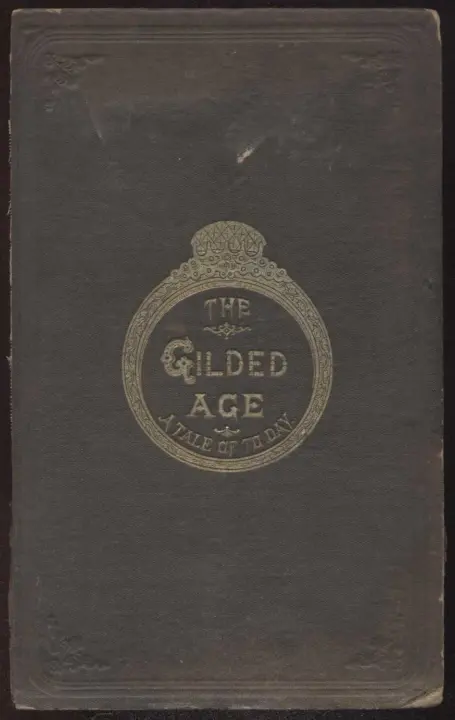
Mark Twain & Charles Dudley Warner
BEHIND THE BOOK
This eBook is for the use of anyone anywhere in the United States and most other parts of the world at no cost and with almost no restrictions whatsoever. You may copy it, give it away or re-use it under the terms of the Project Gutenberg License included with this eBook or online at www.gutenberg.org. If you are not located in the United States, you will have to check the laws of the country where you are located before using this eBook. Read the source licence.
The original source file, including credits and licence, is retained by this library. Request an original-format copy at no charge. Please include the book title and Project Gutenberg identifier #52290.
KEEP YOUR CURIOSITY GOING
Wilfrid Scawen Blunt
Wilfrid Scawen Blunt

E. W. (Edgar Watson) Howe

David Patterson (Spirit) Hatch

David Patterson (Spirit) Hatch

David Patterson (Spirit) Hatch