
In the Levant Twenty Fifth Impression
Charles Dudley Warner
THE CLASSIC COLLECTION · 1904
"Studies in the South and West, with Comments on Canada" by Charles Dudley Warner is a collection of essays written during the late 19th century. This work aims to provide insights into the cultural and social landscapes of the Southern and Western United States, with particular focus on the transition following the Civil War. Warner seeks to elucidate the developing sentiments, trends, and identities within these regions to foster a greater understanding among Americans, informed by his own observations during his travels. At the start of this collection, Warner reflects on his impressions of the South, particularly Louisiana, after a visit in 1885. He describes a region striving to move past the alienation of the Civil War and to embrace a future centered around national unity, commerce, and education. Warner notes the South’s reconciliation with the past, the resilience of its people, and the emerging loyalty to the Union, highlighting discussions around economic recovery and race relations, particularly regarding the African American community. His observations suggest that while the shadows of the past still linger, the South is focused on rebuilding its identity and societal structures amid the lingering complexities of race and regional differences.
Introduction adapted from the source catalogue; source summaries may be automatically generated.
Free to read · English · 135,392 words · No account needed
MAKE TIME FOR A GOOD BOOK
On by default. Untick to stop anonymous reading totals. Each page counts after 10 seconds in view. How this works.
Anonymous counting is on unless you have switched it off.
The war removed one obstacle to the free movement of men desiring work and seeking agreeable homes, a movement marked in the great increase of the industrial population of Louisville and the awakening to varied industries and trade in western Kentucky. The offer of cheap land, which would reward skilful farming In agreeable climatic conditions, has attracted foreign settlers to the plateau south of the blue-grass region; and scientific investigation has made the mountain district in the south-east the object of the eager competition of both domestic and foreign capital. Kentucky, therefore, is entering upon a new era of development. Two phases of it, the Swiss colonies, and the opening of the coal, iron, and timber resources, present special points of interest.
This Incoming of the commercial spirit will change Kentucky for the better and for the worse, will change even the tone of the blue-grass country, and perhaps take away something of that charm about which so much has been written. So thoroughly has this region been set forth by the pen and the pencil and the lens that I am relieved of the necessity of describing it. But I must confess that all I had read of it, all the pictures I had seen, gave me an inadequate idea of its beauty and richness. So far as I know, there is nothing like it in the world. Comparison of it with England is often made in the use of the words “garden” and “park.” The landscape is as unlike the finer parts of Old England as it is unlike the most carefully tended parts of New England. It has neither the intense green, the subdivisions in hedges, the bosky lanes, the picturesque cottages, the niceness of minute garden-culture, of England, nor the broken, mixed lawn gardening and neglected pastures and highways, with the sweet wild hills, of the Berkshire region. It is an open, elevated, rolling land, giving the traveller often the most extended views over wheat and clover, hemp and tobacco fields, forests and blue-grass pastures. One may drive for a hundred miles north and south over the splendid macadam turnpikes, behind blooded roadsters, at an easy ten-mile gait, and see always the same sight—a smiling agricultural paradise, with scarcely a foot, in fence corners, by the road-side, or in low grounds, of uncultivated, uncared-for land. The open country is more pleasing than the small villages, which have not the tidiness of the New England small villages; the houses are for the most part plain; here and there is a negro cabin, or a cluster of them, apt to be unsightly, but always in view somewhere is a plantation-house, more or less pretentious, generally old-fashioned and with the colonial charm. These are frequently off the main thoroughfare, approached by a private road winding through oaks and ash-trees, seated on some gentle knoll or slope, maybe with a small flower-garden, but probably with the old sentimental blooms that smell good and have reminiscences, in the midst of waving fields of grain, blue-grass pastures, and open forest glades watered by a dear stream. There seems to be infinite peace in a house so surrounded. The house may have pillars, probably a colonial porch and door-way with earving in bass-relief, a wide hall, large square rooms, low studded, and a general air of comfort. What is new in it in the way of art, furniture, or bric-à-brac may not be in the best taste, and may “swear” at the old furniture and the delightful old portraits. For almost always will be found some portraits of the post-Revolutionary period, having a traditional and family interest, by Copley or Jouett, perhaps a Stuart, maybe by some artist who evidently did not paint for fame, which carry the observer back to the colonial society in Virginia, Philadelphia, and New York. In a country house and in Lexington I saw portraits, life-size and miniature, of Rebecca Gratz, whose loveliness of person and character is still a tender recollection of persons living. She was a great beauty and toast in her day. It was at her house in Philadelphia, a centre of wit and gayety, that Washington Irving and Henry Brevoort and Gulian C. Verplanck often visited. She shone not less in New York society, and was the most intimate friend of Matilda Hoffman, who was betrothed to Irving; indeed, it was in her arms that Matilda died, fadeless always to us as she was to Irving, in the loveliness of her eighteenth year. The well-founded tradition is that Irving, on his first visit to Abbotsford, told Scott of his own loss, and made him acquainted with the beauty and grace of Rebecca Gratz, and that Scott, wanting at the moment to vindicate a race that was aspersed, used her as a model for Rebecca in “Ivanhoe.”
Your reading position is saved on this browser. Take it to another device with a library code. Reading pages adapt to text, rather than matching a printed edition.
Charles Dudley Warner
Charles Dudley Warner
Charles Dudley Warner
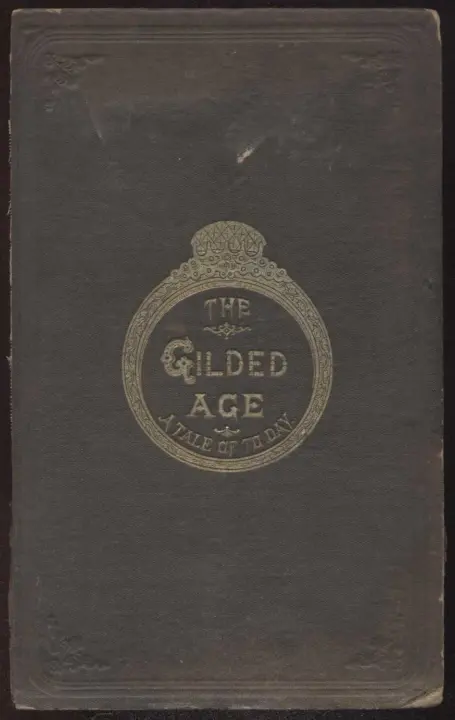
Mark Twain & Charles Dudley Warner
BEHIND THE BOOK
This eBook is for the use of anyone anywhere in the United States and most other parts of the world at no cost and with almost no restrictions whatsoever. You may copy it, give it away or re-use it under the terms of the Project Gutenberg License included with this eBook or online at www.gutenberg.org. If you are not located in the United States, you will have to check the laws of the country where you are located before using this eBook. Read the source licence.
The original source file, including credits and licence, is retained by this library. Request an original-format copy at no charge. Please include the book title and Project Gutenberg identifier #52290.
KEEP YOUR CURIOSITY GOING
Wilfrid Scawen Blunt
Wilfrid Scawen Blunt

E. W. (Edgar Watson) Howe

David Patterson (Spirit) Hatch

David Patterson (Spirit) Hatch

David Patterson (Spirit) Hatch