
In the Levant Twenty Fifth Impression
Charles Dudley Warner
THE CLASSIC COLLECTION · 1904
"Studies in the South and West, with Comments on Canada" by Charles Dudley Warner is a collection of essays written during the late 19th century. This work aims to provide insights into the cultural and social landscapes of the Southern and Western United States, with particular focus on the transition following the Civil War. Warner seeks to elucidate the developing sentiments, trends, and identities within these regions to foster a greater understanding among Americans, informed by his own observations during his travels. At the start of this collection, Warner reflects on his impressions of the South, particularly Louisiana, after a visit in 1885. He describes a region striving to move past the alienation of the Civil War and to embrace a future centered around national unity, commerce, and education. Warner notes the South’s reconciliation with the past, the resilience of its people, and the emerging loyalty to the Union, highlighting discussions around economic recovery and race relations, particularly regarding the African American community. His observations suggest that while the shadows of the past still linger, the South is focused on rebuilding its identity and societal structures amid the lingering complexities of race and regional differences.
Introduction adapted from the source catalogue; source summaries may be automatically generated.
Free to read · English · 135,392 words · No account needed
MAKE TIME FOR A GOOD BOOK
On by default. Untick to stop anonymous reading totals. Each page counts after 10 seconds in view. How this works.
Anonymous counting is on unless you have switched it off.
In the midst of such a material expansion one has learned to expect fine houses, but I was surprised to find three very good book-stores (as I remember, St. Louis has not one so good), and a very good start for a public library, consisting of about 16,000 well-arranged and classified books. Members pay $2 a year, and the library receives only about $2500 a year from the city. The citizens could make no better-paying investment than to raise this library to the first rank. There is also the beginning of an art school in some pretty rooms, furnished with casts and autotypes, where pupils practise drawing under direction of local artiste. There are two social clubs—the University, which occupies pleasant apartments, and the Kansas City Club, which has just erected a handsome club-house. In these respects, and in a hundred refinements of living, the town, which has so largely drawn its young, enterprising population from the extreme East, has little the appearance of a frontier place; it is the push, the public spirit, the mixture of fashion and slouching negligence in street attire, the mingling of Eastern smartness with border emancipation in manner, and the general restlessness of movement, that proclaim the newness. It seems to me that the incessant stir, and especially the clatter, whir, and rapidity of the cable ears, must have a decided effect on the nerves of the whole population. The appearance is certainly that of an entire population incessantly in motion.
I have spoken of the public spirit. Besides the Board of Trade there is a Merchants’ and Manufacturers’ Bureau, which works vigorously to bring to the city and establish mercantile and manufacturing enterprises. The same spirit is shown in the public schools. The expenditures in 1887 were, for school purposes, $226,923; for interest on bonds, $18,408; for grounds and buildings, $110,087; in all, $355,418. The total of children of school age was, white, 31,667; colored, 4204. Of these in attendance at school were, white, 12,933; colored, 1975. There were 25 school-houses and 212 teachers. The schools which I saw—one large grammar-school, a colored school, and the High-school of over 600 pupils—were good all through, full of intelligent emulation, the teachers alert and well equipped, and the attention to literature, to the science of government, to what, in short, goes to make intelligent citizens, highly commendable. I find the annual reports, under Prof. J. M. Greenwood, most interesting reading. Topics are taken up and investigations made of great public interest. These topics relate to the even physical and mental development of the young in distinction from the effort merely to stuff them with information. There is a most intelligent attempt to remedy defective eyesight. Twenty per cent, of school children have some anomaly of refraction or accommodation which should be recognized and corrected early; girls have a larger per cent, of anomalies than boys. Irish, Swedish, and German children have the highest percentage of affections of the eyes; English, French, Scotch, and Americans the lowest. Scientific observations of the eyes are made in the Kansas City schools, with a view to remedy defects. Another curious topic is the investigation of the Contents of Children’s Minds—that is, what very small children know about common things. Prof. Stanley Hall published recently the result of examinations made of very little folks in Boston schools. Professor Greenwood made similar investigations among the lowest grade of pupils in the Kansas City schools, and a table of comparisons is printed. The per cent, of children ignorant of common things is astonishingly less in Kansas City schools than in the Boston; even the colored children of the Western city made a much better showing. Another subject of investigation is the alleged physical deterioration in this country. Examinations were made of hundreds of school children from the age of ten to fifteen, and comparisons taken with the tables in Mulhal’s “Dictionary of Statistics,” London, 1884. It turns out that the Kansas City children are taller, taking sex into account, than the average English child at the age of either ten or fifteen, weigh a fraction less at ten, but upwards of four pounds more at fifteen, while the average Belgian boy and girl compare favorably with American children two years younger. The tabulated statistics show two facts, that the average Kansas child stands fully as tall as the tallest, and that in weight he tips the beam against an older child on the other side of the Atlantic. With this showing, we trust that our American experiment will be permitted to go on.
Your reading position is saved on this browser. Take it to another device with a library code. Reading pages adapt to text, rather than matching a printed edition.
Charles Dudley Warner
Charles Dudley Warner
Charles Dudley Warner
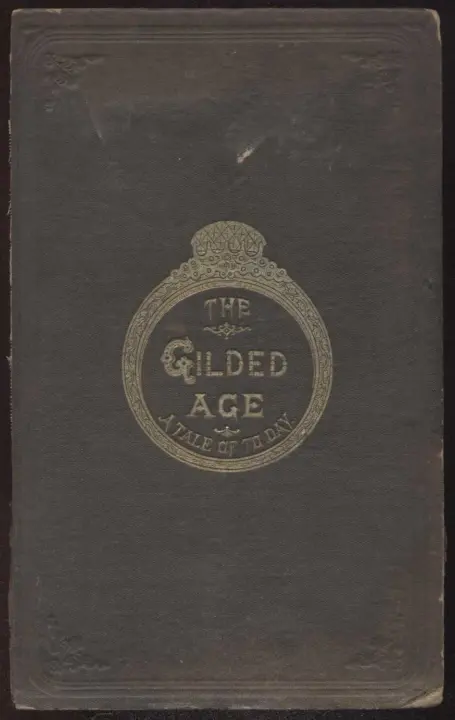
Mark Twain & Charles Dudley Warner
BEHIND THE BOOK
This eBook is for the use of anyone anywhere in the United States and most other parts of the world at no cost and with almost no restrictions whatsoever. You may copy it, give it away or re-use it under the terms of the Project Gutenberg License included with this eBook or online at www.gutenberg.org. If you are not located in the United States, you will have to check the laws of the country where you are located before using this eBook. Read the source licence.
The original source file, including credits and licence, is retained by this library. Request an original-format copy at no charge. Please include the book title and Project Gutenberg identifier #52290.
KEEP YOUR CURIOSITY GOING
Wilfrid Scawen Blunt
Wilfrid Scawen Blunt

E. W. (Edgar Watson) Howe

David Patterson (Spirit) Hatch

David Patterson (Spirit) Hatch

David Patterson (Spirit) Hatch