
In the Levant Twenty Fifth Impression
Charles Dudley Warner
THE CLASSIC COLLECTION · 1904
"Studies in the South and West, with Comments on Canada" by Charles Dudley Warner is a collection of essays written during the late 19th century. This work aims to provide insights into the cultural and social landscapes of the Southern and Western United States, with particular focus on the transition following the Civil War. Warner seeks to elucidate the developing sentiments, trends, and identities within these regions to foster a greater understanding among Americans, informed by his own observations during his travels. At the start of this collection, Warner reflects on his impressions of the South, particularly Louisiana, after a visit in 1885. He describes a region striving to move past the alienation of the Civil War and to embrace a future centered around national unity, commerce, and education. Warner notes the South’s reconciliation with the past, the resilience of its people, and the emerging loyalty to the Union, highlighting discussions around economic recovery and race relations, particularly regarding the African American community. His observations suggest that while the shadows of the past still linger, the South is focused on rebuilding its identity and societal structures amid the lingering complexities of race and regional differences.
Introduction adapted from the source catalogue; source summaries may be automatically generated.
Free to read · English · 135,392 words · No account needed
MAKE TIME FOR A GOOD BOOK
On by default. Untick to stop anonymous reading totals. Each page counts after 10 seconds in view. How this works.
Anonymous counting is on unless you have switched it off.
Almost equal facility for driving and riding is had on the north side by taking the lake-shore drive to Lincoln Park. Too much cannot be said of the beauty of this drive along the curving shore of an inland sea, ever attractive in the play of changing lights and colors, and beginning to be fronted by palatial houses—a foretaste of the coming Venetian variety and splendor. The park itself, dignified by the Lincoln statue, is an exquisite piece of restful landscape, looked over by a thickening assemblage of stately residences. It is a quarter of spacious elegance.
One hardly knows how to speak justly of either the physical aspect or the social life of Chicago, the present performance suggesting such promise and immediate change. The excited admiration waits a little upon expectation. I should like to sec it in five years—in ten years; it is a formative period, but one of such excellence of execution that the imagination takes a very high flight in anticipating the result of another quarter of a century. What other city has begun so nobly or has planned so liberally for metropolitan solidity, elegance, and recreation? What other has such magnificent, avenues and boulevards, and such a system of parks? The boy is born here who will see the town expanded far beyond these splendid pleasure-grounds, and what is now the circumference of the city will be to Chicago what the vernal gardens from St. James to Hampton are to London. This anticipation hardly seems strange when one remembers what Chicago was fifteen years ago.
Architecturally, Chicago is more interesting than many older cities. Its wealth and opportunity for fine building coming when our national taste is beginning to be individual, it has escaped the monotony and mediocrity in which New York for so many years put its money, and out of the sameness of which it is escaping in spots. Having also plenty of room, Chicago has been able to avoid the block system in its residences, and to give play to variety and creative genius. It is impossible to do much with the interior of a house in a block, however much you may load the front with ornament. Confined to a long parallelogram, and limited as to light and air, neither comfort nor individual taste can be consulted or satisfied. Chicago is a city of detached houses, in the humbler quarters as well as in the magnificent avenues, and the effect is home-like and beautiful at the same time. There is great variety—stone, brick, and wood intermingled, plain and ornamental; but drive where you will in the favorite residence parts of the vast city, you will be continually surprised with the sight of noble and artistic houses and homes displaying taste as well as luxury. In addition to the business and public buildings of which I spoke, there are several, like the Art Museum, the Studebaker Building, and the new Auditorium, which would be conspicuous and admired in any city in the world. The city is rich in a few specimens of private houses by Mr. Richardson (whose loss to the country is still apparently irreparable), houses worth a long journey to see, so simple, so noble, so full of comfort, sentiment, unique, having what may be called a charming personality. As to interiors, there has been plenty of money spent in Chicago in mere show; but, after all, I know of no other city that has more character and individuality in its interiors, more evidences of personal refinement and taste. There is, of course—Boston knows that—a grace and richness in a dwelling in which generations have accumulated the best fruits of wealth and cultivation; but any tasteful stranger here, I am sure, will be surprised to find in a city so new so many homes pervaded by the atmosphere of books and art and refined sensibility, due, I imagine, mainly to the taste of the women, for while there are plenty of men here who have taste, there are very few who have leisure to indulge it; and I doubt if there was ever anywhere a livable house—a man can build a palace, but he cannot make a home—that was not the creation of a refined woman. I do not mean to say that Chicago is not still very much the victim of the upholsterer, and that the eye is not offended by a good deal that is gaudy and pretentious, but there is so much here that is in exquisite taste that one has a hopeful heart about its future. Everybody is not yet educated up to the “Richardson houses,” but nothing is more certain than that they will powerfully influence all the future architecture of the town.
Your reading position is saved on this browser. Take it to another device with a library code. Reading pages adapt to text, rather than matching a printed edition.
Charles Dudley Warner
Charles Dudley Warner
Charles Dudley Warner
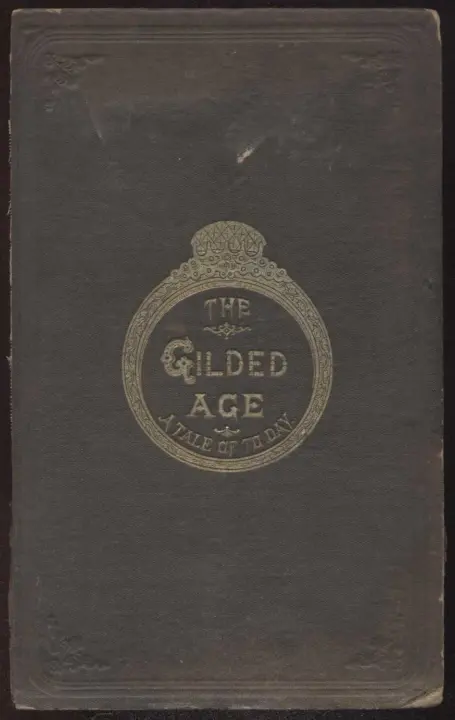
Mark Twain & Charles Dudley Warner
BEHIND THE BOOK
This eBook is for the use of anyone anywhere in the United States and most other parts of the world at no cost and with almost no restrictions whatsoever. You may copy it, give it away or re-use it under the terms of the Project Gutenberg License included with this eBook or online at www.gutenberg.org. If you are not located in the United States, you will have to check the laws of the country where you are located before using this eBook. Read the source licence.
The original source file, including credits and licence, is retained by this library. Request an original-format copy at no charge. Please include the book title and Project Gutenberg identifier #52290.
KEEP YOUR CURIOSITY GOING
Wilfrid Scawen Blunt
Wilfrid Scawen Blunt

E. W. (Edgar Watson) Howe

David Patterson (Spirit) Hatch

David Patterson (Spirit) Hatch

David Patterson (Spirit) Hatch