
In the Levant Twenty Fifth Impression
Charles Dudley Warner
THE CLASSIC COLLECTION · 1904
"Studies in the South and West, with Comments on Canada" by Charles Dudley Warner is a collection of essays written during the late 19th century. This work aims to provide insights into the cultural and social landscapes of the Southern and Western United States, with particular focus on the transition following the Civil War. Warner seeks to elucidate the developing sentiments, trends, and identities within these regions to foster a greater understanding among Americans, informed by his own observations during his travels. At the start of this collection, Warner reflects on his impressions of the South, particularly Louisiana, after a visit in 1885. He describes a region striving to move past the alienation of the Civil War and to embrace a future centered around national unity, commerce, and education. Warner notes the South’s reconciliation with the past, the resilience of its people, and the emerging loyalty to the Union, highlighting discussions around economic recovery and race relations, particularly regarding the African American community. His observations suggest that while the shadows of the past still linger, the South is focused on rebuilding its identity and societal structures amid the lingering complexities of race and regional differences.
Introduction adapted from the source catalogue; source summaries may be automatically generated.
Free to read · English · 135,392 words · No account needed
MAKE TIME FOR A GOOD BOOK
On by default. Untick to stop anonymous reading totals. Each page counts after 10 seconds in view. How this works.
Anonymous counting is on unless you have switched it off.
The product of the iron manufactures in 1887, including rolling-mills ($23,952,000) and founderies ($10,000,000), was $61,187,000 against $46,790,000 in 1886, and the wages paid in iron and steel work was $14,899,000. In 1887 there were erected 4833 buildings, at a reported cost of $19,778,100—a few more build-’ ings, but yet at nearly two millions less cost, than in 1886. A couple of items interested me: that Chicago made in 1887 $900,000 worth of toys and $500,000 worth of perfumes. The soap-makers waged a gallant but entirely unsuccessful war against the soot and smoke of the town in producing $6,250,000 worth of soap and candles. I do not see it mentioned, but I should think the laundry business in Chicago would be the most profitable one at present.
Without attempting at all to set forth the business of Chicago in detail, a few more figures will help to indicate its volume. At the beginning of 1887 the storage capacity for grain in 29 elevators was 27,025,000 bushels. The total receipts of flour and grain in 1882, ‘3, ‘4, ‘5, and ‘6, in bushels, were respectively, 126,155,483, 164,924,732, 159,561,474, 156,408,228, 151,932,995. In 1887 the receipts in bushels were: flour, 6,873,544; wheat, 21,848,251; corn, 51,578,410; oats, 45,750,842; rye, 852,726; barley, 12,476,547—total, 139,380,320. It is useless to go into details of the meat products, but interesting to know that in 1886 Chicago shipped 310,039,600 pounds of lard and 573,496,012 pounds of dressed beef.
I was surprised at the amount of the lake commerce, the railway traffic (nearly 50,000 miles tributary to the city) making so much more show. In 1882 the tonnage of vessels clearing this port was 4,904,999; in 1880 it was 3,950,762. The report of the Board of Trade for 1886 says the arrivals and clearances, foreign and coastwise, for this port for the year ending June 30th were 22,096, which was 869 more than at the ports of Baltimore, Boston, New Orleans, Philadelphia, Portland and Falmouth, and San Francisco combined; 315 more than at New York, New Orleans, Portland and Falmouth, and San Francisco; and 100 more than at New York, Baltimore, and Portland and Falmouth. It will not be overlooked that this lake commerce is training a race of hardy sailors, who would come to the front in case of a naval war, though they might have to go out on rafts.
Your reading position is saved on this browser. Take it to another device with a library code. Reading pages adapt to text, rather than matching a printed edition.
Charles Dudley Warner
Charles Dudley Warner
Charles Dudley Warner
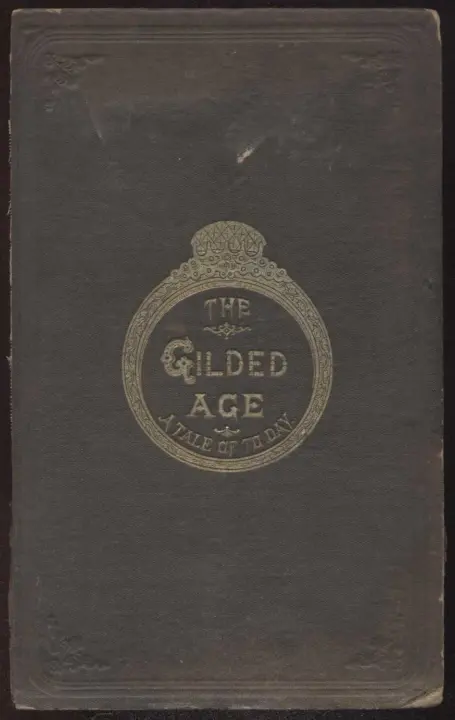
Mark Twain & Charles Dudley Warner
BEHIND THE BOOK
This eBook is for the use of anyone anywhere in the United States and most other parts of the world at no cost and with almost no restrictions whatsoever. You may copy it, give it away or re-use it under the terms of the Project Gutenberg License included with this eBook or online at www.gutenberg.org. If you are not located in the United States, you will have to check the laws of the country where you are located before using this eBook. Read the source licence.
The original source file, including credits and licence, is retained by this library. Request an original-format copy at no charge. Please include the book title and Project Gutenberg identifier #52290.
KEEP YOUR CURIOSITY GOING
Wilfrid Scawen Blunt
Wilfrid Scawen Blunt

E. W. (Edgar Watson) Howe

David Patterson (Spirit) Hatch

David Patterson (Spirit) Hatch

David Patterson (Spirit) Hatch