
In the Levant Twenty Fifth Impression
Charles Dudley Warner
THE CLASSIC COLLECTION · 1904
"Studies in the South and West, with Comments on Canada" by Charles Dudley Warner is a collection of essays written during the late 19th century. This work aims to provide insights into the cultural and social landscapes of the Southern and Western United States, with particular focus on the transition following the Civil War. Warner seeks to elucidate the developing sentiments, trends, and identities within these regions to foster a greater understanding among Americans, informed by his own observations during his travels. At the start of this collection, Warner reflects on his impressions of the South, particularly Louisiana, after a visit in 1885. He describes a region striving to move past the alienation of the Civil War and to embrace a future centered around national unity, commerce, and education. Warner notes the South’s reconciliation with the past, the resilience of its people, and the emerging loyalty to the Union, highlighting discussions around economic recovery and race relations, particularly regarding the African American community. His observations suggest that while the shadows of the past still linger, the South is focused on rebuilding its identity and societal structures amid the lingering complexities of race and regional differences.
Introduction adapted from the source catalogue; source summaries may be automatically generated.
Free to read · English · 135,392 words · No account needed
MAKE TIME FOR A GOOD BOOK
On by default. Untick to stop anonymous reading totals. Each page counts after 10 seconds in view. How this works.
Anonymous counting is on unless you have switched it off.
The growth of Chicago is one of the marvels of the world. I do not wonder that it is incomprehensible even to those who have seen it year by year. As I remember it in 1860, it was one of the shabbiest and most unattractive cities of about a hundred thousand inhabitants anywhere to be found; but even then it had more than trebled its size in ten years; the streets were mud sloughs, the sidewalks were a series of stairs and more or less rotten planks, half the town was in process of elevation above the tadpole level, and a considerable part of it was on wheels—the moving house being about the only wheeled vehicle that could get around with any comfort to the passengers. The west side was a straggling shanty-town, the north side was a country village with two or three “aristocratic” houses occupying a square, the south side had not a handsome business building in it, nor a public edifice of any merit except a couple of churches, but there were a few pleasant residences on Michigan avenue fronting the encroaching lake, and on Wabash avenue. Yet I am not sure that even then the exceedingly busy and excited traders and speculators did not feel that the town was more important than New York. For it had a great business. Aside from its real estate operations, its trade that year was set down at $97,000,000, embracing its dealing in produce, its wholesale supply business, and its manufacturing.
No one then, however, would have dared to predict that the value of trade in 1887 would be, as it was, $1,103,000,000. Nor could any one have believed that the population of 100,000 would reach in 1887 nearly 800,000 (estimated 782,644), likely to reach in 1888, with the annexation of contiguous villages that have become physically a part of the city, the amount of 900,000. Growing at its usual rate for several years past, the city is certain in a couple of years to count its million of people. And there is not probably anywhere congregated a more active and aggressive million, with so great a proportion of young, ambitious blood. Other figures keep pace with those of trade and population. I will mention only one or two of them here. The national banks, in 1887, had a capital of $15,800,000, in which the deposits were $80,473,740, the loans and discounts $63,113,821, the surplus and profits $6,320,559. The First National is, I believe, the second or third largest banking house in the country, having a deposit account of over twenty-two millions. The figures given only include the national banks; add to these the private banks, and the deposits of Chicago in 1887 were $105,307,000. The aggregate bank clearings of the city were $2,969,216,210.00, an increase of 14 per cent, over 1880. It should be noted that there were only twenty-one banks in the clearing house (with an aggregate capital and surplus of $28,514,000), and that the fewer the banks the smaller the total clearings will be. The aggregate Board of Trade clearings for 1887 were $78,179,809. In the year 1880 Chicago imported merchandise entered for consumption to the value of $11,574,449, and paid $4,349,237 duties on it. I did not intend to go into statistics, but these and a few other figures will give some idea of the volume of business in this new city. I found on inquiry that—owing to legislation that need not be gone into—there are few savings-banks, and the visible savings of labor cut a small figure in this way. The explanation is that there are several important loan and building associations. Money is received on deposit in small amounts, and loaned at a good rate of interest to those wishing to build or buy houses, the latter paying in small instalments. The result is that these loan institutions have been very profitable to those who have put money in them, and that the laborers who have borrowed to build have also been benefited by putting all their savings into houses. I believe there is no other large city, except Philadelphia perhaps, where so large a proportion of the inhabitants own the houses they live in. There is no better prevention of the spread of anarchical notions and communist foolishness than this.
Your reading position is saved on this browser. Take it to another device with a library code. Reading pages adapt to text, rather than matching a printed edition.
Charles Dudley Warner
Charles Dudley Warner
Charles Dudley Warner
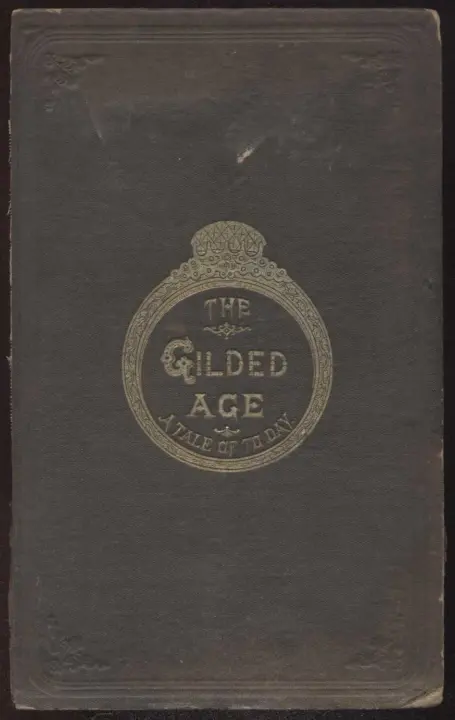
Mark Twain & Charles Dudley Warner
BEHIND THE BOOK
This eBook is for the use of anyone anywhere in the United States and most other parts of the world at no cost and with almost no restrictions whatsoever. You may copy it, give it away or re-use it under the terms of the Project Gutenberg License included with this eBook or online at www.gutenberg.org. If you are not located in the United States, you will have to check the laws of the country where you are located before using this eBook. Read the source licence.
The original source file, including credits and licence, is retained by this library. Request an original-format copy at no charge. Please include the book title and Project Gutenberg identifier #52290.
KEEP YOUR CURIOSITY GOING
Wilfrid Scawen Blunt
Wilfrid Scawen Blunt

E. W. (Edgar Watson) Howe

David Patterson (Spirit) Hatch

David Patterson (Spirit) Hatch

David Patterson (Spirit) Hatch