THE CLASSIC COLLECTION✦Andersonville diaryCLASSIC FREE BOOKS
Andersonville diary
John L. Ransom
THE CLASSIC COLLECTION · 1897
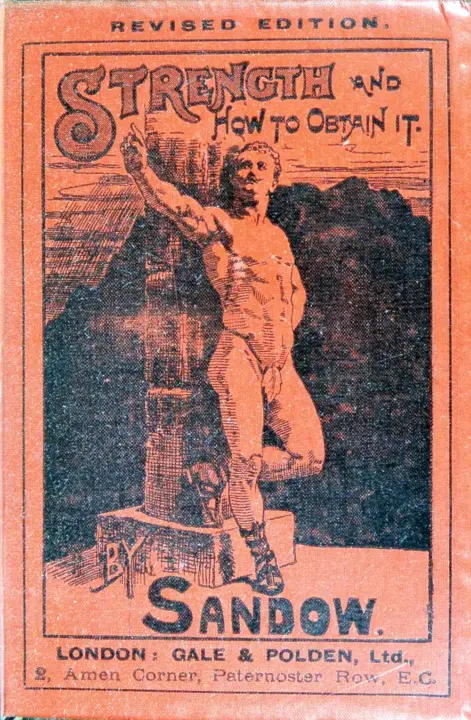
"Strength and How to Obtain It" by Eugen Sandow is a guide on physical culture and strength training written in the late 19th century. This work focuses on the philosophy and practical strategies for developing strength and overall health through systematic exercise and attention to bodily well-being. Sandow aims to make the principles of physical culture accessible to all, asserting that anyone, regardless of their starting point, can achieve a strong and healthy body by following his methods. The opening of the book establishes Sandow's belief in the universal desire for strength among people of all ages and conditions. He stresses that strength encompasses not just muscular size but health, vitality, and well-being, and underscores the idea that physical culture is distinct from mere athletics. Sandow discusses the public's evolving perception of physical training and positions his system as a holistic approach to improving one’s body and life. He provides personal anecdotes and outlines the necessity of willpower in both physical training and the broader quest for personal development, setting the stage for the detailed exercise regimen and principles that follow in the subsequent chapters of the book.
Introduction adapted from the source catalogue; source summaries may be automatically generated.
Free to read · English · 29,845 words · No account needed
MAKE TIME FOR A GOOD BOOK
On by default. Untick to stop anonymous reading totals. Each page counts after 10 seconds in view. How this works.
Anonymous counting is on unless you have switched it off.
13 1 One every fortnight.
14 5 One every three days.
15 3 One every fortnight.
16 (boys only) 3 ” ” ”
17 10 One every three days.
(Using two pound dumb-bells only.)
Increase of Movements. No. of No. of (Not to exceed 40 for Exercise. Movements. No. 1, and other Exercises in proportion.)
1 10 One every three days.
4 4 One every five days.
6 10 One every three days.
7 6 One every five days.
Exercises 8, 9, and 10 are not advised.
11 5 One every five days.
13 1 One every fortnight.
14 6 One every three days.
15 3 One every fortnight.
Exercises 16 and 17 are not advised.
16 (boys only) 3 One every fortnight.
17 10 One every three days.
(Using three pound dumb-bells only.)
Increase of Movements. No. of No. of (Not to exceed 50 for Exercise. Movements. No. 1, and other Exercises in proportion.)
1 10 One every three days.
4 4 One every five days.
6 10 One every three days.
7 6 One every five days.
Exercises 8, 9, and 10 are not advised.
11 5 One every five days.
13 1 One every fortnight.
14 6 One every three days.
15 3 One every fortnight.
16 (boys only) 3 ” ” ”
17 15 One every three days.
(Using three pound dumb-bells only.)
Increase of Movements. No. of No. of (Not to exceed 60 for Exercise. Movements. No. 1, and other Exercises in proportion.)
1 15 One every three days.
4 6 One every five days.
6 10 One every three days.
7 8 One every five days.
Exercises 8, 9, and 10 are not advised.
11 5 One every five days.
13 1 One every fortnight.
14 8 One every three days.
15 3 One every fortnight.
Exercise 16 is not advised.
17 15 One every fortnight.
18 15 ” ” three days.
(Using at first three-pound dumb-bells.)
At this age boys, when they have increased the number of movements of the first exercise from 30 to 60, and all others in proportion, are recommended to go through the course again with five pound dumb-bells.
No. of No. of Increase Exercise. Movements. of Movements.
1 30 One every other day.
2 15 One every three days.
5 5 One every three days.
6 12 One every three days.
7 8 One every three days.
Exercises 8, 9, and 10 are not advised.
11 5 One every two days.
13 2 One a week.
14 15 One every other day.
15 3 One every three days.
16 3 One every fortnight.
17 25 One every three days.
(Using three-pound dumb-bells only.)
Increase of Movements. No. of No. of (Not to exceed 80 for Exercise. Movements. No. 1 and other exercises in proportion).
1 20 One every other day.
2 10 One every three days.
5 4 One every three days.
6 10 One every two days.
7 8 One every three days.
8, 9, and 10 until the pupil feels tired.
11 5 One every two days.
13 1 One a week.
14 10 One every three days.
Exercise 16 is not advised.
17 20 One every three days.
Your reading position is saved on this browser. Take it to another device with a library code. Reading pages adapt to text, rather than matching a printed edition.
BEHIND THE BOOK
This eBook is for the use of anyone anywhere in the United States and most other parts of the world at no cost and with almost no restrictions whatsoever. You may copy it, give it away or re-use it under the terms of the Project Gutenberg License included with this eBook or online at www.gutenberg.org. If you are not located in the United States, you will have to check the laws of the country where you are located before using this eBook. Read the source licence.
The original source file, including credits and licence, is retained by this library. Request an original-format copy at no charge. Please include the book title and Project Gutenberg identifier #65987.
KEEP YOUR CURIOSITY GOING
John L. Ransom

Herman W. Mudgett

Harriet Monroe
Daniel Dulany Addison
Charles Lanman

Harold Rosher