THE CLASSIC COLLECTION✦The lion’s shareCLASSIC FREE BOOKS
The lion’s share
Octave Thanet

THE CLASSIC COLLECTION · 1911
"Stories That End Well" by Octave Thanet is a collection of short stories written in the early 20th century. The book features a variety of narratives focused on different characters and their experiences, often reflecting on themes such as social dynamics, personal relationships, and moral dilemmas in a nuanced, observational style. The opening of the collection introduces "An Adventure in Altruria," centering around Mrs. Katherine Biff, a cook who finds herself working for the eccentric and optimistic Miss Mercedes Van Arden, a self-proclaimed socialist. As Mrs. Biff navigates her new environment, she encounters a range of personalities, including her fellow staff members and the peculiar circumstances surrounding Miss Van Arden's attempts to implement her ideals of communal living. The story sets the stage for exploring the interactions between these characters and their divergent views on societal issues. Through Mrs. Biff's observations, readers get a glimpse into the challenges and humorous predicaments that arise in their everyday lives, creating an intriguing tableau of early 20th-century American society.
Introduction adapted from the source catalogue; source summaries may be automatically generated.
Free to read · English · 69,190 words · No account needed
MAKE TIME FOR A GOOD BOOK
On by default. Untick to stop anonymous reading totals. Each page counts after 10 seconds in view. How this works.
Anonymous counting is on unless you have switched it off.
"Oh, well, you know best what you like," said Darius, easily; "I only thought you seemed a little dull." He dropped the subject; but she repeated his words, often to herself; he never had thought her dull, before. She noticed that Myrtie did not talk of her club. She was puzzled. Outwardly, Myrtie was a handsome young woman with a highbred repose of manner which she had acquired as a college editor and the protector of new girls; inwardly, she was still shy, desperately in dread of awkwardness, and brimming with enthusiasms. Not until she was about to be married did her mother find a trace of her little girl in this gently haughty young creature. And, then, there remained only Myrtie's last photographs and Myrtie's empty chamber, and the weekly letters for her mother's hungry heart. "I am not sure I know her," she would often muse, those days, "I am only sure she doesn't know me!"
Myrtie lived in Chicago; she had married very well indeed; and had a prosperous husband who was a graduate of Harvard and dallied with reform; and there were two sweet little children who called Mrs. Hardy "Granny"; and Myrtie always consulted her mother when they were ill; she was a devoted daughter. "When my dear mother was alive," said Mrs. Hardy, smiling rather grimly, "grannies were not very nice old cronies who smoked pipes in the chimney corner; and 'Grandma' was good enough for any grandmother; now, 'Grandma' is provincial and I am a granny, myself. It is a little puzzling."
The children were all out of the house, now. Ralph, the youngest, was at college; she was well acquainted with him; she used to write him about the books she read and he wrote her about the boys and football; she knew a great deal about football. She lived in a stately new colonial house with quaint little window-panes wherever they would not obstruct the view, and snowy tiled bath-rooms, such as no colonial ever knew; and terraces decked with pink and blue hydrangeas; and dazzling window gardens. Myrtie had been as kind as possible about the house; and Myrtie's taste was charming; it had been an education in colonial history as well as architecture to have Myrtie help build the house; even the architect was deferential to her. Across the street was Darrie's less costly but no less correctly charming house. Hester had done Myrtie's architectural bidding, also. Darrie was the best of sons. She was proud of him; and his father depended more and more on him. She loved his wife; and his children were her vivid delight. Darrie used to fetch her flowers and new plants for the window gardens; and tell her about the children's funny sayings. Darius, her husband, grew kinder and more generous all the time; he gave her a check-book of her own; she told her old friends that she had the best husband and children in the world; and that she was a grateful woman; she duly remembered her abundant mercies in her prayers; and yet--and yet she began to feel herself retired. A most respectable position, that of a retired officer; but, somehow, generals and admirals do not covet it. Nor did Myrtle Hardy. She had been in the center of her own stage; now she felt herself most gently, most civilly, pushed into the wings. Her daughter-in-law, with all her admiration and her dutiful respect, had interests which she never discussed; had a point of view and ideals which were outside her comprehension. She felt fatigued and puzzled when she heard the younger generation's familiar speech with itself. "I am not in it," she said to herself. Darius, too, no longer consulted her; the old fashion of confidence had somehow slipped away; he had not very much to say when they were alone; and he was beginning to call her "Mother." Myrtle Hardy considered. She thought for weeks and thought hard. She sat in her sewing-room, up-stairs, where were the only two rocking-chairs that Myrtie's impeccable taste had allowed to abide in the house. She sat first in one and then in the other of the chairs, her needlework unheeded in her lap; and watched her little grandson and his sister playing while the nurse made an interminable German lace on the back porch; and just across from her window, Hester, her daughter-in-law, sat amid a heap of books, reading and making notes. "That child has been studying for three months, every spare moment, on her paper about 'Scientific Plumbing in the Modern Mansion.'" Mrs. Hardy muttered, with a frown, "well, I hope she will know something, if she keeps her mind! That was not the way we prepared club papers in my day; we decided on our subjects one meeting and we read our essays on them the next; and two weeks was enough for us; now, they spend a half year making a programme and have it hanging over them a year in advance." She watched her daughter-in-law, smiling grimly; then, suddenly, she rose, with the motion of one who has come to a decision. "At least they are not superficial, nowadays," she said, "and perhaps it is better to take one's self too seriously than not seriously enough. And after all, Hester did find out what was the matter with the laundry faucets."
Your reading position is saved on this browser. Take it to another device with a library code. Reading pages adapt to text, rather than matching a printed edition.
Octave Thanet
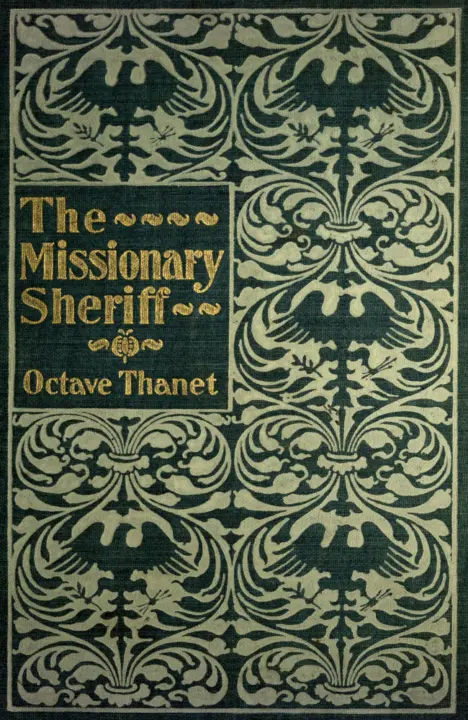
Octave Thanet
Octave Thanet
BEHIND THE BOOK
This eBook is for the use of anyone anywhere in the United States and most other parts of the world at no cost and with almost no restrictions whatsoever. You may copy it, give it away or re-use it under the terms of the Project Gutenberg License included with this eBook or online at www.gutenberg.org. If you are not located in the United States, you will have to check the laws of the country where you are located before using this eBook. Read the source licence.
The original source file, including credits and licence, is retained by this library. Request an original-format copy at no charge. Please include the book title and Project Gutenberg identifier #33499.
KEEP YOUR CURIOSITY GOING
Coulson Kernahan

Maurice Baring
Frances Wright
Cécile Tormay

Frederic Jesup Stimson

W. H. P. (William Henry Pope) Jarvis