THE CLASSIC COLLECTION✦The lion’s shareCLASSIC FREE BOOKS
The lion’s share
Octave Thanet

THE CLASSIC COLLECTION · 1911
"Stories That End Well" by Octave Thanet is a collection of short stories written in the early 20th century. The book features a variety of narratives focused on different characters and their experiences, often reflecting on themes such as social dynamics, personal relationships, and moral dilemmas in a nuanced, observational style. The opening of the collection introduces "An Adventure in Altruria," centering around Mrs. Katherine Biff, a cook who finds herself working for the eccentric and optimistic Miss Mercedes Van Arden, a self-proclaimed socialist. As Mrs. Biff navigates her new environment, she encounters a range of personalities, including her fellow staff members and the peculiar circumstances surrounding Miss Van Arden's attempts to implement her ideals of communal living. The story sets the stage for exploring the interactions between these characters and their divergent views on societal issues. Through Mrs. Biff's observations, readers get a glimpse into the challenges and humorous predicaments that arise in their everyday lives, creating an intriguing tableau of early 20th-century American society.
Introduction adapted from the source catalogue; source summaries may be automatically generated.
Free to read · English · 69,190 words · No account needed
MAKE TIME FOR A GOOD BOOK
On by default. Untick to stop anonymous reading totals. Each page counts after 10 seconds in view. How this works.
Anonymous counting is on unless you have switched it off.
"In any case," said she.
"Look!" he exclaimed, "at the sunset. Ah, is it not lovely?"
Of a sudden they were looking, not at the sunset, but into each other's eyes; and all about them was that wonderful, transfiguring glow, and it seemed as if there were nothing in the whole world that he had not said.
"Is it to the right, Herr Captain?" asked the driver, turning on his seat to divide a benign and semi-intoxicated smile between them.
Then it was hardly a moment until the yellow stucco of the pension jumped at their eyes, around a corner; and there were the clergyman's widow and the teacher at the door. They fell upon the carriage in a clamor of explanation and sympathy; they were at her side when he bowed over her hand and kissed it, saying, "Aufwiedersehen."
That was all. There was never any more. He did not come again. Or if he came, she was not there, since the next day they were on their way to Bremen, summoned by cable to her sister's deathbed. She never heard from him or of him again. Yet she had left her American address with his aunt for any letters that might need to be forwarded, and a stiff little note of thanks and farewell--a perfectly neutral note such as any friend might give or receive. There followed weeks crowded with sorrow and business (the sister was a widow without children, and she shared her estate with her other sister); and Margaret imputed her deep depression to these natural and sufficient causes. She rated herself for vanity in reading her own meanings into a courteous young man's looks and his intelligent interest in national difference of manners. She fostered her shame with the New Englander's zest for self-torture. But one afternoon, without warning, there fell upon her a deep and hopeless peace. It was as if some invisible power controlled and changed all the currents of her thought. She knew that her friend was not faithless or careless; he was dead. She began to weep gently, thinking pitifully of his old father with the loud voice, and his fragile mother and the sister and brother and the little nephew. "Poor people," she murmured, wishing, for the first time in her life, to make some sign of her sorrow for them to them, she who always paid her toll of sympathy, but dreaded it and knew that she was clumsy. She remembered the day at the castle, and went over again each word, each look. A sensation that she could not understand, full of awe and sweetness, possessed her. It was indescribable, unthinkable, but it was also irresistible. Under its impulse she went to a trunk in another room, from which she had not yet removed all the contents, and took out her Heidelberg photographs. She said to herself that she would look at the scenes of that day. In her search she came upon a package of her own pictures which had come the morning of the day that she had gone. She could not remember any details of receiving them, except that she had been at the photographer's the day before and paid for them. When they came she was in too great agitation (they were just packing) to more than fling them into a tray. She could not tell why she took the cartes out of the envelope and ran them listlessly through her fingers; but at the last of the package she uttered a cry. The last carte was a picture of Max, with the inscription in his own hand, "Thine for ever." It is not exact to say that with the finding of the picture her doubt of his affection for her vanished; for in truth, she had no doubts, the possession was too absolute. But the sight came upon her as the presence of a mortal being, alive and visible, comes on one when he enters a room. And there is no question that it was a comfort; if she had really loved Max, at this time, the knowledge of his death would have been her cruelest shock; for then she could have no hope to meet him again in the world--no hope of some explanation and the happiness of life together. But she was not in love with the young German, she was touched by his admiration, she admired him tenderly, she felt the moving of a subtle attraction which she called friendship and which might pass into a keener feeling; but she did not love him. Not then. Therefore, she felt a sweetness in her pain; she could respect herself once more; she had a new and mystical joy; for was she not beloved above women? Had not her lover come to her, through what strange paths who may know, to comfort her? This is the story of the picture. She could not tell it. Nor did she; but she hung Max's portrait on the walls of her little parlor; and she hung opposite a picture of the castle; and from that day, never a day passed that it did not influence her. She used to think her thoughts before it. She came to it with her grief for the loss of kindred and friends, with her loneliness, with her anxieties, with her aspirations, her plans, her cares for others, her slowly dawning interests and affections. She was a reticent woman, who might never have allowed her heart to expand to her husband himself, beyond a certain limit; but she hid nothing from Max. In time, she fell into the habit of talking to the picture. She called him Max. The first time she spoke his name she blushed. She made her toilets for him more than for the world; but whether Max could admire them or not, it is certain that the girls knew every change in her pretty gowns. Her sense of having been loved had its effect on her manner, and a deeper effect on her heart. At thirty she was a New England nun; at forty she was the woman who understands. The love which the shrinking and critical girl repelled at its first step toward her, without knowing, the woman who pitied and who understood, attracted, quite as unconsciously.
Your reading position is saved on this browser. Take it to another device with a library code. Reading pages adapt to text, rather than matching a printed edition.
Octave Thanet
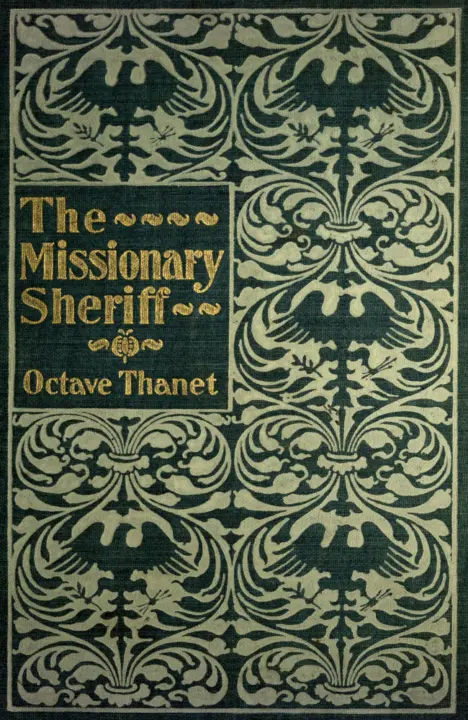
Octave Thanet
Octave Thanet
BEHIND THE BOOK
This eBook is for the use of anyone anywhere in the United States and most other parts of the world at no cost and with almost no restrictions whatsoever. You may copy it, give it away or re-use it under the terms of the Project Gutenberg License included with this eBook or online at www.gutenberg.org. If you are not located in the United States, you will have to check the laws of the country where you are located before using this eBook. Read the source licence.
The original source file, including credits and licence, is retained by this library. Request an original-format copy at no charge. Please include the book title and Project Gutenberg identifier #33499.
KEEP YOUR CURIOSITY GOING
Coulson Kernahan

Maurice Baring
Frances Wright
Cécile Tormay

Frederic Jesup Stimson

W. H. P. (William Henry Pope) Jarvis