THE CLASSIC COLLECTION✦Danger signalsCLASSIC FREE BOOKS
Danger signals
John A. (John Alexander) Hill & Jasper Ewing Brady
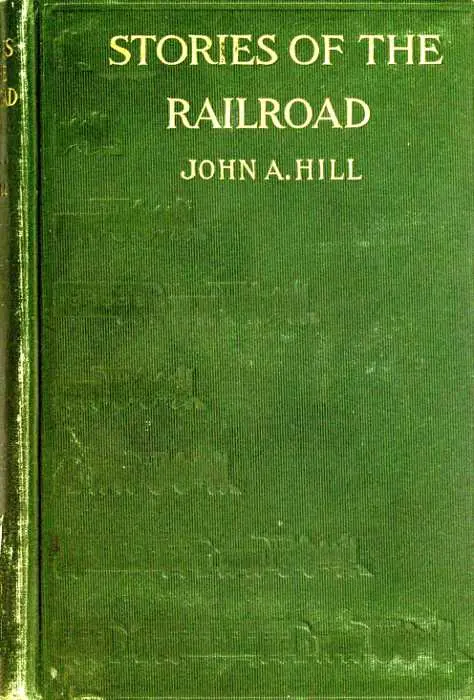
THE CLASSIC COLLECTION · 1898
"Stories of the Railroad" by John A. Hill is a collection of short stories written in the late 19th century. The narratives center around the lives of railroad engineers and their experiences, blending elements of adventure, romance, and the challenges tied to this dynamic profession. Each tale offers a glimpse into the trials and triumphs faced by those who work on the railroads, and the significant relationships that develop along the way. The opening portion of the book introduces readers to the character of John Alexander, a young fireman during the Civil War era, who learns the ropes of railroading under the guidance of the seasoned engineer Jim Dillon. The narrative unfolds with Dillon's influence on Alexander's life, not only in terms of technical skills but also with essential life lessons. As Dillon strives to secure a better future for his family by saving to buy a farm, the heartfelt dynamics between Dillon, his wife, and Alexander are established. This chapter sets the stage for a poignant tale of mentorship, love, and the harsh realities of life on the railroad during turbulent times.
Introduction adapted from the source catalogue; source summaries may be automatically generated.
Free to read · English · 49,698 words · No account needed
MAKE TIME FOR A GOOD BOOK
On by default. Untick to stop anonymous reading totals. Each page counts after 10 seconds in view. How this works.
Anonymous counting is on unless you have switched it off.
"In six months I was back on an engine in a new country, with my silent, loved and loving wife, in a new home. Three times before now someone has seen Madelene's face, twice I told this story, and then we moved away; once I told it and trusted, and it was not repeated. Madelene can stand being a mystery and wondered at, but she cannot stand pity and curiosity. As for you, old Chum, I haven't even asked you not to repeat what I have told you--I know you won't."
After a long while, I turned to Hopkins and said: "And yet, Hopkins, fools say there is no romance in railroad life. This is a story worth reading, and some day I'd like to write it."
"Not in Madelene's time, or in mine, Chum, but if ever a time comes,
I'll send you a token."
"Send me your picture, Hop."
"No, I'll send you Madelene's. No, I'll send you the clock with the
'talking eyes.'"
And standing at Hopkins's gate, the scar-faced man with the romance and I parted, like ships that meet, hail and pass on, never to meet again. Hopkins and I moved away from one another, each on his own course, across the seven seas of life.
And all this happened almost twenty years ago.
The other day, my office boy brought me a card that read, "Mrs. Henry Adams, Washington, D. C." "Is she a book agent?" I asked.
"Nope, don't look like one."
"Show her in."
A young woman came in, looked at me hard for a moment, laid a package on
my desk and asked,
"Is this the Mr. Alexander who used to be an engineer?"
I confessed.
"I don't suppose you remember me," she asked.
I put on my glasses and looked at her. No, I never--then she put her handkerchief up to her lips covering the lower part of her face; it was the face of Madelene Hopkins.
"Yes," said I, "I remember you perfectly, seventeen or eighteen years ago you used to sit on my knee and call me 'Untle Tummy.' and I called you Maddie."
Then we laughed and shook hands.
"Mr. Alexander," said she, "In looking over some of father's papers, we came across a request that under certain conditions you were to be sent an old keepsake of his, a clock with mother's picture on it. I have brought it to you."
"And your father and mother, what of them, my friend?" I asked, for the promise of that clock "under certain conditions" was coming back to me.
Your reading position is saved on this browser. Take it to another device with a library code. Reading pages adapt to text, rather than matching a printed edition.
John A. (John Alexander) Hill & Jasper Ewing Brady
BEHIND THE BOOK
This eBook is for the use of anyone anywhere in the United States and most other parts of the world at no cost and with almost no restrictions whatsoever. You may copy it, give it away or re-use it under the terms of the Project Gutenberg License included with this eBook or online at www.gutenberg.org. If you are not located in the United States, you will have to check the laws of the country where you are located before using this eBook. Read the source licence.
The original source file, including credits and licence, is retained by this library. Request an original-format copy at no charge. Please include the book title and Project Gutenberg identifier #37038.
KEEP YOUR CURIOSITY GOING
Cécile Tormay

Moritz Busch
Coulson Kernahan
John L. Ransom

Maurice Baring
Frances Wright