THE CLASSIC COLLECTION✦Stories of Charlemagne and the twelve Peers of FranceCLASSIC FREE BOOKS
Stories of Charlemagne and the twelve Peers of France
Alfred John Church
THE CLASSIC COLLECTION · 1884
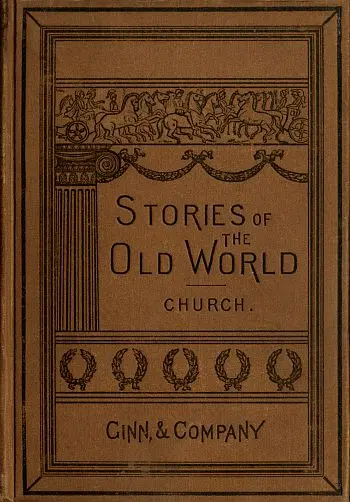
"Stories of the Old World" by Alfred John Church is a collection of retellings of ancient myths and legends, written in the late 19th century. This work draws upon classical sources, specifically focusing on the rich tapestry of stories from Greek mythology, including the adventures of Jason and the Argonauts, as well as tales surrounding the city of Thebes. Readers can expect an engaging introduction to key characters like Jason, the heroic leader seeking the mythical Golden Fleece, and the tragic events involving Oedipus and his offspring. At the start of "Stories of the Old World," the narrative begins with the tale of Jason, who embarks on a perilous quest to retrieve the fabled Golden Fleece. The opening chapters introduce the challenges Jason faces, including a treacherous task set by King Pelias and the gathering of legendary heroes like Hercules and Orpheus to accompany him on his journey. The story unfolds with Jason's encounters with various divine and mortal figures, touching upon themes of fate, loyalty, and the complex relationships between gods and men. The rich descriptions and engaging dialogue offer readers an immersive glimpse into the world of ancient Greek heroism and folly.
Introduction adapted from the source catalogue; source summaries may be automatically generated.
Free to read · English · 115,384 words · No account needed
MAKE TIME FOR A GOOD BOOK
On by default. Untick to stop anonymous reading totals. Each page counts after 10 seconds in view. How this works.
Anonymous counting is on unless you have switched it off.
And as he spake, the birds gave a favorable sign, for a dove that fled from a hawk fell into the bosom of Jason; and the hawk fell upon the hinder part of the ship. And when Mopsus saw it he prophesied saying, “Ye must make your supplication to the maiden. Nor do I doubt that she will hearken to you; for did not Phrixus prophesy that our help should be in Aphrodite? And did ye not see how the dove that is her bird hath escaped from death?” And all the heroes gave heed to his words; but Idas was very wroth, and cried with a terrible voice, “Will ye look at doves and hawks, and turn back from battle? Out on you, that ye think to cheat maidens with words, rather than to trust in your spears!” But Jason said, “We will send Argus as he hath said. Only we will not lie hidden here, as if we were afraid, but will go forth.” So the heroes brought forth the ship.
Meanwhile, King Æætes held a council of the Colchians, to whom he said, “So soon as the oxen have killed, as surely they will kill, the man who shall seek to yoke them, then will I burn these fellows with their ship. For, verily, I had not received Phrixus with hospitality, but for the commands of Zeus; but as for these robbers, they shall not go unpunished.”
But while he yet spake, Argus went to the palace to his mother Chalciope, and besought her that she should persuade her sister Medea to help the heroes. And this the woman had herself thought to do; only she feared the anger of her father. And as they talked, it befell that Medea dreamed a dream, for she had fallen asleep for weariness. And in her dream she yoked the bulls right easily; but her father would not fulfil his promise, saying that he had given this task not to maidens but to men; and hereupon there arose great strife; but she took part with the strangers, and her parents cried shame upon her. After this she awoke, and leapt in great fear from her bed, saying to herself, “I fear me much lest this coming of the heroes should be the beginning of great sorrows. As for this Jason, let him wed a maiden of his own race; but I will keep my unmarried state, and abide in my father’s house; yet, if my sister need help for her sons, I will not stand aloof.” Then she made as if she would seek her sister, standing barefoot on the threshold of her chamber, yet went not, for shame. Thrice she essayed to go, and thrice she returned, for love drove her on, as shame kept her back; but one of her maidens spied her, and told the thing to her sister Chalciope. And Chalciope came to her and took her by the hand, saying, “Why weepest thou, Medea? Dost thou fear the wrath of thy father? As for me, would that I had perished before I saw this day!” And after long silence Medea made answer, speaking craftily, for love so taught her to speak, “My sister, I am troubled for thy sons, lest thy father slay them with these strangers; for, verily, I have seen terrible dreams in my sleep.” So she spake, for she would have her sister pray to her for help for her sons. And when Chalciope heard these words she cried aloud, “O my sister, I beseech thee by the gods, and by thy father and mother, that thou help us in our strait. For, verily, if thou help us not, I will haunt thee as a Fury.” Then the two lifted up their voices together and wept. But at the last Chalciope said, “Wilt thou not, for my children’s sake, give help to this stranger? Verily, my son Argus is come to beg this thing of me, and he is even now in my chamber.” When Medea heard these words she was glad at heart, and said, “My sister, I will surely help thy sons, for they are as brothers to me, and thou as my mother. Wherefore, so soon as it is dark, I will carry to the temple of Hecate such drugs as shall tame these oxen.” Then Chalciope went to her chamber, and told the tidings to her son that Medea would help them; but Medea sat alone and lamented over herself, because she was minded to betray her father to do service to a stranger. Nor did she sleep when night came and all the world was at rest, doubting whether she should do this thing or no, and crying, “Would that Artemis had slain me with her arrows before this stranger came to the land!” And she rose from her bed, and looked into the chest wherein her drugs were stored, some being good and some evil. And now she was minded to take from it some deadly thing that she might end herewith her troubles, but there came upon her a great horror at death, for she thought of all the joys that the living possess, but the dead lose forever; and also, when she regarded her face in the glass, she seemed to herself fairer to look upon than before.
Your reading position is saved on this browser. Take it to another device with a library code. Reading pages adapt to text, rather than matching a printed edition.
Alfred John Church
Alfred John Church
Alfred John Church & Homer

Alfred John Church
BEHIND THE BOOK
This eBook is for the use of anyone anywhere in the United States and most other parts of the world at no cost and with almost no restrictions whatsoever. You may copy it, give it away or re-use it under the terms of the Project Gutenberg License included with this eBook or online at www.gutenberg.org. If you are not located in the United States, you will have to check the laws of the country where you are located before using this eBook. Read the source licence.
The original source file, including credits and licence, is retained by this library. Request an original-format copy at no charge. Please include the book title and Project Gutenberg identifier #43982.
KEEP YOUR CURIOSITY GOING

Maurice Baring
Francis Greenleaf Allinson & Anne C. E. (Anne Crosby Emery) Allinson

Abby Morton Diaz
Helen Hunt Jackson
Mary Frances Blaisdell
Stuart Dodgson Collingwood