THE CLASSIC COLLECTION✦Stories of Charlemagne and the twelve Peers of FranceCLASSIC FREE BOOKS
Stories of Charlemagne and the twelve Peers of France
Alfred John Church
THE CLASSIC COLLECTION · 1884
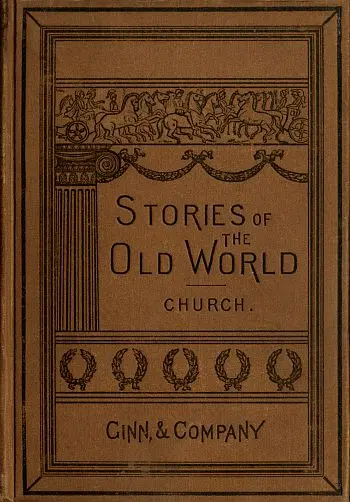
"Stories of the Old World" by Alfred John Church is a collection of retellings of ancient myths and legends, written in the late 19th century. This work draws upon classical sources, specifically focusing on the rich tapestry of stories from Greek mythology, including the adventures of Jason and the Argonauts, as well as tales surrounding the city of Thebes. Readers can expect an engaging introduction to key characters like Jason, the heroic leader seeking the mythical Golden Fleece, and the tragic events involving Oedipus and his offspring. At the start of "Stories of the Old World," the narrative begins with the tale of Jason, who embarks on a perilous quest to retrieve the fabled Golden Fleece. The opening chapters introduce the challenges Jason faces, including a treacherous task set by King Pelias and the gathering of legendary heroes like Hercules and Orpheus to accompany him on his journey. The story unfolds with Jason's encounters with various divine and mortal figures, touching upon themes of fate, loyalty, and the complex relationships between gods and men. The rich descriptions and engaging dialogue offer readers an immersive glimpse into the world of ancient Greek heroism and folly.
Introduction adapted from the source catalogue; source summaries may be automatically generated.
Free to read · English · 115,384 words · No account needed
MAKE TIME FOR A GOOD BOOK
On by default. Untick to stop anonymous reading totals. Each page counts after 10 seconds in view. How this works.
Anonymous counting is on unless you have switched it off.
But the Bebryces were wroth to see that their King was slain, and they set themselves with their clubs and hunting-spears against Pollux; but the heroes drew their swords and stood by him. Then the battle waxed fierce, and many of the Bebryces were slain, and of the heroes certain were wounded; but at the last Ancæus and the two sons of Æacus and Jason rushed upon the enemy and scattered them. After this they feasted on the shore; and the next day they put into their ships so much of the spoil of the land as they would, and so departed; and on the morrow they came to the land of Phineus, the son of Agenor. Now Phineus, being skilled in divination beyond all other men, revealed to men all that Zeus prepared to do; for which reason the god smote him with old age and with blindness, and also sent the plague of the Harpies upon him, which, coming down suddenly upon him as he sat at the banquet, snatched away the meat from the table. And if they left somewhat, it stank so foully that a man might not touch it.
When Phineus heard that the heroes were come, he was glad, and came forth to meet them. Very feeble was he with old age and hunger; and when he saw them he said, “Welcome, ye heroes! Right glad I am to see you, for I know by the inspiration of Apollo that there shall come to this land the two sons of Boreas, who shall deliver me from this plague that I endure.” And he told them what things he suffered from the Harpies. Then Zetes laid hold of the old man’s hand, and said, “We pity thee, son of Agenor, and will help thee if it may be; but first thou must swear that we shall not anger the gods thereby; for, as thou knowest, these evils have come upon thee because thou hast revealed their will to men too plainly.” And the old man swore that the thing was pleasing to the gods. Then they prepared a banquet for him, and as soon as the old man had reached his hand to the food, of a sudden the Harpies flew down, as lightning cometh out of the clouds, and carried off the meat. But the two sons of Boreas followed hard after them, and Zeus gave them strength; otherwise of a truth they had not caught them, for the winds themselves were not more fleet. And when they had caught them they would have slain them, only Iris, the messenger of Zeus, came down and said, “Slay not the Harpies, that are the hounds of Zeus. I will swear to you that they shall not come any more to the dwelling of Phineus, the son of Agenor.” So they stayed from slaying them. After this Phineus and the heroes feasted together, and the King said, “I will expound to you things to come, yet so much only as the gods will have me tell; for they will not that men should know all things, but that they should yet need counsel and help. When ye have departed from this land ye shall see certain rocks, between the which ye must needs pass. Do ye therefore first send a dove before you, and if she pass through safely then may ye also follow. And row with all your might, for your hands rather than your prayers shall deliver you. But if the dove perish, then do ye go back, for it is not the will of the gods that ye should go further. After this ye shall see many places, as Helica, and the river of Halys, and the land of the Chalybes, the workers of iron, and at the last shall come to the river of Phasis, whereby ye shall see the town of Æætes and the grove of Æa, where the fleece of gold hangeth even on the top of a beech tree, and the dragon, a terrible monster to behold, watcheth it with eyes that turn every way.” Then were the heroes much dismayed; but when Jason would have questioned him further, he said, “Seek ye for the help of Aphrodite, for the victory will be of her. And now ask me no more.” And when he had ended his words, the two sons of Boreas came back, panting from their course, and told what things they had done. And the next morning many were gathered together to hear from him of things to come, among whom was a certain Parœbius, whom the King had delivered from great trouble; for the man’s father had cut down an oak upon the mountains, not heeding the prayers of the Nymph that dwelt therein that he should spare it, for which reason the Nymph sent all manner of evil upon him and his children after him. Nor did they know the cause till Phineus expounded it to them.
Your reading position is saved on this browser. Take it to another device with a library code. Reading pages adapt to text, rather than matching a printed edition.
Alfred John Church
Alfred John Church
Alfred John Church & Homer

Alfred John Church
BEHIND THE BOOK
This eBook is for the use of anyone anywhere in the United States and most other parts of the world at no cost and with almost no restrictions whatsoever. You may copy it, give it away or re-use it under the terms of the Project Gutenberg License included with this eBook or online at www.gutenberg.org. If you are not located in the United States, you will have to check the laws of the country where you are located before using this eBook. Read the source licence.
The original source file, including credits and licence, is retained by this library. Request an original-format copy at no charge. Please include the book title and Project Gutenberg identifier #43982.
KEEP YOUR CURIOSITY GOING

Maurice Baring
Francis Greenleaf Allinson & Anne C. E. (Anne Crosby Emery) Allinson

Abby Morton Diaz
Helen Hunt Jackson
Mary Frances Blaisdell
Stuart Dodgson Collingwood