
Highways and Byways in the Border Illustrated
Andrew Lang & John Lang
THE CLASSIC COLLECTION · 1916
"Stories of the Border Marches" by John Lang and Jean Lang is a historical collection of tales drawn from the folklore of the English-Scottish border, likely written in the early 20th century. The work delves into various legends and stories tied to the tumultuous history of the borderlands, spotlighting characters such as supernatural figures and infamous outlaws. The narratives blend reality and myth, exploring themes of bravery, drama, and the supernatural amidst a backdrop of war-torn landscapes. The opening of the collection begins with a preface that reflects on the charm of these old stories, lamenting their overshadowing by modernity. The first tale, "The White Lady of Blenkinsopp," introduces readers to a haunting legend of a woman who brought treasure with her to an ancient castle but suffered a tragic love story, leading to her disappearance and the folklore that followed. The tale intertwines elements of intrigue and the supernatural as it unfolds the history of the castle, the violent lives of its past inhabitants, and the spectral figure that haunts it. This captivating blend of history and myth immediately immerses readers in the rich tapestry of border lore that characterizes the collection.
Introduction adapted from the source catalogue; source summaries may be automatically generated.
Free to read · English · 88,309 words · No account needed
MAKE TIME FOR A GOOD BOOK
On by default. Untick to stop anonymous reading totals. Each page counts after 10 seconds in view. How this works.
Anonymous counting is on unless you have switched it off.
Sir Patrick Home's denunciation was longer in coming than that of his friend, and not until November 1684 was the warrant for his apprehension issued. He, good man, had no desire for martyrdom; moreover, at that time he already possessed ten children, whose future as orphans was likely to be wretched, and so Sir Patrick sought concealment from the hounds of the law. Foiled in laying hold of him, the law seized his eldest son, Patrick, and cast him into prison. Two days after Jerviswoode's death, the lad petitioned the Privy Council for release. He was but "a poor afflicted young boy," he said, loyal to his principles and with a hatred of plots, and only craved liberty that he might "see to some livelihood for himself" and "be in some condition" to help and serve his disconsolate mother and the rest of his father's ten starving children. Most grudgingly was the boon bestowed, and not until the boy had obtained security for his good behaviour to the extent of two thousand pounds sterling was he allowed to return to the Merse.
Meantime Redbraes Castle was constantly kept under supervision. Scarcely a week passed without a party of redcoats clattering up the drive, interrogating the servants, tramping through all the rooms, hunting round the policies, and doing everything in their power to make things unpleasant for the wife and children of this attainted rebel. To only two people in the house, and to one out of it, was the secret of Sir Patrick Home's hiding-place known. With the help of a faithful friend and retainer, Jamie Winter, the carpenter, Lady Home and her daughter Grisell had one dark night carried bed and bedclothes to the burying-place of the Homes, a vault under Polwarth Church, a mile from Redbraes. A black walnut folding-bed, exactly underneath the pulpit from which the minister of Polwarth preached every Sunday, was the fugitive's resting-place at night, while for a month he saw no more daylight than was able to reach him from a slit at one end of the vault. The ashes of his ancestors were scarcely lively company, but Sir Patrick found "great comfort and constant entertainment" by repeating to himself Buchanan's Latin Version of the Psalms. Each night, too, the prisoner was cheered by a visit from his daughter Grisell. Through an open glen by the Swindon Burn, down what is called The Lady's Walk, Grisell nightly came to the vault with her little store of provisions. She was an imaginative, poetic little maid, and the whisper of the wind in the lime trees that grew on either hand would make her shiver, and yet more loudly would her heart thump when in the darkness she stumbled over the graves in the kirkyard, and remembered all the tales she had ever heard of bogles and of ghosts. That lonely walk in the night must always have been full of terrors, yet Grisell's love for her father was so great that she steadfastly braved them all. One fear only she had--that of the soldiers. The wind moaning through the trees or rustling the long grass, the sound of a rabbit or some other wild thing in the bracken, the sudden bark of a dog,--all these made her sure that some spy had found out her secret, and sent her running as fast as her little legs could carry her to try to save her father from his captors. The first night she went was the worst, for the minister kept dogs, and the manse was near the church, and even her light footfall was sufficient to set every one of them a-barking. But Lady Home sent for the minister next day, and upon the pretence of one of them being mad, persuaded their owner to hang them all. Grisell and her father had the same sunny nature, and both dearly loved a joke, and each amusing little incident of the day was saved up by the former to be told while the prisoner made a meal on the food which she brought with her. Many a hearty laugh they had together in that dark, dismal place, and often Grisell stayed so late that she had to run up the glen, so as to get home before day dawned. The difficulties she encountered in securing food enough for her father without arousing the suspicion of the servants was always a subject for jest, for, more often than not, the only possible means of getting the food was by surreptitiously conveying it, during a meal, from her own plate into her lap. Her amazing appetite was bound to be commented upon, but never did she surprise her brothers and sisters more than on a day when the chief dish at dinner was her father's favourite one--sheep's head. While the younger members of the family were very busy over their broth, Grisell conveyed to her lap the greater part of the head. Her brother Sandy, afterwards Lord Marchmont, dispatched his plateful first, looked up, and gave a shout of amazement.
Your reading position is saved on this browser. Take it to another device with a library code. Reading pages adapt to text, rather than matching a printed edition.
Andrew Lang & John Lang
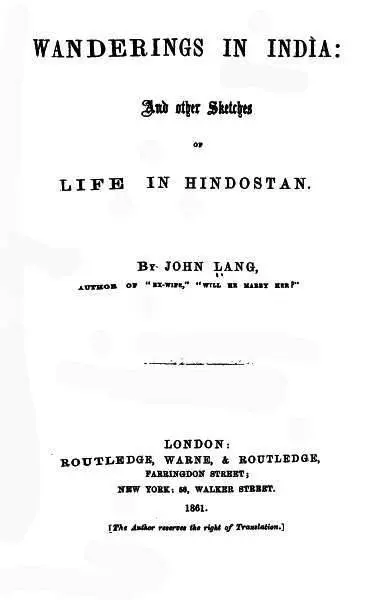
John Lang
BEHIND THE BOOK
This eBook is for the use of anyone anywhere in the United States and most other parts of the world at no cost and with almost no restrictions whatsoever. You may copy it, give it away or re-use it under the terms of the Project Gutenberg License included with this eBook or online at www.gutenberg.org. If you are not located in the United States, you will have to check the laws of the country where you are located before using this eBook. Read the source licence.
The original source file, including credits and licence, is retained by this library. Request an original-format copy at no charge. Please include the book title and Project Gutenberg identifier #14416.
KEEP YOUR CURIOSITY GOING
Cécile Tormay

Moritz Busch
Coulson Kernahan
John L. Ransom

Maurice Baring
Frances Wright