THE CLASSIC COLLECTION✦Aspects of Modern Opera: Estimates and InquiriesCLASSIC FREE BOOKS
Aspects of Modern Opera: Estimates and Inquiries
Lawrence Gilman
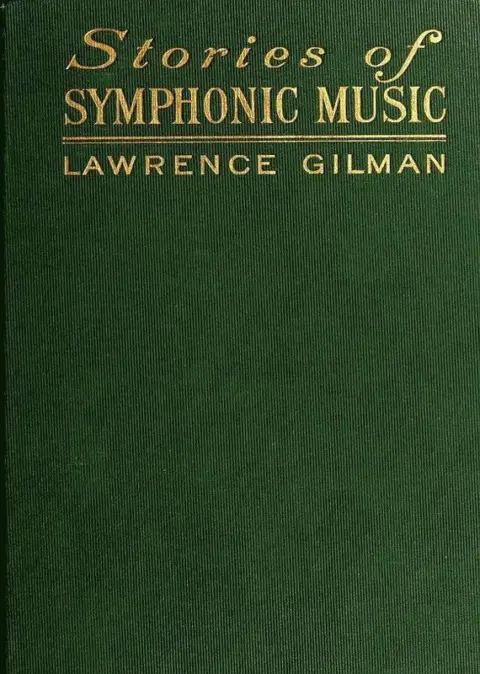
THE CLASSIC COLLECTION · 1907
"Stories of Symphonic Music" by Lawrence Gilman is a collection of essays written in the early 20th century that serves as a guide to understanding important symphonic works and orchestral compositions, ranging from Beethoven to more contemporary pieces. The focus of the text is on how music can communicate narratives, emotions, and imagery without the necessity of lyrics, highlighting the expressive potential of instrumental music. The opening of the guide establishes its purpose as an informative resource for concert-goers seeking to gain deeper insights into the meaning behind various symphonic pieces. Gilman begins by discussing the orchestral composition's ability to convey stories and emotions, asking how an orchestra can narrate tales or evoke imagery through sound alone. He contrasts the evolution of music from the structured, rule-bound compositions of the 18th century to the expressive, programmatic music of the 19th and early 20th centuries, noting that modern composers have begun to use titles and descriptions to inform listeners about the intended themes or emotions associated with their works. This sets the stage for further exploration of specific composers and symphonies that follow in the remainder of the text.
Introduction adapted from the source catalogue; source summaries may be automatically generated.
Free to read · English · 77,741 words · No account needed
MAKE TIME FOR A GOOD BOOK
On by default. Untick to stop anonymous reading totals. Each page counts after 10 seconds in view. How this works.
Anonymous counting is on unless you have switched it off.
For the five connected sections into which the music, upon the authority of the composer, may be divided, analogies are to be found in Whitman's poem. Those portions of the poem which correspond with the successive mood-pictures in the music may be indicated as follows (only the opening lines of each section are quoted):
"Hark! some wild trumpeter, some strange musician, Hovering unseen in air, vibrates capricious tunes to-night. I hear thee, trumpeter--listening, alert, I catch thy notes, Now pouring, whirling like a tempest round me, Now low, subdued--now in the distance lost."
"Blow again, trumpeter! and for thy theme Take now the enclosing theme of all--the solvent and the setting; Love, that is pulse of all--the sustenance and the pang;"
"Blow again, trumpeter--conjure war's wild alarums. "Swift to thy spell, a shuddering hum like distant thunder rolls; Lo! where the arm'd men hasten--Lo! 'mid the clouds of dust, the glint of bayonets;"
"O trumpeter! methinks I am myself the instrument thou playest!
Thou melt'st my heart, my brain--thou movest, drawest, changest them,
at will:
And now thy sullen notes send darkness through me;
Thou takest away all cheering light--all hope:
I see the enslaved, the overthrown, the hurt, the opprest of
the whole earth;"
"Now, trumpeter, for thy close,
Vouchsafe a higher strain than any yet;
Sing to my soul--renew its languishing faith and hope;
Rouse up my slow belief--give me some vision of the future;
Give me, for once, its prophecy and joy.
"O glad, exulting, culminating song!
A vigor more than earth's is in thy notes!"
[31] On the highway from Rennes to Brest. The forest is now known as
Paimpont.
[32] The scene which served Mr. Converse, too long for quotation here, occurs in Book I of Keats's poem, beginning:
"... Yet hourly had he striven
To hide the cankering venom, that had riven
His fainting recollections."
and continuing to the end of Book I.
[33] The piano is here, as the composer has pointed out, treated not as a solo instrument, but "as an integral although very important part of the orchestral scheme, and whatever technically important moments it may have grow naturally out of the emotional contents, and not from the desire for a display of virtuosity."
[34] January 20, 1905.
[35] From "Youth, Day, Old Age, and Night," in the section entitled
"Calamus."
Your reading position is saved on this browser. Take it to another device with a library code. Reading pages adapt to text, rather than matching a printed edition.
BEHIND THE BOOK
This eBook is for the use of anyone anywhere in the United States and most other parts of the world at no cost and with almost no restrictions whatsoever. You may copy it, give it away or re-use it under the terms of the Project Gutenberg License included with this eBook or online at www.gutenberg.org. If you are not located in the United States, you will have to check the laws of the country where you are located before using this eBook. Read the source licence.
The original source file, including credits and licence, is retained by this library. Request an original-format copy at no charge. Please include the book title and Project Gutenberg identifier #57063.
KEEP YOUR CURIOSITY GOING

David Patterson (Spirit) Hatch

David Patterson (Spirit) Hatch

David Patterson (Spirit) Hatch

Ralph Waldo Emerson

Maurice Baring

Oscar Wilde & James McNeill Whistler