THE CLASSIC COLLECTION✦Aspects of Modern Opera: Estimates and InquiriesCLASSIC FREE BOOKS
Aspects of Modern Opera: Estimates and Inquiries
Lawrence Gilman
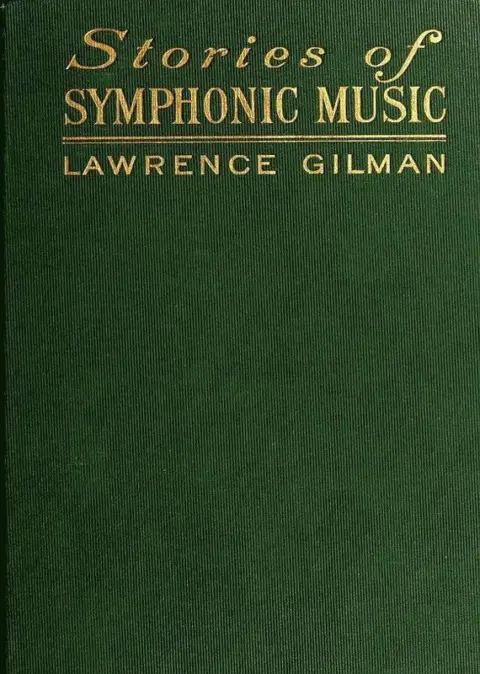
THE CLASSIC COLLECTION · 1907
"Stories of Symphonic Music" by Lawrence Gilman is a collection of essays written in the early 20th century that serves as a guide to understanding important symphonic works and orchestral compositions, ranging from Beethoven to more contemporary pieces. The focus of the text is on how music can communicate narratives, emotions, and imagery without the necessity of lyrics, highlighting the expressive potential of instrumental music. The opening of the guide establishes its purpose as an informative resource for concert-goers seeking to gain deeper insights into the meaning behind various symphonic pieces. Gilman begins by discussing the orchestral composition's ability to convey stories and emotions, asking how an orchestra can narrate tales or evoke imagery through sound alone. He contrasts the evolution of music from the structured, rule-bound compositions of the 18th century to the expressive, programmatic music of the 19th and early 20th centuries, noting that modern composers have begun to use titles and descriptions to inform listeners about the intended themes or emotions associated with their works. This sets the stage for further exploration of specific composers and symphonies that follow in the remainder of the text.
Introduction adapted from the source catalogue; source summaries may be automatically generated.
Free to read · English · 77,741 words · No account needed
MAKE TIME FOR A GOOD BOOK
On by default. Untick to stop anonymous reading totals. Each page counts after 10 seconds in view. How this works.
Anonymous counting is on unless you have switched it off.
The following prose translation of Rollinat's verses, made by Mr. Philip Hale, is prefixed to the published score of Loeffler's fantasia:
"Hell's a-burning, burning, burning. Chuckling in clear staccato, the Devil, prowling, runs about.
"He watches, advances, retreats like zig-zag lightning; Hell's
a-burning, burning, burning.
"In dive and cell, underground and in the air, the Devil, prowling,
runs about.
"Now he is flower, dragon-fly, woman, black cat, green snake; Hell's a-burning, burning, burning.
"And now, with pointed mustache, scented with vetiver, the Devil,
prowling, runs about.
"Wherever mankind swarms, without rest, summer and winter, Hell's
a-burning, burning, burning.
"From alcove to hall, and on the rail-ways, the Devil, prowling, runs
about.
"He is Mr. Seen-at-Night, who saunters with staring eyes. Hell's
a-burning, burning, burning.
"There floating as a bubble, here squirming as a worm, the Devil,
prowling, runs about.
"He's grand seigneur, tough, student, teacher. Hell's a-burning,
burning, burning.
"He inoculates each soul with his bitter whispering: the Devil,
prowling, runs about.
"He promises, bargains, stipulates in gentle or proud tones. Hell's a-burning, burning, burning.
"Mocking pitilessly the unfortunate whom he destroys, the Devil,
prowling, runs about.
"He makes goodness ridiculous and the old man futile. Hell's
a-burning, burning, burning.
"At the home of priest or sceptic, whose soul and body he wishes, the Devil, prowling, runs about.
"Beware of him to whom he toadies, and whom he calls 'My dear sir.' Hell's a-burning, burning, burning.
"Friend of the tarantula, darkness, the odd number, the Devil,
prowling, runs about.
"--My clock strikes midnight. If I should go to see Lucifer?--Hell's a-burning, burning, burning; the Devil, prowling, runs about."
"A PAGAN POEM," FOR ORCHESTRA AND PIANO: Op. 14
This tone-poem was written originally (in 1901) for a small combination of instruments,[99] and was intended for performance as chamber-music. It was afterwards arranged for two pianos and three trumpets, and was performed in private in this form. In 1905-6 the work was recast in its present shape--for orchestra with piano. Its inspiration is derived from the Eighth Eclogue of Virgil, the subject of which consists of two love-songs, placed in the mouths of Damon and Alphesibœus. The poetic basis of Loeffler's music is found in the second of these love-songs. A Thessalian girl has resorted to magic incantations in the hope that she may bring back to her cottage her truant lover Daphnis. The passage which inspired the mood of the music, and which is quoted as a preface to the score, is as follows (beginning, in the original, at the line Effer aquam, et molli cinge hæc altaria vitta):
Your reading position is saved on this browser. Take it to another device with a library code. Reading pages adapt to text, rather than matching a printed edition.
BEHIND THE BOOK
This eBook is for the use of anyone anywhere in the United States and most other parts of the world at no cost and with almost no restrictions whatsoever. You may copy it, give it away or re-use it under the terms of the Project Gutenberg License included with this eBook or online at www.gutenberg.org. If you are not located in the United States, you will have to check the laws of the country where you are located before using this eBook. Read the source licence.
The original source file, including credits and licence, is retained by this library. Request an original-format copy at no charge. Please include the book title and Project Gutenberg identifier #57063.
KEEP YOUR CURIOSITY GOING

David Patterson (Spirit) Hatch

David Patterson (Spirit) Hatch

David Patterson (Spirit) Hatch

Ralph Waldo Emerson

Maurice Baring

Oscar Wilde & James McNeill Whistler