THE CLASSIC COLLECTION✦Aspects of Modern Opera: Estimates and InquiriesCLASSIC FREE BOOKS
Aspects of Modern Opera: Estimates and Inquiries
Lawrence Gilman
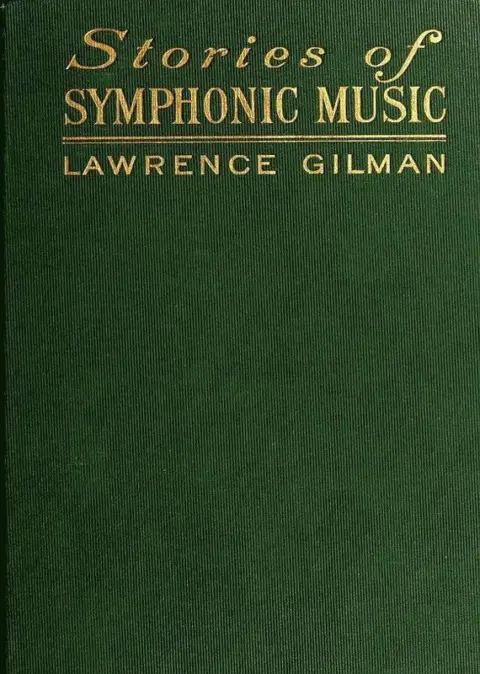
THE CLASSIC COLLECTION · 1907
"Stories of Symphonic Music" by Lawrence Gilman is a collection of essays written in the early 20th century that serves as a guide to understanding important symphonic works and orchestral compositions, ranging from Beethoven to more contemporary pieces. The focus of the text is on how music can communicate narratives, emotions, and imagery without the necessity of lyrics, highlighting the expressive potential of instrumental music. The opening of the guide establishes its purpose as an informative resource for concert-goers seeking to gain deeper insights into the meaning behind various symphonic pieces. Gilman begins by discussing the orchestral composition's ability to convey stories and emotions, asking how an orchestra can narrate tales or evoke imagery through sound alone. He contrasts the evolution of music from the structured, rule-bound compositions of the 18th century to the expressive, programmatic music of the 19th and early 20th centuries, noting that modern composers have begun to use titles and descriptions to inform listeners about the intended themes or emotions associated with their works. This sets the stage for further exploration of specific composers and symphonies that follow in the remainder of the text.
Introduction adapted from the source catalogue; source summaries may be automatically generated.
Free to read · English · 77,741 words · No account needed
MAKE TIME FOR A GOOD BOOK
On by default. Untick to stop anonymous reading totals. Each page counts after 10 seconds in view. How this works.
Anonymous counting is on unless you have switched it off.
[A mysterious phrase for solo viola, above trumpets, trombones, and tuba pianissimo, with harp arpeggios.]
(C)
"And old Silenus, shaking a green stick
Of lilies, and the wood-gods in a crew
Came, blithe, as in the olive copses thick
Cicadæ are, drunk with the noonday dew:
And Dryope and Faunus followed quick,
Teasing the god to sing them something new,
Till in this cave they found the lady lone,
Sitting upon a seat of emerald stone."
[A solo violin has a wide-arched phrase against sweeping harp arpeggios; a staccato passage in the wood-wind introduces a lyric theme in the strings--an expansion of the one with which the tone-poem opened.]
(D)
"And every nymph of stream and spreading tree,
And every shepherdess of Ocean's flocks,
Who drives her white waves over the green sea;
And Ocean, with the brine on his gray locks,
And quaint Priapus with his company,
All came, much wondering how the enwombèd rocks
Could have brought forth so beautiful a birth;--
Her love subdued their wonder and their mirth."
[This section begins, in more sprightly mood, with trills on the solo violin against a staccato figure in the wood-wind.]
(E)
"For she was beautiful: her beauty made
The bright world dim, and everything beside
Seemed like the fleeting image of a shade":
[Four horns sing a flowing and tender theme, andante; solo viola and solo 'cello play a pizzicato accompaniment.]
(F)
"The deep recesses of her odorous dwelling
Were stored with magic treasures--sounds of air,
Which had the power all spirits of compelling,"
[Vigorous descending passages in the strings, against fortissimo chords of the full orchestra, introduce a theme of animated character announced by trumpets, trombones, tuba, horns, wood-wind, and strings.]
(G)
"And then she called out of the hollow turrets
Of those high clouds, white, golden and vermilion,
The armies of her ministering spirits.
In mighty legions million after million
They came, each troop emblazoning its merits
On meteor flags; and many a proud pavilion,
Of the intertexture of the atmosphere,
They pitched upon the plain of the calm mere."
[The animated theme continues in the full orchestra. Later, an extended harp passage leads into the succeeding section.]
(H)
"To those she saw most beautiful, she gave
Strange panacea in a crystal bowl.
They drank in their deep sleep of that sweet wave,
And lived thenceforward as if some control,
Mightier than life, were in them; and the grave
Of such, when death oppressed the weary soul,
Was as a green and over-arching bower
Lit by the gems of many a starry flower."[6]
[The horn theme of section E returns in more elaborate orchestral dress, against pizzicato arpeggios and trills in the strings.]
Your reading position is saved on this browser. Take it to another device with a library code. Reading pages adapt to text, rather than matching a printed edition.
BEHIND THE BOOK
This eBook is for the use of anyone anywhere in the United States and most other parts of the world at no cost and with almost no restrictions whatsoever. You may copy it, give it away or re-use it under the terms of the Project Gutenberg License included with this eBook or online at www.gutenberg.org. If you are not located in the United States, you will have to check the laws of the country where you are located before using this eBook. Read the source licence.
The original source file, including credits and licence, is retained by this library. Request an original-format copy at no charge. Please include the book title and Project Gutenberg identifier #57063.
KEEP YOUR CURIOSITY GOING

David Patterson (Spirit) Hatch

David Patterson (Spirit) Hatch

David Patterson (Spirit) Hatch

Ralph Waldo Emerson

Maurice Baring

Oscar Wilde & James McNeill Whistler