THE CLASSIC COLLECTION✦The story of Aaron (so named) the son of Ben AliCLASSIC FREE BOOKS
The story of Aaron (so named) the son of Ben Ali
Joel Chandler Harris
THE CLASSIC COLLECTION · 1896
"Stories of Georgia" by Joel Chandler Harris is a historical collection written in the late 19th century. This work aims to present engaging narratives focused on key events and figures in Georgia's history, making the exploration of its past both enlightening and enjoyable for young readers. Through various tales, the book highlights significant moments, including the adventures of early explorers like Hernando de Soto, as well as the contributions of people such as General Oglethorpe and notable women like Aunt Nancy Hart. At the start of the book, the author provides a preface that sets the stage for a series of engaging stories meant to connect readers, especially the youth of Georgia, with their state’s heritage. The narrative begins with an exploration of Hernando de Soto and his expedition in the 1500s as they journey through Georgia in search of treasure. The story delves into the experiences of De Soto and his men, illustrating their interactions with the indigenous people, their relentless search for gold, and the ensuing hardships they faced. Following this historical account, the text foreshadows upcoming tales, including the insightful journeys of Oglethorpe and the fierce determination of local heroines, thus inviting readers into a rich tapestry of Georgia's past.
Introduction adapted from the source catalogue; source summaries may be automatically generated.
Free to read · English · 76,990 words · No account needed
MAKE TIME FOR A GOOD BOOK
On by default. Untick to stop anonymous reading totals. Each page counts after 10 seconds in view. How this works.
Anonymous counting is on unless you have switched it off.
Genet's plan was to raise in this country an army large enough to seize the Spanish possessions in Florida, and to reconquer Louisiana. For the reasons stated, Genet found the people enthusiastic in favor of his enterprise. The enthusiasm was intense. It crossed the Savannah, and found General Elijah Clarke, with his strong nature and active sympathies, ready to embrace it. His military prestige in the South commended him to Genet as the man to lead the military enterprise against the Spanish settlements in the South. Accordingly he was given command of the army that was to be raised, and was made a major general in the French service with a pay of ten thousand dollars.
Having secured a commander whose courage and resources in the field could be depended on, Genet went from Charleston to Philadelphia overland, stirring up sympathy for his enterprise and enlisting men. His success was greater than he had dreamed of. He found but one thing in his way, and that was the firmness and vigilance of George Washington. This great man set his face sternly against the project; but such was the enthusiasm of the people--artfully stirred by Genet, who was as accomplished as he was unscrupulous,--that a French party was formed. Genet took advantage of the formation of this party to arouse prejudice against Washington; and such was his success, that John Adams, who was afterwards President, says that there was a multitude of men in Philadelphia ready to drive Washington from the executive chair.
A considerable army was raised, recruits reported to General Clarke from the Ohio River to the St. Mary's, and everything was ready for action. At that moment the heavy hand of Washington descended on the enterprise. The recall of Genet was demanded, the French party went to pieces, the project collapsed, and Elijah Clarke was left without resources, surrounded by a considerable force of men who had come at his bidding to take part in the attack on the Spanish possessions. These men were on his hands, expecting the fulfillment of promises that had been made to them. What was to be done? It was at this critical period that the eyes of General Clarke turned to the Indian reservation west of the Oconee. He marched his men to these lands, and took possession. He, and those who engaged in the movement for settling the lands, had risked their lives for their country on a hundred battlefields. They thought that the lands that had been claimed by the King belonged to those who had conquered the King's armies. They were right in principle, but wrong in action. The lands that had belonged to the King now belonged to the people, not as individuals, but as a corporate body,--to the whole people represented by the State government. These principles had not been made as clear by discussion in General Clarke's day as they have been made since. He engaged in no speculation. He boldly settled the lands, and was prepared to boldly hold his position. The settlement was made in 1794. On the 28th of July, Governor George Matthews issued a proclamation forbidding the settlement, and likewise directed one of the judges to issue a warrant for the general's arrest. At the Superior Court of Wilkes County, Clarke surrendered himself to the judge, who referred the case to the county justices. These judges made a decision, setting forth the fact that Elijah Clarke had surrendered himself into custody; that, being desirous to do speedy justice to the State as well as to the party charged, they had proceeded to maturely consider the case; and that after examining the laws of the State, and the treaties made and laws passed by the United States, they gave it as their "decided and unanimous opinion that the said Elijah Clarke be and is hereby discharged." Encouraged by this decision, General Clarke returned to his settlement with the intention of holding the lands; but finally both the Federal and the State governments moved against him, and he abandoned the enterprise. The policy that Clarke began in settling the Indian lands without regard to the rights of the savage has since become the policy of the government. It is not a wholesome policy, nor is it authorized by the moral or civil law; but it has been unblushingly carried out nevertheless.
Your reading position is saved on this browser. Take it to another device with a library code. Reading pages adapt to text, rather than matching a printed edition.
Joel Chandler Harris
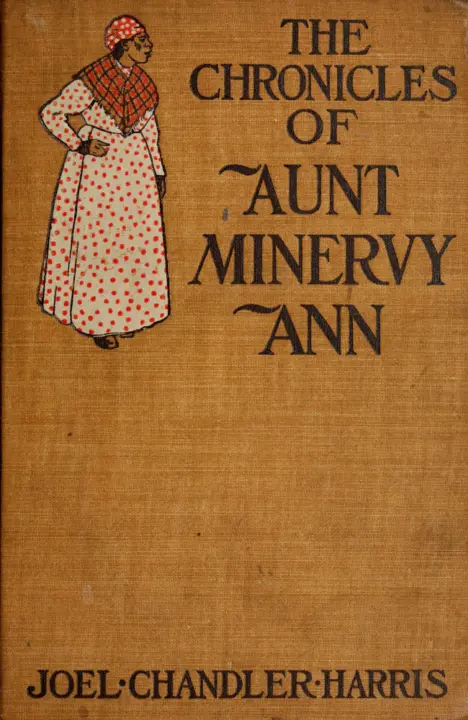
Joel Chandler Harris
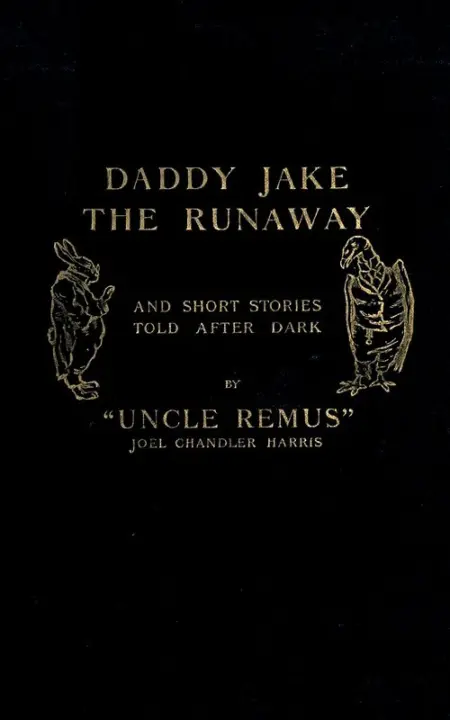
Joel Chandler Harris
Joel Chandler Harris
BEHIND THE BOOK
This eBook is for the use of anyone anywhere in the United States and most other parts of the world at no cost and with almost no restrictions whatsoever. You may copy it, give it away or re-use it under the terms of the Project Gutenberg License included with this eBook or online at www.gutenberg.org. If you are not located in the United States, you will have to check the laws of the country where you are located before using this eBook. Read the source licence.
The original source file, including credits and licence, is retained by this library. Request an original-format copy at no charge. Please include the book title and Project Gutenberg identifier #24728.
KEEP YOUR CURIOSITY GOING
Cécile Tormay

Moritz Busch
John L. Ransom
Frances Wright
Cécile Tormay

Mabel Potter Daggett