THE CLASSIC COLLECTION✦A dead man’s diaryCLASSIC FREE BOOKS
A dead man’s diary
Coulson Kernahan
THE CLASSIC COLLECTION · 1865
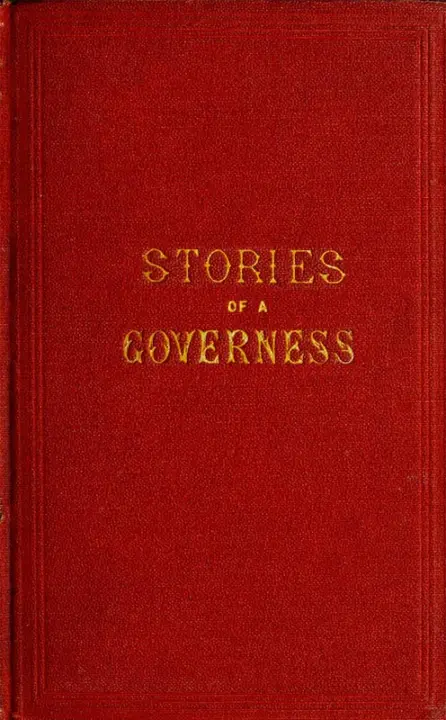
"Stories of a Governess" by Annie Fisler is a fictional work written in the mid-19th century. The narrative revolves around the experiences and challenges faced by a young governess named Miss Lane as she interacts with the children under her care—a family grappling with loss and seeking guidance. The story delves into themes of childhood innocence, moral lessons, and the nurturing bond between the governess and the young ones, reflecting on the transformative power of love and responsibility. At the start of the book, the anticipation and curiosity of the children waiting for their new governess set the emotional tone. As they speculate about her qualities, the story paints a vivid picture of their home life, marked by the absence of their deceased mother and the loving but challenging environment created by their father. The narrative introduces each child's unique personality—Lillie's eagerness, Frank's restlessness, and Rosie’s quiet contemplation. The arrival of Miss Lane reveals her gentle, nurturing demeanor and her resolve to instill discipline and decorum in her young charges. As she begins to integrate into their lives, the children grapple with feelings of loss, longing, and the transformative importance of guidance in their formative years. The opening establishes a foundation of emotional depth and moral undertones that promise to unfold as the story progresses.
Introduction adapted from the source catalogue; source summaries may be automatically generated.
Free to read · English · 29,998 words · No account needed
MAKE TIME FOR A GOOD BOOK
On by default. Untick to stop anonymous reading totals. Each page counts after 10 seconds in view. How this works.
Anonymous counting is on unless you have switched it off.
Lillie was putting her drawing materials away hurriedly, a look of eagerness taking the place of the weary expression that had before rested upon her face, when Jennie continued—
“You must not go down, you know, Miss Lane told us not to have
anything to do with her.”
“I don’t care!” exclaimed Lillie.
“For shame, Lillie! I’ll tell papa. What would he say if he heard you
speak so?”
“I’m not going to sit still, shut up in the house all day. Besides, what is the harm? Mary Noel don’t hurt anybody.”
“It is wrong to do what your teacher tells you not to do. You know Mary Noel is not a good girl.”
“She’s as good as anybody. You don’t like her, nor care to play with her at all, or you would not be so obedient all at once.”
Just then the door opened, and Mary appeared.
“Don’t you want to go and slide? It is fine on the ice, Lillie,” she
exclaimed.
“Miss Lane and papa don’t like Lillie to go on the ice alone,” answered
Jennie, quickly.
“That was when the ice was thinner,” interposed Lillie, angry at her
interference.
“What a baby you are, to care for everything Miss Lane says. I don’t see what right she has to rule you.”
“She don’t rule us,” cried Jennie, indignantly; but Lillie, whose wrong-doing had not been without its effect upon her sense of justice and natural nobleness, began to consider herself an ill-used person, and flushed crimson at the thought of being “ruled.”
“She does,” continued Mary; “why, the other afternoon, Lillie was
afraid——”
A quick, imploring gesture from Lillie stopped her words, and Jennie, facing round, eyed both girls suspiciously.
“What was she afraid of? What have you been doing?”
“Oh, nothing. Come, Lillie, are you going?”
“No, she isn’t,” uttered Jennie, imperatively.
“You can’t hinder me.”
“I’ll tell papa.”
“Well, tell him.”
“I’ll go now, and Mrs. Hill will lock you up, if I speak to her.”
“Oh, dear, there’s another mistress, is there? Why, it’s a wonder you get liberty to eat or sleep,” exclaimed Mary, mockingly.
“I did not care about going on the ice,” said Lillie, standing up and looking wrathfully at Jennie, “but since you have made yourself so disagreeable about it, I will go. So there’s nobody to blame but yourself. Papa has told you never to speak to me in that manner, many a time.”
Your reading position is saved on this browser. Take it to another device with a library code. Reading pages adapt to text, rather than matching a printed edition.
BEHIND THE BOOK
This eBook is for the use of anyone anywhere in the United States and most other parts of the world at no cost and with almost no restrictions whatsoever. You may copy it, give it away or re-use it under the terms of the Project Gutenberg License included with this eBook or online at www.gutenberg.org. If you are not located in the United States, you will have to check the laws of the country where you are located before using this eBook. Read the source licence.
The original source file, including credits and licence, is retained by this library. Request an original-format copy at no charge. Please include the book title and Project Gutenberg identifier #52572.
KEEP YOUR CURIOSITY GOING
Coulson Kernahan

Maurice Baring
Frances Wright
Cécile Tormay

Frederic Jesup Stimson

W. H. P. (William Henry Pope) Jarvis