THE CLASSIC COLLECTION✦Glimpses of Bengal Selected from the letters of Sir Rabindranath Tagore, 1885 to 1895CLASSIC FREE BOOKS
Glimpses of Bengal Selected from the letters of Sir Rabindranath Tagore, 1885 to 1895
Rabindranath Tagore
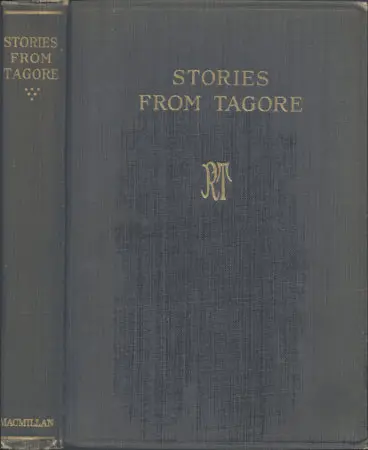
THE CLASSIC COLLECTION · 1916
"Stories from Tagore" by Rabindranath Tagore is a collection of short stories written in the early 20th century. The anthology captures various facets of life, culture, and social issues in India, exploring themes of love, friendship, and the human condition through relatable characters and poignant narratives. Each story provides a glimpse into the complexities of life, often highlighting the emotional and spiritual journeys of its characters. At the start of this collection, the opening story, "The Cabuliwallah," introduces us to Mini, a lively five-year-old girl who is unfazed by curiosity and chatter. Her life intersects with that of Rahmun, a fruit-seller from Kabul, who becomes a source of fascination for Mini and a friend who offers her snacks and playful banter. As their relationship develops amidst cultural contrasts and societal expectations, a poignant sense of attachment grows between the innocent child and the rugged man, leading to a deeper understanding of love and loss as life unfolds. The narrative sets the tone for Tagore's exploration of human connections across social divides, creating an evocative backdrop for the stories that follow.
Introduction adapted from the source catalogue; source summaries may be automatically generated.
Free to read · English · 47,675 words · No account needed
MAKE TIME FOR A GOOD BOOK
On by default. Untick to stop anonymous reading totals. Each page counts after 10 seconds in view. How this works.
Anonymous counting is on unless you have switched it off.
Phatik began to cry out: "By the mark--three fathoms. By the mark--four fathoms. By the mark----." He had heard the sailor on the river-steamer calling out the mark on the plumb-line. Now he was himself plumbing an unfathomable sea.
Later in the day Phatik's mother burst into the room, like a whirlwind, and began to toss from side to side and moan and cry in a loud voice.
Bishamber tried to calm her agitation, but she flung herself on the bed, and cried: "Phatik, my darling, my darling."
Phatik stopped his restless movements for a moment. His hands ceased beating up and down. He said: "Eh?"
The mother cried again: "Phatik, my darling, my darling."
Phatik very slowly turned his head and without seeing anybody said: "Mother, the holidays have come."
=proposal.= From the Latin word "ponere," to place. Compare position, post, depose, impose, component, composition, repose.
=unanimously.= From the Latin "unus," one, and "animus," mind. Compare magnanimous, pusillanimous.
=philosopher.= From the Greek "philos," a friend, and "sophia," wisdom. Compare philology, philanthropy, theosophy.
=moustache.= A French word which has found its home in English. French is frequently giving to English new words. Compare, in this story, manA"uvre, discomfit, mischief.
=juncture.= From the Latin "jungere," to join. Compare junction, conjunction, subjunctive, adjunct.
=unattractive.= From the negative "un," meaning "not," and the root "tract-," meaning to draw. Compare traction, tractor, attract, extract, subtract.
=atmosphere.= From the Greek word "atmos," the air, and "sphaira," a "globe." Compare sphere, hemisphere, photosphere.
=wistfulness.= Probably from the English word "wish," wishfulness. Several, however, regard it as coming from an old word "whist" or "wist," meaning silent. The vernacular word "udAes" has the same meaning.
=abjectly.= From the Latin word "jacere," to throw. Compare ad-jec-tive, subject, object, project, inject, reject.
=neighbourhood.= From a Saxon word meaning near, nigh; "hood" or "head" is a common addition to Saxon words denoting the quality or character. Compare knighthood, manhood, boyhood, womanhood.
=holidays.= This word is made up of two words, "holy" and "days." The religious days of the Church were those on which no one worked and thus they got the meaning of holidays as opposed to working days.
Your reading position is saved on this browser. Take it to another device with a library code. Reading pages adapt to text, rather than matching a printed edition.
Rabindranath Tagore
Rabindranath Tagore
Rabindranath Tagore
Rabindranath Tagore
BEHIND THE BOOK
This eBook is for the use of anyone anywhere in the United States and most other parts of the world at no cost and with almost no restrictions whatsoever. You may copy it, give it away or re-use it under the terms of the Project Gutenberg License included with this eBook or online at www.gutenberg.org. If you are not located in the United States, you will have to check the laws of the country where you are located before using this eBook. Read the source licence.
The original source file, including credits and licence, is retained by this library. Request an original-format copy at no charge. Please include the book title and Project Gutenberg identifier #33525.
KEEP YOUR CURIOSITY GOING
Coulson Kernahan

Maurice Baring
Frances Wright
Cécile Tormay

Frederic Jesup Stimson

W. H. P. (William Henry Pope) Jarvis