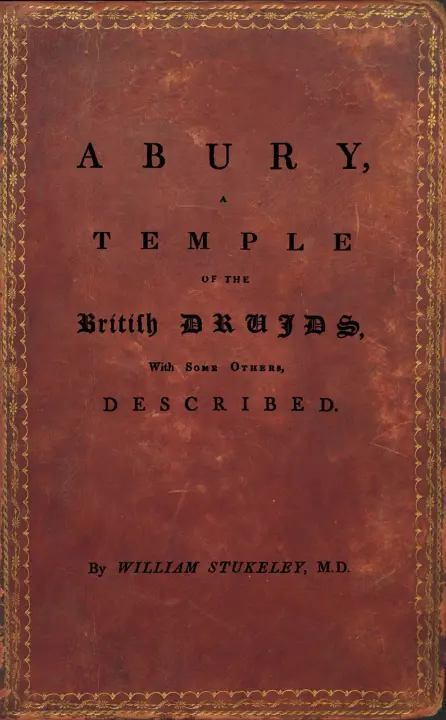
Abury, A Temple of the British Druids, With Some Others, Described
William Stukeley
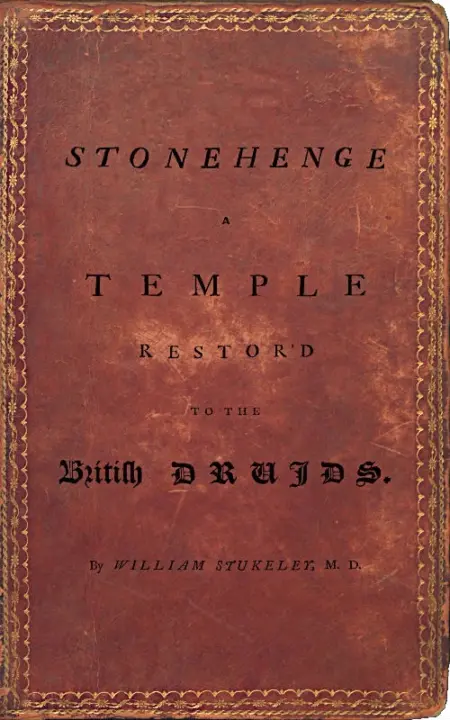
THE CLASSIC COLLECTION · 1740
"Stonehenge, a Temple Restor'd to the British Druids" by William Stukeley is a historical account written in the early 18th century. The book explores the origins and significance of Stonehenge, positing that it was built by the ancient Druids as a temple. Stukeley's investigation encompasses the physical description of the ruins, their architectural features, and the cultural context surrounding them, particularly concerning the Druids' religious practices. The opening of the text introduces Stukeley's fascination with ancient structures and outlines his systematic approach to studying the works of the Druids. He describes his summers spent measuring and contemplating the stone circles across Britain, including the famous Stonehenge. Stukeley argues that these monuments reflect a deep continuity of religious practice from ancient times, positioning the Druids within a historical lineage that traces back to patriarchal religions. His detailed reflection sets the stage for a comprehensive examination of the site's dimensions, material origins, and its place in the broader narrative of British history, revealing the book's intent to preserve and illuminate the memory of these ancient wonders.
Introduction adapted from the source catalogue; source summaries may be automatically generated.
Free to read · English · 48,776 words · No account needed
MAKE TIME FOR A GOOD BOOK
On by default. Untick to stop anonymous reading totals. Each page counts after 10 seconds in view. How this works.
Anonymous counting is on unless you have switched it off.
No wonder these matters are well nigh lost, in the mist of extreme antiquity, when even the meaning of the word ambrosius was hardly known, either to the antients or moderns, till Mr. Baxter discover’d it, in his glossary. It signifies oil of roses, rosaceum: the most antient kind of perfume. In the 4th Odyssy, v. 445. Edothea a sea goddess, teaches Menelaus and his companions, to cure the odious smell of the sea calves.
Ἀμβροσίην ὑπὸ ῥῖνα ἑκάστῳ θῆκε φέρουσα Ἡδὺ μάλα πνείουσαν.————————————————
She put ambrosia to their noses, sweetly smelling. Again, in his hymn to Venus, the graces washt the goddess, and anointed her with oil ambrosial: such as becomes the immortals.
——————————————καὶ χρῖσαν ἐλαίῳ Ἀμβρότῳ, οἷα Θεοὺς ἐπενήνοθεν αἰὲν ἐόντας.
Lastly, in Iliad. XXIII. Venus anoints Hector’s body with
ambrosial oil of roses,
——————ῥοδόεντι δὲ χρῖεν ἐλαίῳ Ἀμβροσίῳ————————————
Which is a tautology. For from length of time, they scarce knew the true meaning of the word in Homer’s age.
Virgil seems to understand but somewhat of the original meaning of the word, speaking of Venus; her hair was anointed with ointment perfum’d.
Ambrosiæq; comæ divinum vertice odorem Spiravere———————————————— Æneid.
In Pliny Nat. Hist. XIII. 1. we find the oleum rhodinum most antient, common and simple. And this is the true ambrosia, which from its very antient use in sacred rites, had almost lost its meaning; and was us’d to signify, one while, the food of the gods, another time, immortality; again, whatever is divine, or appropriate to the gods. But simply, it signifies oil of roses, still from its first use, in sacred matters, it imports anointed, in a religious sense; consecrated, dedicated. Then main ambres, ambres, petræ ambrosiæ, signify the stones anointed with holy oil, consecrated; or in a general sense a temple, altar, or place of worship.
The truth is, it was a patriarchal custom to consecrate their altars, pillars, or in a general word temples, by anointing with oil, either simple or perfum’d. Rose oil being the oldest, engross’d the general name of the action; so that a stone anointed with oil of roses, is a main amber, or lapis ambrosius. The same is an altar, or stone dedicate to religious use. The plural number, petræ ambrosiæ, import a church or temple, in our way of speaking.
Your reading position is saved on this browser. Take it to another device with a library code. Reading pages adapt to text, rather than matching a printed edition.
BEHIND THE BOOK
This eBook is for the use of anyone anywhere in the United States and most other parts of the world at no cost and with almost no restrictions whatsoever. You may copy it, give it away or re-use it under the terms of the Project Gutenberg License included with this eBook or online at www.gutenberg.org. If you are not located in the United States, you will have to check the laws of the country where you are located before using this eBook. Read the source licence.
The original source file, including credits and licence, is retained by this library. Request an original-format copy at no charge. Please include the book title and Project Gutenberg identifier #61567.
KEEP YOUR CURIOSITY GOING
Cécile Tormay

Moritz Busch
John L. Ransom
Frances Wright
Cécile Tormay

Mabel Potter Daggett