THE CLASSIC COLLECTION✦An outlaw’s diary: the CommuneCLASSIC FREE BOOKS
An outlaw’s diary: the Commune
Cécile Tormay
THE CLASSIC COLLECTION · 1898
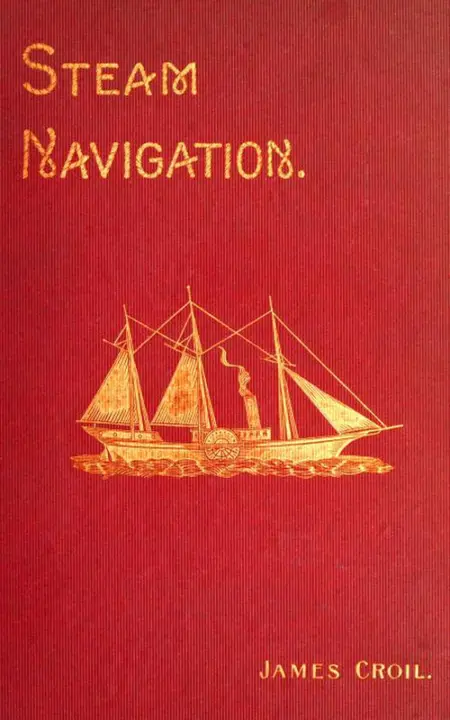
"Steam Navigation and Its Relation to the Commerce of Canada and the United States" by James Croil is a historical account written in the late 19th century. The book explores the origins, development, and impact of steam navigation on commerce between Canada and the United States, highlighting significant steam vessels and their contributions to trade and transportation. The opening of the work presents a detailed preface that outlines the motivations behind the book and acknowledges other notable writings on the subject. Croil expresses a deep passion for steam navigation, citing its revolutionary role in connecting distant lands and facilitating trade. He mentions the plethora of sources he has drawn upon to compile his narrative, indicating a meticulous approach to documenting the history of steam vessels, particularly those related to Canadian waterways. This sets the stage for a comprehensive exploration of the evolution of steam navigation that the forthcoming chapters promise to elaborate on in more detail.
Introduction adapted from the source catalogue; source summaries may be automatically generated.
Free to read · English · 81,663 words · No account needed
MAKE TIME FOR A GOOD BOOK
On by default. Untick to stop anonymous reading totals. Each page counts after 10 seconds in view. How this works.
Anonymous counting is on unless you have switched it off.
The North Briton, Captain Grange, was wrecked in November, 1861, on one of the Mingan Islands, north of Anticosti (the usual track for steamers at that time). There was no loss of life. The Anglo-Saxon, Captain Burgess, in April, 1863, was stranded in Clam Cove, three miles from Cape Race, during a dense fog. A heavy sea rolling in drove her farther on the rocks, from which she eventually slid off and sank in deep water. The captain, some of the officers, and many of the passengers and crew were carried down into the vortex of the ship, and were drowned to the number of 238 souls.
The Norwegian, Captain McMaster, in June, 1863, was totally wrecked on St. Paul’s Island, at the entrance of the Gulf. A dense fog was prevailing. The passengers and crew, numbering about 420, were all saved. The Bohemian, Captain Borland, struck on the Alden Ledges, off Cape Elizabeth, near Portland, in February, 1864, when twenty passengers were drowned. The Dacian was wrecked near Halifax, April 7th, 1872. In the same year the Germany went ashore at the mouth of the Garonne River, near Bordeaux, France, and was totally wrecked, with the loss of thirty lives. The St. George, Captain Jones, was lost on the Blonde Rock, south of Seal Island, N.S. The Jura stranded on Formby Bank, at the entrance to the Mersey, in 1864. The Moravian, Captain Archer, was wrecked on Mud Islands, near Yarmouth, N.S., in December, 1881. The Hanoverian, Captain Thompson, struck a rock at the entrance of Nepassey Bay, Newfoundland, and was totally lost, but all hands were saved.
The Pomeranian, Captain Dalziel, a fine ship of 4,364 tons, in 1893 survived one of the stormiest Atlantic voyages on record. She sailed from Greenock for New York, March 27th. After eight days battling with a furious gale, when about twelve hundred miles west of Ireland, she was well-nigh overwhelmed by a tremendous wave, which made a clean sweep of the deck. The bridge, the chart-house, the saloon, the steam-winch, the ventilators, everything between the foremast and the funnel, were hurled overboard, a mass of wreckage. The captain and a saloon passenger were so severely injured that both died in a few hours. The second and fourth officers, who were on the bridge, were swept into the sea and drowned, as were the rest of the cabin passengers, one intermediate, and four of the crew—twelve persons in all. Three of the lifeboats were carried away and two were smashed, leaving only one available for service. The whole of the nautical instruments, books and charts had gone overboard, the steering gear was badly wrecked, and the only compass left was that in the steering-house aft. The first officer, Mr. McCulloch, on whom the command now devolved, seeing the crippled condition of the ship, turned her head homewards, a thing not easily done in such a sea, and eventually returned to the Clyde in a gale of wind.
Your reading position is saved on this browser. Take it to another device with a library code. Reading pages adapt to text, rather than matching a printed edition.
BEHIND THE BOOK
This eBook is for the use of anyone anywhere in the United States and most other parts of the world at no cost and with almost no restrictions whatsoever. You may copy it, give it away or re-use it under the terms of the Project Gutenberg License included with this eBook or online at www.gutenberg.org. If you are not located in the United States, you will have to check the laws of the country where you are located before using this eBook. Read the source licence.
The original source file, including credits and licence, is retained by this library. Request an original-format copy at no charge. Please include the book title and Project Gutenberg identifier #58849.
KEEP YOUR CURIOSITY GOING
Cécile Tormay

Moritz Busch
John L. Ransom
Frances Wright
Cécile Tormay

Mabel Potter Daggett