THE CLASSIC COLLECTION✦An outlaw’s diary: the CommuneCLASSIC FREE BOOKS
An outlaw’s diary: the Commune
Cécile Tormay
THE CLASSIC COLLECTION · 1898
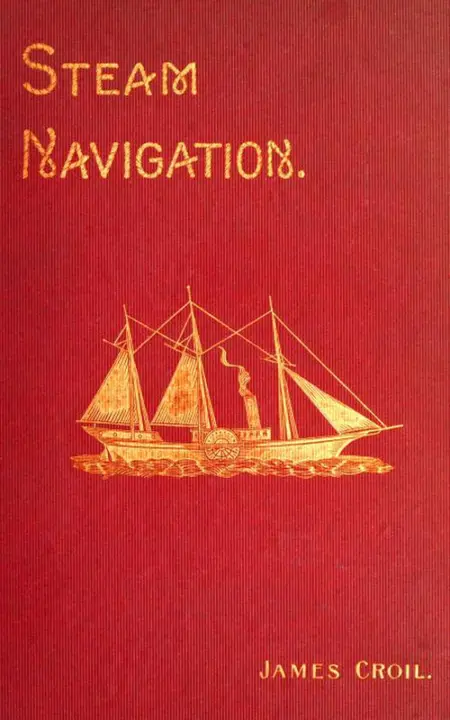
"Steam Navigation and Its Relation to the Commerce of Canada and the United States" by James Croil is a historical account written in the late 19th century. The book explores the origins, development, and impact of steam navigation on commerce between Canada and the United States, highlighting significant steam vessels and their contributions to trade and transportation. The opening of the work presents a detailed preface that outlines the motivations behind the book and acknowledges other notable writings on the subject. Croil expresses a deep passion for steam navigation, citing its revolutionary role in connecting distant lands and facilitating trade. He mentions the plethora of sources he has drawn upon to compile his narrative, indicating a meticulous approach to documenting the history of steam vessels, particularly those related to Canadian waterways. This sets the stage for a comprehensive exploration of the evolution of steam navigation that the forthcoming chapters promise to elaborate on in more detail.
Introduction adapted from the source catalogue; source summaries may be automatically generated.
Free to read · English · 81,663 words · No account needed
MAKE TIME FOR A GOOD BOOK
On by default. Untick to stop anonymous reading totals. Each page counts after 10 seconds in view. How this works.
Anonymous counting is on unless you have switched it off.
One of these ships, when carrying her full complement of passengers, will start on her voyage provisioned somewhat on this scale: 20,000 lbs. of fresh beef, 1,000 lbs. of corned beef, 10,000 lbs. of mutton, 1,400 lbs. of lamb, 500 lbs. of veal, 500 lbs. of pork, 3,500 lbs. of fresh fish, 1,000 fowls—400 chickens, 250 ducks and geese, 100 turkeys, 30 tons of potatoes, 30 hampers of vegetables, 18,000 eggs, 6,000 lbs. of ham, 3,000 lbs. of butter, etc., etc.; 13,650 bottles of ale and porter, 6,650 bottles of mineral waters, 1,600 bottles of wines and spirits, are frequently consumed on a single voyage.
The various vessels of the Cunard fleet between them carry on an average 110,000 passengers per annum, besides 600,000 tons of merchandise and 50,000 carcases of dead meat in refrigerators, over a distance of one million miles annually. The Campania and Lucania, owing to the large space occupied by their machinery, only carry about 1,600 tons of freight each.
The order and discipline on board a Cunard liner is that of a man-of-war. The vessels have been built under a special survey, and combine in their construction the best known appliances, in cases of fire, collision, or any other marine contingency, for the safety of the ship and its living freight. The watertight bulkheads are sixteen in number, and will enable the ship to float with any two or even three of the compartments filled with water. The life-boat equipment and service is ample and thoroughly organized. In short, everything is made subservient to safety.
Some idea of the cost of running vessels of this size and speed may be formed when it is stated that the daily average consumption of coal is nearly four hundred tons, but when urged to utmost speed it would be nearer five hundred tons. The crew, all told, number about 424, of whom 195 are required to attend to the engines and boilers alone. In the sailing department, from the captain to the lamplighter, about sixty-five; in the steward’s department, including 8 stewardesses, about 120, and in the cook’s department, about 45. These 424 persons must be paid and fed at a cost of from $12,000 to $15,000 a month. Each of the ships must have cost over $3,000,000, the interest upon which, at four per cent., is $120,000 per annum; add the enormous cost of provisioning the ship for perhaps six hundred cabin passengers, who, for the most part, expect to fare more sumptuously every day they are on board than they do at home; and one thousand intermediate and steerage passengers, who must live like fighting-cocks; then estimate, if you can, the cost of insurances, agencies, advertising, port charges, pilotage; write off a reasonable percentage for wear and tear; these put together represent an amount so formidable as to leave a very slender margin for profits. At the last annual meeting of the shareholders a dividend of 2½ per cent. for the year 1897 was declared, which was considered a good showing.
Your reading position is saved on this browser. Take it to another device with a library code. Reading pages adapt to text, rather than matching a printed edition.
BEHIND THE BOOK
This eBook is for the use of anyone anywhere in the United States and most other parts of the world at no cost and with almost no restrictions whatsoever. You may copy it, give it away or re-use it under the terms of the Project Gutenberg License included with this eBook or online at www.gutenberg.org. If you are not located in the United States, you will have to check the laws of the country where you are located before using this eBook. Read the source licence.
The original source file, including credits and licence, is retained by this library. Request an original-format copy at no charge. Please include the book title and Project Gutenberg identifier #58849.
KEEP YOUR CURIOSITY GOING
Cécile Tormay

Moritz Busch
John L. Ransom
Frances Wright
Cécile Tormay

Mabel Potter Daggett