
The Writing of News A Handbook with Chapters on Newspaper Correspondence and Copy Reading
Charles G. (Charles Griffith) Ross
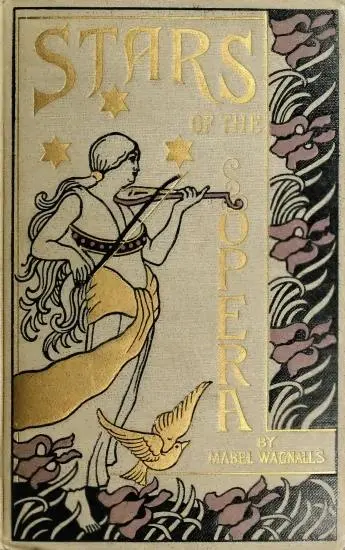
THE CLASSIC COLLECTION · 1899
"Stars of the Opera" by Mabel Wagnalls is a collection of descriptive accounts and personal interviews written in the early 20th century. The book features operas as its main subject, providing readers with insights into the world of grand opera through discussions with notable singers like Marcella Sembrich and Emma Eames. The work highlights the artistry and challenges faced by these prominent figures in opera, inviting readers to appreciate the depth of their craft. The opening of "Stars of the Opera" introduces readers to the exhilarating atmosphere of a grand performance, specifically highlighting Marcella Sembrich’s celebrated portrayal in "Traviata." Wagnalls captures the excitement of the audience and the formidable talent of the performers, showcasing the hard work and dedication that goes into the art of opera. In a personal interview, Sembrich shares her early experiences with music, her rigorous training, and the emotional weight she feels as a performer. Through this intimate glimpse, readers can grasp the blend of artistry, discipline, and passion that defines the opera world.
Introduction adapted from the source catalogue; source summaries may be automatically generated.
Free to read · English · 56,933 words · No account needed
MAKE TIME FOR A GOOD BOOK
On by default. Untick to stop anonymous reading totals. Each page counts after 10 seconds in view. How this works.
Anonymous counting is on unless you have switched it off.
The curtain arose upon the first act of Romeo and Juliet; a blaze of color and a whirl of gay music. Soon the dancers dispersed, and a slender figure in saphire satin sauntered down the Capulet stairs, came forward with quiet confidence, and commenced the famous Waltz Song--slowly--dreamily.
With these very first notes Geraldine Farrar revealed originality; she sang them as tho thinking aloud; the words fell from her lips like a tender caress--
"I would linger in this dream that enthralls me."
She closed the aria with brilliant tones, a high note--and a smile. Geraldine Farrar's smile is something to drive a poet to sonnets--and a prince to sighs!
One paper the next morning declared: "From that moment she could have wrapped the whole audience around her little finger."
There followed a "Farrar furor," tho cautious critics were careful to point out that her performance as yet evinced nothing more than "a lovely voice, a peculiarly gifted dramatic temperament, youth, beauty, and considerable experience!" That's all!
"She is not yet a finished artist," these critics say, but at four-and-twenty what would you? Her voice is "golden," and no one denies that her histrionic gifts are phenomenal.
It is strange--this quality of native greatness. In the case of these famous singers, one almost feels that the greatness makes the voice. The mind is what counts, after all. Geraldine Farrar impresses one forcibly with this fact. Her mind is alert, keen, observant, thoughtful, quick at reaching conclusions, widely interested, eager to learn, but at the same time self-contained and firmly poised.
When talking about music her face lights up. She has much to say; she has thought and studied deeply; she is intense, enthusiastic, full of her subject, aglow with earnestness and vitality.
From early childhood she was always singing, always acting, and always intending to be a prima-donna.
"I began voice-study when I was twelve, but before that had sung all of Faust in Italian, and acted it according to my own imagination."
When asked if she had not run some risk of harming the vocal cords by beginning so young, she explained that her voice at this age was remarkably mature and full. She was possessed, besides, with an irresistible desire to sing, so it seemed both prudent and wise to commence serious study thus early.
"A born singer is instinctive, and selects, almost instinctively, her individual means of expression, avoiding, in the main, what is distinctly harmful. But practice and study are continuously and always necessary. I work faithfully every day with scales and trills and intervals. Before a performance I go over my part, mentally, from beginning to end."
Your reading position is saved on this browser. Take it to another device with a library code. Reading pages adapt to text, rather than matching a printed edition.
BEHIND THE BOOK
This eBook is for the use of anyone anywhere in the United States and most other parts of the world at no cost and with almost no restrictions whatsoever. You may copy it, give it away or re-use it under the terms of the Project Gutenberg License included with this eBook or online at www.gutenberg.org. If you are not located in the United States, you will have to check the laws of the country where you are located before using this eBook. Read the source licence.
The original source file, including credits and licence, is retained by this library. Request an original-format copy at no charge. Please include the book title and Project Gutenberg identifier #38153.
KEEP YOUR CURIOSITY GOING
Charles G. (Charles Griffith) Ross
Hannah Webster Foster

Emily Lawless
Edwin Hamlin Carr

Charles De Lano Hine
Andrew Ure