THE CLASSIC COLLECTION✦An outlaw’s diary: the CommuneCLASSIC FREE BOOKS
An outlaw’s diary: the Commune
Cécile Tormay
THE CLASSIC COLLECTION · 1919
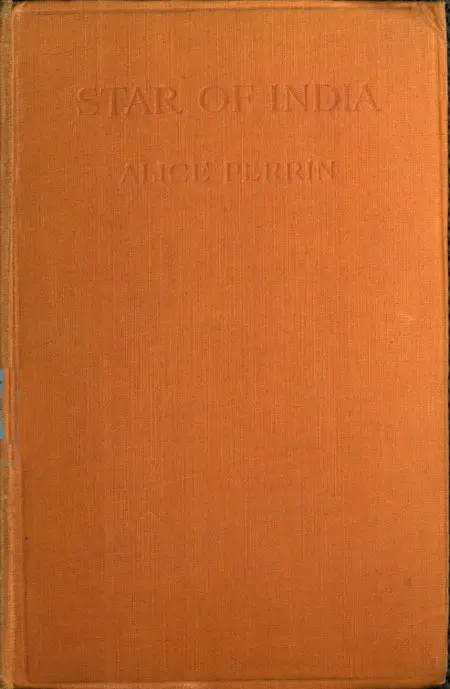
"Star of India" by Alice Perrin is a novel written in the early 20th century. The narrative centers around Stella Carrington, a spirited girl chafing against the confines of her stifling home environment and yearning for adventure and a life beyond the small village she inhabits. Struggling with her identity amidst familial expectations and societal norms, Stella grapples with her desires and aspirations while witnessing friends embark on their own paths, especially as she becomes infatuated with the grandeur of India. The opening of the book introduces the reader to Stella during a church service, where she reflects on the tedium of her life with her strict grandmother and aunts while noticing her former playmate Maud Verrall, who is transformed into an alluring young lady. Stella's frustrations boil over during lunch, revealing her longing for excitement and change. This discontent leads her to explore her family's storied past in India, instilling in her a desire for the adventure her relatives once experienced. As the narrative unfolds, we find Stella’s life facing a pivotal change with the arrival of Colonel Crayfield, her father's old friend, leading to the development of a plan that promises to take her away from The Chestnuts and into the rarefied adventures of India—an escape from her monotonous existence into a future filled with hope and uncertainty.
Introduction adapted from the source catalogue; source summaries may be automatically generated.
Free to read · English · 77,366 words · No account needed
MAKE TIME FOR A GOOD BOOK
On by default. Untick to stop anonymous reading totals. Each page counts after 10 seconds in view. How this works.
Anonymous counting is on unless you have switched it off.
"There must be some protection," Flint told her reluctantly; "you see, jackals and other animals----"
"I understand." She turned away, gazing sadly over the misty, red plain. "And we have to leave her here by herself! Oh! I can't bear it--India is horrible, horrible!"
For the first time she broke down, leaned, weeping, against the trunk of the tree that, maybe, had seen other human sacrifices offered at its foot. Flint waited for a moment; then he went to her, took her hand gently, protectively.
"Don't grieve too much," he said. "She is all right. She would have asked nothing better than to give her life for her work. We are not leaving her here, remember!"
"I wish I could think"--she paused, flung out her hands passionately. "I can't believe anything; I always wondered how she could. And here am I alive and useless, and she has gone. It seems so unfair!"
"I expect she was very tired," said Flint simply, "and is glad to rest. Come back to the camp; Laban will see that it is all finished properly, and I want to talk to you."
They started. It was now almost dark, and he set himself as they went to tell her what he had arranged--that she should take Miss Abigail's personal belongings back to the Mission headquarters.
"The things are all ready," he confessed. "I told the ayah to pack them. There were very few, just a writing-case and a little locked box and some papers and notebooks; one or two photographs, her Bible and Prayer Book. The camp things can all follow later. Of course the clothes she was wearing, and the bed and so on, have had to be burnt, that was necessary; the Mission people will understand."
At first she said nothing. He went on hurriedly: "I can drive you to the junction; there's a train----"
"You want me to go?" she asked below her breath, "to go now, to-night?"
His heart sank. Did she mean to refuse? "It's only right. She would have wished you to go, you know she would."
"But do you wish it?" She bent towards him, trying to see his face in
the gathering dusk.
"Only because I know I ought to send you away."
Silence again for a space. "I telegraphed to the Magistrate's wife as well. She is a kind woman, she will take you in if you would prefer it to the Mission House, I am sure."
There was a pathetic little catch in her voice as she answered drearily: "Yes, I suppose I must go. Oh, how everything has altered, just in a few hours!"
"That's India."
"I feel so horribly alone."
Your reading position is saved on this browser. Take it to another device with a library code. Reading pages adapt to text, rather than matching a printed edition.
BEHIND THE BOOK
This eBook is for the use of anyone anywhere in the United States and most other parts of the world at no cost and with almost no restrictions whatsoever. You may copy it, give it away or re-use it under the terms of the Project Gutenberg License included with this eBook or online at www.gutenberg.org. If you are not located in the United States, you will have to check the laws of the country where you are located before using this eBook. Read the source licence.
The original source file, including credits and licence, is retained by this library. Request an original-format copy at no charge. Please include the book title and Project Gutenberg identifier #53372.
KEEP YOUR CURIOSITY GOING
Cécile Tormay

Moritz Busch
Coulson Kernahan
John L. Ransom

Maurice Baring
Frances Wright