THE CLASSIC COLLECTION✦China collecting in AmericaCLASSIC FREE BOOKS
China collecting in America
Alice Morse Earle
THE CLASSIC COLLECTION · 1900
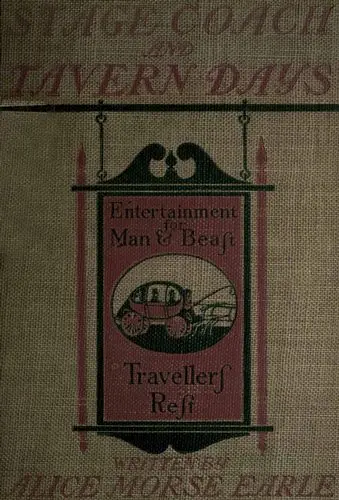
"Stage-coach and Tavern Days" by Alice Morse Earle is a historical account written in the late 19th century. This work offers a detailed exploration of the significance of stage-coaches and taverns in early American life, particularly in New England. The book delves into the social and cultural roles these establishments played, revealing how they served not only as places for travelers to rest but also as crucial centers of community interaction and gathering. The opening of "Stage-coach and Tavern Days" sets the stage for understanding the early Puritan society's relationship with hospitality and neighborliness. Earle introduces the concept of the "ordinary," the early tavern, noting its dual purpose of providing accommodation for travelers and acting as a social hub for locals. She discusses the regulations surrounding the establishment of ordinaries, the challenges faced by tavern keepers, and how these venues facilitated social life while adhering to strict codes of conduct—balancing hospitality with upheld moral standards in a deeply pious community.
Introduction adapted from the source catalogue; source summaries may be automatically generated.
Free to read · English · 101,353 words · No account needed
MAKE TIME FOR A GOOD BOOK
On by default. Untick to stop anonymous reading totals. Each page counts after 10 seconds in view. How this works.
Anonymous counting is on unless you have switched it off.
There were in Boston at different times several ordinaries and taverns known as the King's Arms. One of the earliest ones stood at the head of Dock Square. In 1651 one Hugh Gunnison, vintner, and his wife, sold this house, known by the sign of the King's Arms, with its furniture and appurtenances, for the sum of L600 sterling, a goodly sum for the day. An inventory of the "p'ticular goods and household stuffe" still exists, and is of much interest not only as indicating the furnishings of a house of that character in that colony at that date, but showing also the naming of the chambers, as in the English inns of Shakespeare's day.
"In the chamber called the Exchange one halfe bedstead with blew pillows, one livery Cupbord coloured blue, one long table, benches, two formes and one carved chaire.
"In the Kitchen three formes dressers shelves.
"In the Larder one square Table banisters dressers & shelves round.
"In the Hall, three Small Roomes with tables and benches in them, one table about six foote long in the Hall and one bench.
"In the low parlor one bedstead one table and benches two formes, one small frame of a form and shelves, one Closet with shelves.
"In the room Vnder the closet one child's bedsted.
"In the Chamber called London, one bedsted two benches.
"In the Chamber over London one bedsted one crosse table one forme one
bench.
"In the Closet next the Exchange, shelves.
"In the barr by the hall, three shelves, the frame of a low stoole.
"In the vpper p'lor one bedsted two chaires one table one forme bench
and shelves.
"In the Nursery one Crosse Table with shelvs.
"In the Court Chamber one Long table three formes one livery cupbord,
& benches.
"In the closet within the Court chamber one bedsted and shelvs.
"In the Starr chamber one long table, one bedsted, one livery Cupbord one chaire three formes with benches.
"In the Garret over the Court chamber one bedsted one table two
formes.
"In the garret over the closet in the Court chamber one bedsted one
smale forme.
"In the foure garrett chambers over the Starr chamber three bedsteds four tables with benches.
"In the brewhouse one Cop', twoe fatts, one vnder back, one vpper back, one kneading trough one dresser one brake.
"In the stable one Racke & manger.
"In the yarde one pumpe, pipes to convey the water to the brew house, fyve hogg styes, one house of office.
"The signes of the Kinges Armes and signe posts."
This was certainly a large house and amply furnished. It contained thirteen bedsteads and a vast number of tables, forms, benches, shelves, and cupboards.
Your reading position is saved on this browser. Take it to another device with a library code. Reading pages adapt to text, rather than matching a printed edition.
Alice Morse Earle
Alice Morse Earle
Alice Morse Earle
Alice Morse Earle
BEHIND THE BOOK
This eBook is for the use of anyone anywhere in the United States and most other parts of the world at no cost and with almost no restrictions whatsoever. You may copy it, give it away or re-use it under the terms of the Project Gutenberg License included with this eBook or online at www.gutenberg.org. If you are not located in the United States, you will have to check the laws of the country where you are located before using this eBook. Read the source licence.
The original source file, including credits and licence, is retained by this library. Request an original-format copy at no charge. Please include the book title and Project Gutenberg identifier #37272.
KEEP YOUR CURIOSITY GOING
Cécile Tormay

Moritz Busch
John L. Ransom
Frances Wright
Cécile Tormay

Mabel Potter Daggett