THE CLASSIC COLLECTION✦Torwood’s trustCLASSIC FREE BOOKS
Torwood’s trust
Evelyn Everett-Green
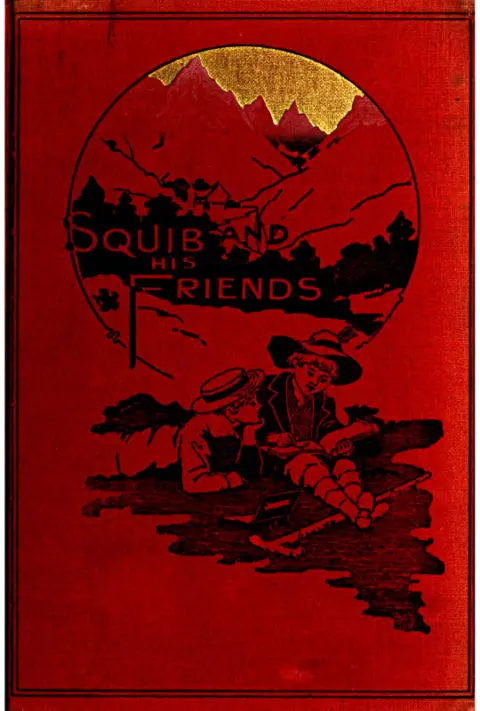
THE CLASSIC COLLECTION · 1897
"Squib and His Friends" by Evelyn Everett-Green is a children's novel written in the late 19th century. The story centers around a young boy named Squib, whose real name is Sydenham, and chronicles his adventures and experiences as he navigates the complex dynamics of his family, his love for the outdoors, and the unique bond he shares with animals, particularly his dog, Czar. As the narrative unfolds, themes of friendship, family, and the innocence of childhood are explored through Squib's eyes. At the start of the book, we are introduced to Squib, often referred to as "the odd one" in his family due to his unique position among his siblings and his solitary interests. Lacking a close sibling bond, Squib immerses himself in imaginative play and adventures outside, cultivating a strong affinity for animals. The opening chapter unfolds various anecdotes about Squib's interactions with his father, his pet dog, and the gentle conflicts he faces in establishing himself in a loving but busy household. His father's eventual kindness towards him and the growing connection they form sets the stage for future adventures as Squib learns about the world around him, leading to a story rich in character development and whimsical exploration.
Introduction adapted from the source catalogue; source summaries may be automatically generated.
Free to read · English · 71,295 words · No account needed
MAKE TIME FOR A GOOD BOOK
On by default. Untick to stop anonymous reading totals. Each page counts after 10 seconds in view. How this works.
Anonymous counting is on unless you have switched it off.
“Is it well to fly from the nest where the hand of God hath placed us?” questioned the man with gentle severity: the child hung his head and gave no answer.
Dinner being ended, the smith arose and girded on his leather apron afresh; then he turned into the forge and grasped his heavy hammer. But the child eyed him in surprise.
“It is so hot at noonday,” he said; “surely thou wilt rest awhile ere thou dost labour again?”
The smith smiled as he swung his hammer, and blew up his forge with the
great bellows.
“Nay, child,” he answered, “rest cometh at night, and sweet it is to the weary who have earned it by the labour of their hands in the appointed place; but the day is given us by the Master for work, and He looks that we fulfil our allotted tasks with the best that is in us. Look, too, at yon patient horses, waiting to be shod, and think of the loads of golden grain awaiting to be drawn homeward by them! Suppose a thunder-storm comes up to-night, and the grain is not housed because the horses be not shod, and that because the smith was sleeping the noontide hour away when he should have been at work. A fine story that for the Master’s ears!”
But the child looked about him round the forge, and said,—
“I had thought it all belonged to thee.”
“Ay, so it does,” answered the smith, “and was my father’s before me.”
“Then why canst thou not rest at thy will, since no man is thy master?”
But at that question the blacksmith turned upon him, and cried with a
loud voice,—
“Child! Though the forge be mine, and the anvil and the iron, yet my time is not mine own, for I serve a Master to whom I must give account of each day as it passes. Yet,” he added, in a gentler voice, “He is full of compassion and tender mercy, and hath pity on the weakness of His children.”
And something in the good man’s face made the child ask,—
“Dost thou find pleasure, then, in His service?”
And the blacksmith answered,—
“His smile is worth far more than ten thousand pieces of silver. Ah, my child, thou hast still much to learn, seeing that thou knowest not as yet thy Master.”
But the words fell on unwilling ears, and in his heart the child said, “I have no master;” and presently, while the smith worked, he crept away in the lengthening shadows, for he feared lest the good man might seek to make him his fellow-labourer at the anvil.
Your reading position is saved on this browser. Take it to another device with a library code. Reading pages adapt to text, rather than matching a printed edition.
Evelyn Everett-Green
Evelyn Everett-Green
Evelyn Everett-Green
Evelyn Everett-Green
BEHIND THE BOOK
This eBook is for the use of anyone anywhere in the United States and most other parts of the world at no cost and with almost no restrictions whatsoever. You may copy it, give it away or re-use it under the terms of the Project Gutenberg License included with this eBook or online at www.gutenberg.org. If you are not located in the United States, you will have to check the laws of the country where you are located before using this eBook. Read the source licence.
The original source file, including credits and licence, is retained by this library. Request an original-format copy at no charge. Please include the book title and Project Gutenberg identifier #54994.
KEEP YOUR CURIOSITY GOING
Wilfrid Scawen Blunt
Wilfrid Scawen Blunt

E. W. (Edgar Watson) Howe
Coulson Kernahan

Maurice Baring
Frances Wright