
Switch off
Oliver Optic
THE CLASSIC COLLECTION · 1884
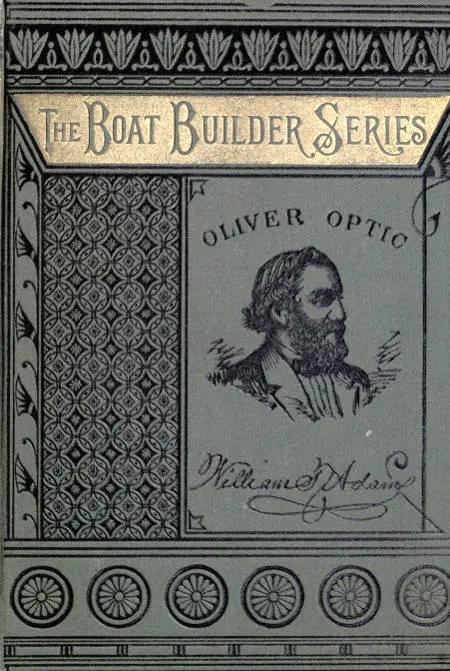
"Square and Compasses; Or, Building the House" by Oliver Optic is a novel from the late 19th century, specifically targeting a young audience. This book is part of "The Boat-Builder Series" and continues to follow the adventures of students at the Beech Hill Industrial School, introducing new characters and conflicts. The central theme appears to revolve around the juxtaposition of well-disciplined students against ill-disciplined peers, exploring the importance of moral character and practical skills among young boys. The opening of the story sets the stage for a conflict revolving around the enforcement of a school uniform, which some students resist, seeing it as an affront to their independence. The principal, Captain Gildrock, believes that the uniform will help instill a sense of discipline and responsibility. As tensions rise, the boys engage in various dialogues about the necessity and implications of this rule. The chapter hints at an impending rebellion and the establishment of rivalry with a competing school, which promises to lead to further adventures and moral lessons throughout the narrative.
Introduction adapted from the source catalogue; source summaries may be automatically generated.
Free to read · English · 62,462 words · No account needed
MAKE TIME FOR A GOOD BOOK
On by default. Untick to stop anonymous reading totals. Each page counts after 10 seconds in view. How this works.
Anonymous counting is on unless you have switched it off.
"As I am charged with injustice and unfairness, I should like to have the committee settle this question," said Captain Gildrock, who appeared to be in an unusual mood for him, for he was laughing as merrily as the stout civil engineer. "I will agree to abide by your decision, gentlemen."
"For myself and my associates whom I represent, I assent to this magnanimous proposition," replied Shoreham.
From motives of delicacy the committee objected to deciding the matter, but, at the request of the captain, they finally consented, regarding the whole business as a farce rather than a matter of serious importance. The students were rather impatient, for they wanted to know to whom the prizes had been awarded, and most of the rebels were satisfied that they had been in the wrong.
Shoreham had already stated the question, and the chairman, declaring that they understood it perfectly, declined to allow Shoreham to make another speech.
"You were shut up in your room, and could not find out the terms of the offer; that's the whole thing in a nutshell, isn't it?" said Mr. Bridges, turning to the orator of the rebels.
"The question you ask, sir, naturally and logically involves the reason why we were confined to our apartments," replied Shoreham,--and this seemed to be the place where the oration could be properly introduced.
"Dry up, Lew!" called Windham, in a whisper loud enough to be heard by all in the room, calling forth a burst of laughter.
"If we were properly and justly incarcerated"--
Mr. Bridges exploded again.
"Never mind that, Mr. Shoreham," interposed the chairman of the
committee.
"No rogue e'er felt the halter draw
With good opinion of the law,"
chuckled the civil engineer.
"We were acting on principle, sir," said Shoreham warmly.
"Exactly so!" exclaimed the jolly Mr. Bridges. "Let me tell you of a terrible outrage inflicted on one of my neighbors in a small town in another State. His name was on the voting-list, but when the day of election came, he was not allowed to vote. He was robbed of the dearest right of an American citizen. He was ruthlessly debarred from constitutionally expressing his choice for a governor of the State. Wasn't it awful?"
"I should say that it was an outrage, as you called it in the beginning. But why was he debarred from his right?" asked the orator.
"He was shut up in the house of correction," laughed the fat
committee-man.
"Oh, for some crime!" exclaimed the representative of the rebels.
Your reading position is saved on this browser. Take it to another device with a library code. Reading pages adapt to text, rather than matching a printed edition.
BEHIND THE BOOK
This eBook is for the use of anyone anywhere in the United States and most other parts of the world at no cost and with almost no restrictions whatsoever. You may copy it, give it away or re-use it under the terms of the Project Gutenberg License included with this eBook or online at www.gutenberg.org. If you are not located in the United States, you will have to check the laws of the country where you are located before using this eBook. Read the source licence.
The original source file, including credits and licence, is retained by this library. Request an original-format copy at no charge. Please include the book title and Project Gutenberg identifier #52351.
KEEP YOUR CURIOSITY GOING
Coulson Kernahan

Maurice Baring
Frances Wright
Cécile Tormay

Frederic Jesup Stimson

W. H. P. (William Henry Pope) Jarvis
