THE CLASSIC COLLECTION✦Stories from the Faerie QueeneCLASSIC FREE BOOKS
Stories from the Faerie Queene
Mary Macleod & Edmund Spenser
THE CLASSIC COLLECTION · 1909
"Spenser's Faerie Queene, Vol. 2 (of 2): Books IV-VII" by Edmund Spenser is an epic poem first published in 1596. This continuation follows knights on quests examining virtues including Friendship, Justice, and others. Written in Spenser's invented Spenserian stanza, the allegorical work interweaves multiple storylines of separated lovers, tournaments, rescues, and trials. Knights pursue their beloveds through enchanted perils while fulfilling sacred quests. The poem operates on multiple levels, praising Queen Elizabeth I while exploring moral virtues through adventure and romance in a complex tapestry of English poetry.
Introduction adapted from the source catalogue; source summaries may be automatically generated.
Free to read · English · 153,184 words · No account needed
MAKE TIME FOR A GOOD BOOK
On by default. Untick to stop anonymous reading totals. Each page counts after 10 seconds in view. How this works.
Anonymous counting is on unless you have switched it off.
Much wondred Calidore at this straunge sight, xvii Whose like before his eye had neuer seene, And standing long astonished in spright, And rapt with pleasaunce, wist not what to weene; Whether it were the traine of beauties Queene, Or Nymphes, or Faeries, or enchaunted show, With which his eyes mote haue deluded beene. Therefore resoluing, what it was, to know, Out of the wood he rose, and toward them did go.
But soone as he appeared to their vew, xviii They vanisht all away out of his sight, And cleane were gone, which way he neuer knew; All saue the shepheard, who for fell despight Of that displeasure, broke his bag-pipe quight, And made great mone for that vnhappy turne. But Calidore, though no lesse sory wight, For that mishap, yet seeing him to mourne, Drew neare, that he the truth of all by him mote learne.
And first him greeting, thus vnto him spake, xix Haile iolly shepheard, which thy ioyous dayes Here leadest in this goodly merry make, Frequented of these gentle Nymphes alwayes, Which to thee flocke, to heare thy louely layes; Tell me, what mote these dainty Damzels be, Which here with thee doe make their pleasant playes? Right happy thou, that mayst them freely see: But why when I them saw, fled they away from me?
Not I so happy[560], answerd then that swaine, xx As thou vnhappy, which them thence didst chace, Whom by no meanes thou canst recall againe, For being gone, none can them bring in place, But whom they of them selues list so to grace. Right sory I, (saide then Sir Calidore,) That my ill fortune did them hence displace. But since things passed none may now restore, Tell me, what were they all, whose lacke thee grieues so sore.
Tho gan that shepheard thus for to dilate; xxi Then wote thou shepheard, whatsoeuer thou bee, That all those Ladies, which thou sawest late, Are Venus Damzels, all within[561] her fee, But differing in honour and degree: They all are Graces, which on her depend, Besides a thousand more, which ready bee Her to adorne, when so she forth doth wend: But those three in the midst, doe chiefe on her attend.
They are the daughters of sky-ruling Ioue, xxii By him begot of faire Eurynome, The Oceans daughter, in this pleasant groue, As he this way comming from feastfull glee, Of Thetis wedding with Æacidee,[562] In sommers shade him selfe[563] here rested weary. The first of them hight mylde Euphrosyne, Next faire Aglaia, last Thalia merry: Sweete Goddesses all three which me in mirth do cherry.
Your reading position is saved on this browser. Take it to another device with a library code. Reading pages adapt to text, rather than matching a printed edition.
Mary Macleod & Edmund Spenser
Edmund Spenser
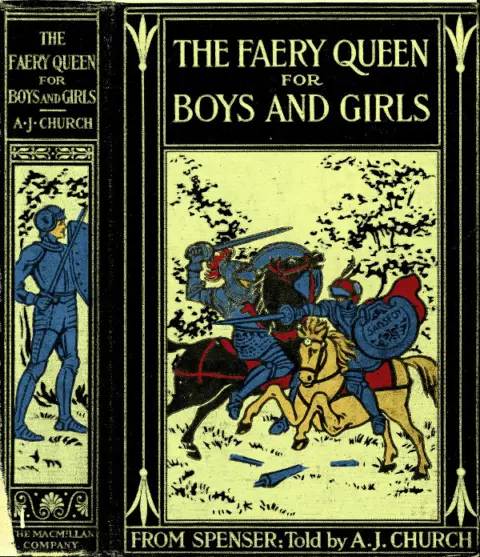
Alfred John Church & Edmund Spenser
BEHIND THE BOOK
This eBook is for the use of anyone anywhere in the United States and most other parts of the world at no cost and with almost no restrictions whatsoever. You may copy it, give it away or re-use it under the terms of the Project Gutenberg License included with this eBook or online at www.gutenberg.org. If you are not located in the United States, you will have to check the laws of the country where you are located before using this eBook. Read the source licence.
The original source file, including credits and licence, is retained by this library. Request an original-format copy at no charge. Please include the book title and Project Gutenberg identifier #72698.
KEEP YOUR CURIOSITY GOING

Maurice Baring
Francis Greenleaf Allinson & Anne C. E. (Anne Crosby Emery) Allinson

Eric Mackay
Edmund Gosse
Sophia Margaretta Hensley
Stuart Dodgson Collingwood