THE CLASSIC COLLECTION✦The Life of Mrs. Robert Louis StevensonCLASSIC FREE BOOKS
The Life of Mrs. Robert Louis Stevenson
Nellie Van de Grift Sanchez
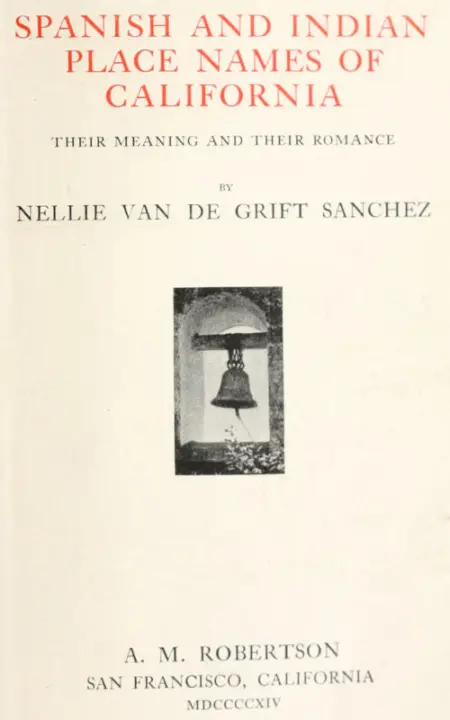
THE CLASSIC COLLECTION · 1914
"Spanish and Indian Place Names of California: Their Meaning and Their Romance" by Nellie Van de Grift Sanchez is a historical reference work written in the early 20th century. This volume explores the origins and meanings of California's Spanish and Indian place names, intertwining them with captivating historical anecdotes and cultural narratives to contextualize the legacy of early explorers and settlers. The work aims to serve both as an informative guide for tourists and a resource for educational purposes. At the start of this reference work, the author introduces the purpose and intent behind compiling the stories and meanings of California’s diverse place names. Sanchez articulates the importance of preserving this heritage, emphasizing the romantic historical backdrop that these names convey. She acknowledges the challenges in tracing the origins of many names, particularly those of Indian descent, and highlights the differences in naming conventions between Spanish explorers and local indigenous tribes. The introduction sets the stage for a deeper exploration of specific regions, beginning with San Diego, and promises a wealth of fascinating tales connected to California's geographical names.
Introduction adapted from the source catalogue; source summaries may be automatically generated.
Free to read · English · 62,377 words · No account needed
MAKE TIME FOR A GOOD BOOK
On by default. Untick to stop anonymous reading totals. Each page counts after 10 seconds in view. How this works.
Anonymous counting is on unless you have switched it off.
Prado (meadow), in Riverside County. See page 82. This place was so named on account of its resemblance to a prairie.
La Presa (dam, dike). See page 46. This place is so called from the Sweetwater irrigation dam located there.
Presidio (garrison, prison). See page 231.
Prieta (dark), a place north of San Francisco.
Los Prietos (the dark ones).
Providencia (providence).
Pueblo (town).
Los Dos Pueblos (the two towns). See page 106.
Puente (bridge), near Los Ángeles. See page 82.
Las Puentes (the bridges). See page 161.
El Puerto (the port), of San Diego.
Pulgas (fleas). See pages 82 and 224.
La Punta (the point), in San Diego County.
Punta Almejas (mussel point).
Punta Año Nuevo (point New Year). See page 157.
Punta Arenas (sandy point). See page 340.
Punta de la Concepción (point of the immaculate conception).
Punta Delgada (thin or narrow point). See page 260.
Punta Gorda (fat or thick point). See pages 108 and 260.
Punta Guijarros (pebble or boulder point).
Punta de la Laguna (point of the lagoon). See page 261.
Punta Loma (hill point), near San Diego. See page 45. It should be
Punta de la Loma.
Punta de Pinos (point of pines). Near Monterey. Page 148.
Punta de los Reyes (point of the kings). See page 232.
Punta de las Ritas (point of the rites). See page 108.
Purísima Point (point of the most pure conception). On the Santa
Bárbara Coast.
Purísima (most pure), in San Matéo County.
Point Sal (a surname). See page 108.
Point Sur (south point). See page 162.
La Quemada (the burned place), from the verb quemar (to burn). This name refers to a custom prevalent among the Indians of burning over large tracts of land for the purpose of killing the under-brush and encouraging the growth of grass, which resulted in attracting game. The diaries of the Spaniards refer frequently to this custom, and speak of finding a great deal of country burned over in this way. One writer has offered to his astonished readers the translation of La Quemada as “the over-full, having enough to eat.”
Quién Sabe (who knows), a familiar expression among the Spaniards.
Quintín. See page 235.
Quinto (a surname). Simón Tadéo Quinto was one of the members of this
pioneer family.
Raimundo (Raymond).
Ramírez (a surname), near Marysville.
Ramona (a Christian name), well known as that of the heroine of Mrs. Helen Hunt Jackson’s romance.
Ranchería, a word meaning “settlement,” but generally used by the Spaniards to mean an Indian village.
Ranchería del Baile de las Indias (village of the dance of the Indian
women). See page 100.
Ranchería del Corral (village of the yard).
Ranchería de la Espada (village of the sword). See page 102.
Your reading position is saved on this browser. Take it to another device with a library code. Reading pages adapt to text, rather than matching a printed edition.
BEHIND THE BOOK
This eBook is for the use of anyone anywhere in the United States and most other parts of the world at no cost and with almost no restrictions whatsoever. You may copy it, give it away or re-use it under the terms of the Project Gutenberg License included with this eBook or online at www.gutenberg.org. If you are not located in the United States, you will have to check the laws of the country where you are located before using this eBook. Read the source licence.
The original source file, including credits and licence, is retained by this library. Request an original-format copy at no charge. Please include the book title and Project Gutenberg identifier #59251.
KEEP YOUR CURIOSITY GOING
Cécile Tormay

Moritz Busch
John L. Ransom
Frances Wright
Cécile Tormay

Mabel Potter Daggett