THE CLASSIC COLLECTION✦Basque Legends; With an Essay on the Basque LanguageCLASSIC FREE BOOKS
Basque Legends; With an Essay on the Basque Language
Wentworth Webster
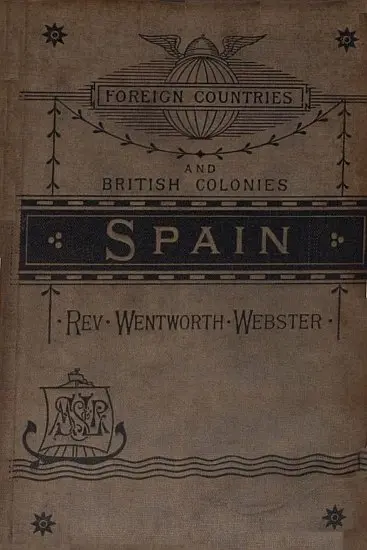
THE CLASSIC COLLECTION · 1892
"Spain" by Wentworth Webster is a geographical and cultural account written in the late 19th century. The work explores the diverse provinces of Spain, delving into its geography, climate, natural resources, and the unique attributes of its various regions. It aims to provide a comprehensive understanding of the country's physical and social landscape, highlighting the distinctions between different areas, from the northern provinces to the southern coast. At the start of the book, the author addresses the complexities involved in accurately portraying Spain due to its varied geography and the unreliable nature of official statistics. The opening portion outlines the geographical layout of Spain, discussing its boundaries, climate variations, and the significance of its mountain chains and river systems. The text emphasizes how these physical features shape not only the environment but also the cultural and political aspects of the populations living in different provinces, setting the groundwork for a thorough exploration of Spain's multifaceted identity.
Introduction adapted from the source catalogue; source summaries may be automatically generated.
Free to read · English · 54,965 words · No account needed
MAKE TIME FOR A GOOD BOOK
On by default. Untick to stop anonymous reading totals. Each page counts after 10 seconds in view. How this works.
Anonymous counting is on unless you have switched it off.
The primary education of Spain, though nominally everywhere alike, is really so very varied as to defy any average description. A few of her infant schools are equal to the best of those of other countries. Where the provincial deputations or the municipalities take an interest in education the primary schools are very fair, but in other parts the education is little more than nominal, and the schoolmaster's appointment is well-nigh a sinecure both in pay and labour; and probably at the present moment, notwithstanding the great improvements of late years, two-thirds of the people can still neither read nor write.
Church and Religion.
From the time of the OEcumenical Council of Nicea, A.D. 325, with the brief exception of the reigns of the Arian Visigoth kings, Spain has been the champion of orthodoxy in religion. From early times too the demarcation between Church and State has been less marked, or rather the influence of the former over the latter has been more constant and more powerful, than in perhaps any other European kingdom. The great councils of Toledo were scarcely more ecclesiastical than civil assemblies. The recognition of the sovereign, the order of succession, the validity of the laws, were either settled or sanctioned therein. Later, in the great struggle with the Moors, through the antagonism of exclusive beliefs, the war assumed the character of a religious crusade. The semi-monastic Spanish military orders, the preaching of the monks, the sanction and the bulls of the Popes--auxiliaries which the kings of Spain were forced to summon to their aid--gave a complexion to the conquest and to the national character quite different to what might have been the case had the contest been fought out by the sovereign, the lay warriors, and the civil power alone. Thus the triumph of the Christian over the Moor became in some sort also the triumph of the Roman over the national Spanish Church. The Mozarabic liturgy gave way to that of Rome. The peculiar institution of the inquisition, following on that of the Santa Hermandad in civil matters, developed in Spain a degree of power to which it never attained in other lands. The certainty and the secrecy of its proceedings, the mingled pomp and horror of its "autos de fe," the whispers and the shudder with which men told of the tortures of its hidden processes, deeply impressed and captivated the imagination of a people singularly greedy of, and susceptible to, strong and vivid emotions. The chivalrous respect for women, heightened by the reserve and half-seclusion which the Spanish knights had learned from the Moors, was transformed in the sphere of religion into an almost ardent passion of devotion to the Blessed Virgin. Centuries before the doctrine of the Immaculate Conception was proclaimed by Pius IX. the cry of the Spanish beggar heard at every door throughout her vast dominions was, "Ave Maria purisima, sin pecado concebida." Spain had been the champion of Christendom against the Jews and against the Moors; she had without remorse violated every compact she had sworn with the latter, and she became equally the champion of Roman Catholicism against the Reformation. Though Philip II. failed in his great armed struggle with the northern powers, and wasted and destroyed therein all the real resources of Spain, yet Spanish theologians were among the most eloquent and the most learned in the Council of Trent; and it was the Jesuits of Spain who headed the reaction of the seventeenth century, and who won back all but the Teutonic and Scandinavian races to the allegiance of Rome. This glory of Catholicism is never absent from the heart of a Spaniard. His whole literature is steeped in it; it inspires Spain's greatest painters. It is this deep but unconscious feeling that Protestanism is un-Spanish which is the real stronghold of Catholicism in Spain, and which, in spite of spoliation and political subjection, still gives the clerical party there a greater power than they possess in other countries. Yet the few Spaniards who embraced the reformed doctrines in the sixteenth century were not inferior to those of other lands in earnestness, in learning, in eloquence, or in high position, both in Church and State. There was just a moment when the court of Charles V. hovered on the verge of protest against Rome. When, as before related, the liberties of Spain fell beneath the iron rule of the Austrian sovereigns, it was the Church, by the hand of one of its greatest ornaments, Cardinal Ximenes, which became the willing instrument of despotism. In return for the servility of the court, and the presence and the sanction of the sovereign at the "autos," the inquisition lent its aid to the monarchy, and its assistance was called in to suppress the trade in horses, so senselessly forbidden, on the northern frontier. In the seventeenth century, however, the Spanish court fell under the influence of the French encyclopaedists. The Jesuits were banished in 1767. We need not detail again the various vicissitudes of the abolition and re-establishment of the inquisition, of the suppression of tithes, of the sale of Church property, the destruction of the monasteries, and the exile of the monks, the effects of which have been sufficiently indicated above.
Your reading position is saved on this browser. Take it to another device with a library code. Reading pages adapt to text, rather than matching a printed edition.
BEHIND THE BOOK
This eBook is for the use of anyone anywhere in the United States and most other parts of the world at no cost and with almost no restrictions whatsoever. You may copy it, give it away or re-use it under the terms of the Project Gutenberg License included with this eBook or online at www.gutenberg.org. If you are not located in the United States, you will have to check the laws of the country where you are located before using this eBook. Read the source licence.
The original source file, including credits and licence, is retained by this library. Request an original-format copy at no charge. Please include the book title and Project Gutenberg identifier #34875.
KEEP YOUR CURIOSITY GOING
Wilfrid Scawen Blunt
Wilfrid Scawen Blunt
E. W. (Edgar Watson) Howe
Cécile Tormay

Moritz Busch
John L. Ransom