THE CLASSIC COLLECTION✦Basque Legends; With an Essay on the Basque LanguageCLASSIC FREE BOOKS
Basque Legends; With an Essay on the Basque Language
Wentworth Webster
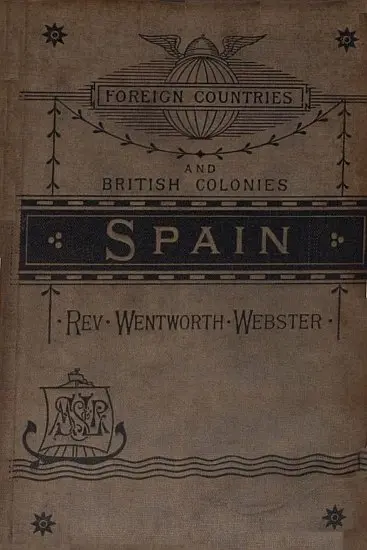
THE CLASSIC COLLECTION · 1892
"Spain" by Wentworth Webster is a geographical and cultural account written in the late 19th century. The work explores the diverse provinces of Spain, delving into its geography, climate, natural resources, and the unique attributes of its various regions. It aims to provide a comprehensive understanding of the country's physical and social landscape, highlighting the distinctions between different areas, from the northern provinces to the southern coast. At the start of the book, the author addresses the complexities involved in accurately portraying Spain due to its varied geography and the unreliable nature of official statistics. The opening portion outlines the geographical layout of Spain, discussing its boundaries, climate variations, and the significance of its mountain chains and river systems. The text emphasizes how these physical features shape not only the environment but also the cultural and political aspects of the populations living in different provinces, setting the groundwork for a thorough exploration of Spain's multifaceted identity.
Introduction adapted from the source catalogue; source summaries may be automatically generated.
Free to read · English · 54,965 words · No account needed
MAKE TIME FOR A GOOD BOOK
On by default. Untick to stop anonymous reading totals. Each page counts after 10 seconds in view. How this works.
Anonymous counting is on unless you have switched it off.
Intellectually, in science, and especially in literature, Spain is advancing rapidly. The historical treasures long buried in the archives of Simancas, and those of the Indies at Seville, are now thrown open to the world, and are eagerly consulted by native historians. Her literary and scientific men, though comparatively few in number, are full of zeal and intelligence. There needs only a larger and more appreciative audience to encourage them in their labours in order to bring the literature of Spain to a level with that of any European country of equal population.
Per square
Provinces. Inhabitants. Kilometer.
Alava 93,191 30
Albacete 219,122 14
Alicante 408,154 75
Almeria 349,854 41
Avila 180,457 23
Badajoz 432,809 19
Barcelona 835,306 108
Burgos 332,461 23
Caceres 306,594 15
Cadiz 430,158 59
Castellon 283,961 45
Ciudad-Real 260,641 13
Cordova 385,582 28
Corunna 595,585 75
Cuenca 237,497 14
Gerona 299,002 51
Granada 477,719 37
Guadalajara 201,288 16
Guipuzcoa 167,207 88
Huelva 210,641 20
Huesca 252,165 17
Jaen 422,972 32
Leon 350,210 22
Lerida 285,297 23
Logrono 174,425 34
Lugo 410,387 42
Madrid 593,775 77
Malaga 500,231 68
Murcia 451,611 39
Navarre 304,184 29
Orense 388,835 55
Oviedo 576,352 54
Palencia 180,785 22
Pontevedra 451,946 100
Salamanca 285,500 23
Santander 235,299 44
Saragossa 400,266 23
Segovia 149,961 21
Seville 505,291 36
Soria 153,654 15
Tarragona 330,105 52
Teruel 242,296 17
Toledo 334,744 23
Valencia 679,030 60
Valladolid 247,453 31
Vizcaya 189,954 86
Zamora 250,004 23
---------- --
16,053,961 32
Balearic Isles 289,035 60
Canaries 280,388 37
---------- --
16,623,384 33
---------- --
In area of surface Spain ranks the 5th of European States. In number of population 7th " In density of population to the square mile 14th " In extent of colonies 5th " Rates of women to men, 1044 to 1000. The infantile mortality is said to be 24-1/2 per cent. in first year. Expectation of life at 2 years old is said to be 49 years; the average 41.
Visigoth kings rule from 414 to 711 Entry of Moors, battle of Guadelete, death of last Visigothic king 31 July, 711 Reconquest begun by Pelayo at Covadonga in the Asturias 719 Toledo captured by Alphonso VI. 1085 Battle of Las Navas de Tolosa 1212 Final union of Leon and Castile 1230 Alphonso X. (Law Codes: The Fuero Real and Las Siete Partidas) 1252 Union of Aragon with Castile under Ferdinand and Isabella 1474 Inquisition established (first Auto de Fe, 1488) 1484 Conquest of Granada 1492 Discovery of America 1492 Expulsion of Moors from Castile, 1501; from Granada 1502 Conquest of Naples and Sicily 1504 Austrian Dynasty:--Philip I. and Joanna 1504 Charles I. (Emperor of Germany, Charles V.) 1516 War of Comunidades of Castile, Battle of Villalar 1521 Battle of Pavia, Francis I. prisoner 1525 Capture of Tunis 1535 Abdication of Charles I. 1556 Philip II.:--Greatest extension of Spanish monarchy, comprising Spain, Portugal, Naples, Sicily, Sardinia, Milan, Roussillon, Holland, Belgium, Luxembourg, Franche-Comte, Tunis, Oran, the Canaries, Fernando Po, St. Helena, The Americas, Philippine Isles, &c. Insurrection of Low Countries 1566 First rebellion and expulsion of Moriscos 1568 Battle of Lepanto 1571 League of Provinces and independence of Holland, 25 Jan., 1579 Conquest of Portugal (1580-1640) 1580 Defeat of Armada 1588 Death of Philip II. 1598 Final expulsion of Moriscos 1609 Insurrection of Catalonia 1640 Loss of Portugal 1640 Battle of Rocroy 1643 Peace of the Pyrenees and marriage of Louis XIV. 1659 Death of Charles II., last of Austrian dynasty 29 Oct., 1700
Your reading position is saved on this browser. Take it to another device with a library code. Reading pages adapt to text, rather than matching a printed edition.
BEHIND THE BOOK
This eBook is for the use of anyone anywhere in the United States and most other parts of the world at no cost and with almost no restrictions whatsoever. You may copy it, give it away or re-use it under the terms of the Project Gutenberg License included with this eBook or online at www.gutenberg.org. If you are not located in the United States, you will have to check the laws of the country where you are located before using this eBook. Read the source licence.
The original source file, including credits and licence, is retained by this library. Request an original-format copy at no charge. Please include the book title and Project Gutenberg identifier #34875.
KEEP YOUR CURIOSITY GOING
Wilfrid Scawen Blunt
Wilfrid Scawen Blunt
E. W. (Edgar Watson) Howe
Cécile Tormay

Moritz Busch
John L. Ransom