READ · DISCOVER · ENJOYClassic literature · Always free
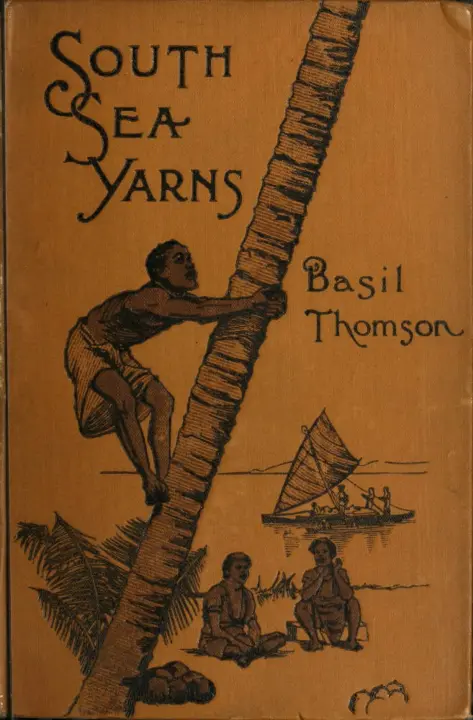
South Sea Yarns — digital edition cover

THE CLASSIC COLLECTION · 1894

South Sea Yarns

"South Sea Yarns" by Basil Thomson is a collection of narratives illustrated with vivid descriptions, likely written in the late 19th century. The book explores life in the South Pacific Islands, focusing on the customs, court systems, and interactions between local inhabitants and foreign influences. Through a blend of storytelling and observation, Thomson sheds light on the complexities of cultural exchanges and the impact of colonialism. The opening of "South Sea Yarns" introduces a gathering in the traditional "bure" (a Fijian house) where elders recount tales of the past, reflecting on their experiences with foreigners and the changes brought about by outside influences. As the characters discuss recent encounters with Europeans, their skepticism and admiration surface, showcasing the tension between tradition and modernity. The scene is rich with sensory details, from the smell of the cooking meats to the murmurs of the assembled crowd, establishing an intimate setting where story and culture intertwine, setting the stage for further exploration of life in Fiji.

Introduction adapted from the source catalogue; source summaries may be automatically generated.

Start reading ↓

Free to read · English · 71,024 words · No account needed

MAKE TIME FOR A GOOD BOOK

South Sea Yarns

On by default. Untick to stop anonymous reading totals. Each page counts after 10 seconds in view. How this works.

Anonymous counting is on unless you have switched it off.

South Sea Yarns

All this time we were sailing northwards, the wind being south-east but light. And the air grew warm, and the spirit-light flashed in our wake at night, and the flying-fish, the birds of Nukuloa, took wing under our bows, and my heart grew light in the warm air, for I knew we were approaching my own land where only it is fit for man to live. We had left behind us the bitter winds that chill the marrow, and the sterile palmless shores, where men hurry ceaselessly to and fro, never resting but toiling ever, and the heart is filled with darkness and disgust of life and a great longing for rest. But though my heart was glad because I should soon be in that sweet land and see the green yam-vines, graceful as fair women in the dance, the captain became sorrowful, for the woman whom he tended was now sick, and for many days we had not seen her face, though we knew by his looks day by day that she grew worse.

And on the day when the sea-birds first circled the ship, the wind being still fair but falling light, the mate ordered the sailor they called Bill--him with the red beard--to go aloft and shake out the topsail, which was furled; but he not moving quickly, but with murmurs and unwillingly, the mate spoke angrily to him, saying, “Goddam!” many times, and other evil words. Then the sailor turned back and struck the mate, calling upon the others to come and help him; for he was a sort of leader among them, through his quarrelsome nature and unwillingness to render due obedience to his chiefs. But the others stood as if uncertain, wishing to slay the mate, and yet afraid. And as he continued calling upon them, two of the crew joined him, and drove the mate against the cook-house, where he stood striking at them, for he was very strong. Then Bill took the cook’s axe that stood near and lifted it to strike, and I ran to help the mate, whom I loved. But before I could reach him another passed me very swiftly and flung himself upon Bill, as a falcon seizes a sese, and strove with him a moment till both fell heavily upon the deck and rolled, so that Bill was underneath straining for breath, as the other had him by the throat. Then I wondered greatly, for I saw that he who had done this was the captain, whose body was thin and light like the body of a cat, and Bill was like a bulumokau for bulk. And when the two others saw what had befallen Bill they retreated towards the forecastle; but the mate followed them, striking them with his fists so that they went down the hatchway as a man who dives for turtle, their feet following them. But when we turned back the captain was gone to his cabin, and Bill was still lying on the deck gasping for breath. And that night when it was my watch the mate came and sat with me near the wheel, for the night was clear and calm, and I was steering. He did not speak contemptuously of the captain, but wonderingly, as if he had suddenly become another whom he did not know. And while we still talked a sound came through the cabin skylight near us as of a woman’s voice, and of a man weeping. And then the weeping of the man drowned the voice of the woman, which was weak, and we both knew it for the captain’s voice, and the mate got up and went forward saying no word. But my heart was filled with a great contempt for the captain, since I hold it great shame for a man to weep. And a little later the wind died away, and the sails struck the mast with a noise like musketry, and then filled and struck again with the breath of the dying wind, and then hung loose from the yards as dead vines hang from the limbs of the damanu-tree; for even the swell was calm, so that both the air and the restless sea were dead, and the ship lay under the stars as still as a canoe left on the sands by the ebbing tide. And when the bell had struck one, and the dawn was near, I lay upon the hatchway wishing for sleep. And suddenly there was a terrible cry, so that we all started up asking ourselves whence it came and what it meant, for it was not the voice of a man but of some fierce animal. Then it came again, and we knew that it came from the cabin, and was the captain’s voice, but changed as the voice of a man whose senses have left him. And when it came a third time the mate said that the woman must be dead, for the captain’s voice was changed by grief, and he was calling the name of the woman, who would never answer him more. But after the third time the cry did not come again, but only a low moaning, continuously, as I have heard a man make after the battle when he has been clubbed, but his senses have returned to him, and he knows that they who are taking him are heating the oven for his body. And when the sun rose no wind came to fill the sails and cool the air. And beside the ship lay her image, complete to the last rope, as clear as in those glasses the traders sell to the women. And as the sun rose higher the sky turned to iron, and the sea threw back the brightness so that it burned the eyes; and the pitch grew wet in the seams and scorched the bare feet, gluing them to the deck. And we lay under the shadow of the masts and sails panting for breath. Only the sailmaker worked, making a hammock for the body of the woman. And all the while the moaning in the cabin never ceased, even for a moment. And when the sun was overhead, all things being prepared, the mate went to the cabin with the sailmaker. And we heard blows upon the cabin-door, and the captain was loudly called; but however loudly they knocked or called, when they ceased they still heard the moaning, mingled with broken words. So the mate came to us again, saying that he would wait until eight bells, and then force the door, for the weather was hot and the matter could not be delayed. But when eight bells were struck, the moaning still continuing, the mate called me, and I took the hammock and followed him down the companion. And the mate called loudly and struck upon the door. Then we listened and heard the voice as of one who sleeps and dreams evil dreams. Then stepping back, the mate ran upon the door, striking it heavily with his shoulder, and the door burst in, and the mate fell forward with the door into the cabin. And I, looking in, saw a foolish sight, for the captain was sitting on the floor of the cabin and had the body of the woman clasped in his arms as a mother holds her suckling child. And the woman was an ill sight, for she was axe-faced, like all the white women, and the flesh had left her face in her sickness, and being dead the eyes stared upward and the jaw had fallen. Yet for all this the captain, not seeing us, kissed the dead face as is the white man’s fashion with the lips, and moaned unceasingly. Then the mate touched him and spoke, but he seemed not to know him, and his eyes became fierce, and he cried to us to leave him. Seeing that we could do nothing without using force, we left him for that night. But when the morning came and there was still no wind, the mate again bade me follow him, and called to him also the carpenter and the boatswain, and we four entered the cabin and found him sitting as before, only quieter, but the woman’s face was much changed. And the mate spoke brave words to the captain, bidding him have courage and allow the woman’s body to be buried. And when he understood why we had come, and saw the hammock, he became like a wild sow who is wounded with a spear and turns to protect her young ones. Even so he turned to defend the body of the woman. But the mate seized him, and, with the help of the carpenter, held him fast, while we dragged the body from him. But so changed was it that it would not go into the hammock. So we carried it on deck out of his sight, while he struggled with the others, and the sailmaker ripped the hammock and sewed it up in haste, enclosing a shot at the feet. And when all was ready we carried it amidships and laid it on a grating, with a flag over it, and the mate nailed up the captain’s door lest he should do some fearful thing. Then the mate said some sacred words,--not many, for he could remember only a few,--and the men, being impatient lest ill-luck should befall the ship, threw up the grating and the body splashed into the sea, breaking the image of the ship into a thousand pieces. But scarcely had it sunk when it sprang up again as if alive, and most of the sailors fled in fear thinking it to be alive. But the mate, knowing the cause, cried that the shot was not heavy enough seeing that the body was much swollen. He shouted to us to pierce the hammock quickly to make the body sink. So a boat was lowered, and as no other would do it, I was sent with a sharp boat-hook to pierce the hammock. Now the body had drifted a few fathoms from the ship, and still danced up and down upright and immersed from the waist downwards. And as the boat drew near, and I stood up in the bows, I thought I saw the axe-face grinning at me through the canvas, and drawing away from me, so that I almost feared to strike lest it still lived. Then one of the sailors in the boat cried, “It is alive and will drown us!” and I held my hand in terror lest I should strike a live woman. But the mate cried from the ship, “Strike!” and I turned and saw that the ship was turning so that we were nearly opposite the cabin window, and the mate and all the sailors were beckoning to me to strike quickly. Then courage came to me, and standing up in the boat I struck at the woman with the boat-hook as a man strikes at his enemy with a spear, but as I struck, the woman only danced up and down the more, rocking to and fro, so that I could not strike hard to pierce the canvas. Then one of the men in the boat laughed to see the woman dance up and down so, and I laughed too, so that my arm became weak. But the mate cried to me again, and I balanced myself as a harpooner does before he strikes the whale, and as I balanced the boat-hook I turned and saw that the ship had swung so that we were opposite the cabin windows. Then with all my force I threw the boat-hook into the soft body and drew it out again....

Your reading position is saved on this browser. Take it to another device with a library code. Reading pages adapt to text, rather than matching a printed edition.

More from this author

BEHIND THE WORDS

About Basil Thomson

Basil Thomson (1861–1939). Explore Queer people, South Sea Yarns, Savage Island: An Account of a Sojourn in Niué and Tonga and other works in this collection. These books span mystery & detective, classic fiction, travel & exploration.

Explore this author’s books →

THE READERS’ VERDICT

How did this story stay with you?

Not rated yet
Your rating for South Sea Yarns

Be the first to share your verdict.

One rating per browser, which you can change or remove. A necessary browser identifier remembers your vote. How ratings work

A GOOD STORY DESERVES COMPANY

Pass this book along.

A great read is even better when it’s shared.

SEND A LITTLE INSPIRATION

Share this book

BEHIND THE BOOK

Edition & source details.

Title
South Sea Yarns
Author
Basil Thomson
First publication (Open Library catalogue match)
1894
Digital edition publisher
Project Gutenberg
Gutenberg release date
2021-09-01
Language
English
Source edition imprint
$aUnited Kingdom :$bWilliam Blackwood and Sons,$c1894.
Source identifier
Project Gutenberg #66195
Contributors
No additional named contributors in source metadata

Public-domain source & licence

This eBook is for the use of anyone anywhere in the United States and most other parts of the world at no cost and with almost no restrictions whatsoever. You may copy it, give it away or re-use it under the terms of the Project Gutenberg License included with this eBook or online at www.gutenberg.org. If you are not located in the United States, you will have to check the laws of the country where you are located before using this eBook. Read the source licence.

Full source licence and obtaining an original copy

The original source file, including credits and licence, is retained by this library. Request an original-format copy at no charge. Please include the book title and Project Gutenberg identifier #66195.

the full Project Gutenberg License must appear
prominently whenever any copy of a Project Gutenberg work (any work
on which the phrase “Project Gutenberg” appears, or with which the
phrase “Project Gutenberg” is associated) is accessed, displayed,
performed, viewed, copied or distributed:

This eBook is for the use of anyone anywhere in the United States and most
other parts of the world at no cost and with almost no restrictions
whatsoever. You may copy it, give it away or re-use it under the terms
of the Project Gutenberg™ License included with this eBook or online
at www.gutenberg.org. If you
are not located in the United States, you will have to check the laws
of the country where you are located before using this eBook.

1.E.2. If an individual Project Gutenberg electronic work is
derived from texts not protected by U.S. copyright law (does not
contain a notice indicating that it is posted with permission of the
copyright holder), the work can be copied and distributed to anyone in
the United States without paying any fees or charges. If you are
redistributing or providing access to a work with the phrase “Project
Gutenberg” associated with or appearing on the work, you must comply
either with the requirements of paragraphs 1.E.1 through 1.E.7 or
obtain permission for the use of the work and the Project Gutenberg
trademark as set forth in paragraphs 1.E.8 or 1.E.9.

1.E.3. If an individual Project Gutenberg electronic work is posted
with the permission of the copyright holder, your use and distribution
must comply with both paragraphs 1.E.1 through 1.E.7 and any
additional terms imposed by the copyright holder. Additional terms
will be linked to the Project Gutenberg License for all works
posted with the permission of the copyright holder found at the
beginning of this work.

1.E.4. Do not unlink or detach or remove the full Project Gutenberg
License terms from this work, or any files containing a part of this
work or any other work associated with Project Gutenberg.

1.E.5. Do not copy, display, perform, distribute or redistribute this
electronic work, or any part of this electronic work, without
prominently displaying the sentence set forth in paragraph 1.E.1 with
active links or immediate access to the full terms of the Project
Gutenberg License.

1.E.6. You may convert to and distribute this work in any binary,
compressed, marked up, nonproprietary or proprietary form, including
any word processing or hypertext form. However, if you provide access
to or distribute copies of a Project Gutenberg work in a format
other than “Plain Vanilla ASCII” or other format used in the official
version posted on the official Project Gutenberg website
(www.gutenberg.org), you must, at no additional cost, fee or expense
to the user, provide a copy, a means of exporting a copy, or a means
of obtaining a copy upon request, of the work in its original “Plain
Vanilla ASCII” or other form. Any alternate format must include the
full Project Gutenberg License as specified in paragraph 1.E.1.

1.E.7. Do not charge a fee for access to, viewing, displaying,
performing, copying or distributing any Project Gutenberg works
unless you comply with paragraph 1.E.8 or 1.E.9.

1.E.8. You may charge a reasonable fee for copies of or providing
access to or distributing Project Gutenberg electronic works
provided that:

• You pay a royalty fee of 20% of the gross profits you derive from
the use of Project Gutenberg works calculated using the method
you already use to calculate your applicable taxes. The fee is owed
to the owner of the Project Gutenberg trademark, but he has
agreed to donate royalties under this paragraph to the Project
Gutenberg Literary Archive Foundation. Royalty payments must be paid
within 60 days following each date on which you prepare (or are
legally required to prepare) your periodic tax returns. Royalty
payments should be clearly marked as such and sent to the Project
Gutenberg Literary Archive Foundation at the address specified in
Section 4, “Information about donations to the Project Gutenberg
Literary Archive Foundation.”

• You provide a full refund of any money paid by a user who notifies
you in writing (or by e-mail) within 30 days of receipt that s/he
does not agree to the terms of the full Project Gutenberg™
License. You must require such a user to return or destroy all
copies of the works possessed in a physical medium and discontinue
all use of and all access to other copies of Project Gutenberg™
works.

• You provide, in accordance with paragraph 1.F.3, a full refund of
any money paid for a work or a replacement copy, if a defect in the
electronic work is discovered and reported to you within 90 days of
receipt of the work.

• You comply with all other terms of this agreement for free
distribution of Project Gutenberg™ works.


1.E.9. If you wish to charge a fee or distribute a Project
Gutenberg™ electronic work or group of works on different terms than
are set forth in this agreement, you must obtain permission in writing
from the Project Gutenberg Literary Archive Foundation, the manager of
the Project Gutenberg™ trademark. Contact the Foundation as set
forth in Section 3 below.

1.F.

1.F.1. Project Gutenberg volunteers and employees expend considerable
effort to identify, do copyright research on, transcribe and proofread
works not protected by U.S. copyright law in creating the Project
Gutenberg™ collection. Despite these efforts, Project Gutenberg™
electronic works, and the medium on which they may be stored, may
contain “Defects,” such as, but not limited to, incomplete, inaccurate
or corrupt data, transcription errors, a copyright or other
intellectual property infringement, a defective or damaged disk or
other medium, a computer virus, or computer codes that damage or
cannot be read by your equipment.

1.F.2. LIMITED WARRANTY, DISCLAIMER OF DAMAGES - Except for the “Right
of Replacement or Refund” described in paragraph 1.F.3, the Project
Gutenberg Literary Archive Foundation, the owner of the Project
Gutenberg™ trademark, and any other party distributing a Project
Gutenberg™ electronic work under this agreement, disclaim all
liability to you for damages, costs and expenses, including legal
fees. YOU AGREE THAT YOU HAVE NO REMEDIES FOR NEGLIGENCE, STRICT
LIABILITY, BREACH OF WARRANTY OR BREACH OF CONTRACT EXCEPT THOSE
PROVIDED IN PARAGRAPH 1.F.3. YOU AGREE THAT THE FOUNDATION, THE
TRADEMARK OWNER, AND ANY DISTRIBUTOR UNDER THIS AGREEMENT WILL NOT BE
LIABLE TO YOU FOR ACTUAL, DIRECT, INDIRECT, CONSEQUENTIAL, PUNITIVE OR
INCIDENTAL DAMAGES EVEN IF YOU GIVE NOTICE OF THE POSSIBILITY OF SUCH
DAMAGE.

1.F.3. LIMITED RIGHT OF REPLACEMENT OR REFUND - If you discover a
defect in this electronic work within 90 days of receiving it, you can
receive a refund of the money (if any) you paid for it by sending a
written explanation to the person you received the work from. If you
received the work on a physical medium, you must return the medium
with your written explanation. The person or entity that provided you
with the defective work may elect to provide a replacement copy in
lieu of a refund. If you received the work electronically, the person
or entity providing it to you may choose to give you a second
opportunity to receive the work electronically in lieu of a refund. If
the second copy is also defective, you may demand a refund in writing
without further opportunities to fix the problem.

1.F.4. Except for the limited right of replacement or refund set forth
in paragraph 1.F.3, this work is provided to you ‘AS-IS’, WITH NO
OTHER WARRANTIES OF ANY KIND, EXPRESS OR IMPLIED, INCLUDING BUT NOT
LIMITED TO WARRANTIES OF MERCHANTABILITY OR FITNESS FOR ANY PURPOSE.

1.F.5. Some states do not allow disclaimers of certain implied
warranties or the exclusion or limitation of certain types of
damages. If any disclaimer or limitation set forth in this agreement
violates the law of the state applicable to this agreement, the
agreement shall be interpreted to make the maximum disclaimer or
limitation permitted by the applicable state law. The invalidity or
unenforceability of any provision of this agreement shall not void the
remaining provisions.

1.F.6. INDEMNITY - You agree to indemnify and hold the Foundation, the
trademark owner, any agent or employee of the Foundation, anyone
providing copies of Project Gutenberg™ electronic works in
accordance with this agreement, and any volunteers associated with the
production, promotion and distribution of Project Gutenberg™
electronic works, harmless from all liability, costs and expenses,
including legal fees, that arise directly or indirectly from any of
the following which you do or cause to occur: (a) distribution of this
or any Project Gutenberg work, (b) alteration, modification, or
additions or deletions to any Project Gutenberg work, and (c) any
Defect you cause.

Section 2. Information about the Mission of Project Gutenberg

Project Gutenberg is synonymous with the free distribution of
electronic works in formats readable by the widest variety of
computers including obsolete, old, middle-aged and new computers. It
exists because of the efforts of hundreds of volunteers and donations
from people in all walks of life.

Volunteers and financial support to provide volunteers with the
assistance they need are critical to reaching Project Gutenberg’s
goals and ensuring that the Project Gutenberg collection will
remain freely available for generations to come. In 2001, the Project
Gutenberg Literary Archive Foundation was created to provide a secure
and permanent future for Project Gutenberg and future
generations. To learn more about the Project Gutenberg Literary
Archive Foundation and how your efforts and donations can help, see
Sections 3 and 4 and the Foundation information page at www.gutenberg.org.

Section 3. Information about the Project Gutenberg Literary Archive Foundation

The Project Gutenberg Literary Archive Foundation is a non-profit
501(c)(3) educational corporation organized under the laws of the
state of Mississippi and granted tax exempt status by the Internal
Revenue Service. The Foundation’s EIN or federal tax identification
number is 64-6221541. Contributions to the Project Gutenberg Literary
Archive Foundation are tax deductible to the full extent permitted by
U.S. federal laws and your state’s laws.

The Foundation’s business office is located at 41 Watchung Plaza #516,
Montclair NJ 07042, USA, +1 (862) 621-9288. Email contact links and up
to date contact information can be found at the Foundation’s website
and official page at www.gutenberg.org/contact

Section 4. Information about Donations to the Project Gutenberg
Literary Archive Foundation

Project Gutenberg™ depends upon and cannot survive without widespread
public support and donations to carry out its mission of
increasing the number of public domain and licensed works that can be
freely distributed in machine-readable form accessible by the widest
array of equipment including outdated equipment. Many small donations
($1 to $5,000) are particularly important to maintaining tax exempt
status with the IRS.

The Foundation is committed to complying with the laws regulating
charities and charitable donations in all 50 states of the United
States. Compliance requirements are not uniform and it takes a
considerable effort, much paperwork and many fees to meet and keep up
with these requirements. We do not solicit donations in locations
where we have not received written confirmation of compliance. To SEND
DONATIONS or determine the status of compliance for any particular state
visit www.gutenberg.org/donate.

While we cannot and do not solicit contributions from states where we
have not met the solicitation requirements, we know of no prohibition
against accepting unsolicited donations from donors in such states who
approach us with offers to donate.

International donations are gratefully accepted, but we cannot make
any statements concerning tax treatment of donations received from
outside the United States. U.S. laws alone swamp our small staff.

Please check the Project Gutenberg web pages for current donation
methods and addresses. Donations are accepted in a number of other
ways including checks, online payments and credit card donations. To
donate, please visit: www.gutenberg.org/donate.

Section 5. General Information About Project Gutenberg electronic works

Professor Michael S. Hart was the originator of the Project
Gutenberg concept of a library of electronic works that could be
freely shared with anyone. For forty years, he produced and
distributed Project Gutenberg eBooks with only a loose network of
volunteer support.

Project Gutenberg eBooks are often created from several printed
editions, all of which are confirmed as not protected by copyright in
the U.S. unless a copyright notice is included. Thus, we do not
necessarily keep eBooks in compliance with any particular paper
edition.

Most people start at our website which has the main PG search
facility: www.gutenberg.org.

This website includes information about Project Gutenberg,
including how to make donations to the Project Gutenberg Literary
Archive Foundation, how to help produce our new eBooks, and how to
subscribe to our email newsletter to hear about new eBooks.


KEEP YOUR CURIOSITY GOING

Your next chapter awaits.