THE CLASSIC COLLECTION✦Queer peopleCLASSIC FREE BOOKS
Queer people
Basil Thomson
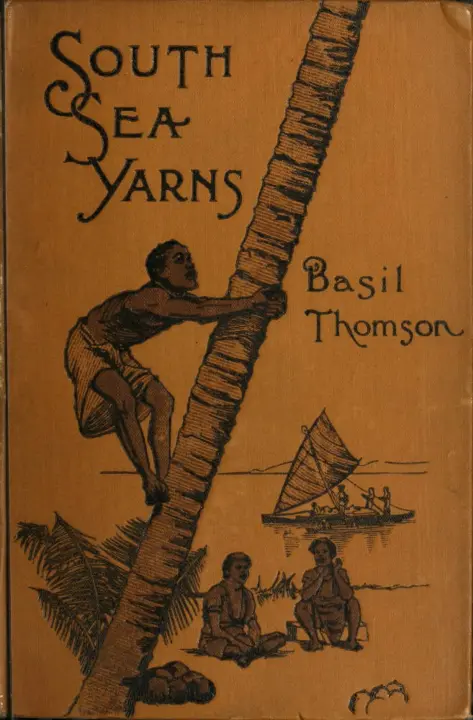
THE CLASSIC COLLECTION · 1894
"South Sea Yarns" by Basil Thomson is a collection of narratives illustrated with vivid descriptions, likely written in the late 19th century. The book explores life in the South Pacific Islands, focusing on the customs, court systems, and interactions between local inhabitants and foreign influences. Through a blend of storytelling and observation, Thomson sheds light on the complexities of cultural exchanges and the impact of colonialism. The opening of "South Sea Yarns" introduces a gathering in the traditional "bure" (a Fijian house) where elders recount tales of the past, reflecting on their experiences with foreigners and the changes brought about by outside influences. As the characters discuss recent encounters with Europeans, their skepticism and admiration surface, showcasing the tension between tradition and modernity. The scene is rich with sensory details, from the smell of the cooking meats to the murmurs of the assembled crowd, establishing an intimate setting where story and culture intertwine, setting the stage for further exploration of life in Fiji.
Introduction adapted from the source catalogue; source summaries may be automatically generated.
Free to read · English · 71,024 words · No account needed
MAKE TIME FOR A GOOD BOOK
On by default. Untick to stop anonymous reading totals. Each page counts after 10 seconds in view. How this works.
Anonymous counting is on unless you have switched it off.
“Nay, Setariki; even though they darken the truth until none shall know it from the false, yet cannot I escape, for I have told the bald-headed magistrate that I slew Lusiana.”
“The foreigners I have told you of, whose business it is to twist the truth--loya they are called--will come to you in the prison, and teach you how to lie before the court, and will even lie themselves on your behalf if you will first give them money. The Indians do this every day, feeding these loya with money, and they in return save the Indians from the law. Therefore send to your relations to gather money together for the loya. Send to Vita, who has the rent of your land where the store is; tell him not to spend that money, but to sell copra to add to it. Now tell me the manner of the accusation.”
“What is there to tell? I am Leone of Notho, of the fishermen clan. I did in truth slay the woman Lusiana my wife. It fell thus. I gave the marriage gifts, and my house was built as the law requires; then I took her and we were married. This was ten Sabbaths ago. She was of good report, and none knew aught to her dishonour, so that I feared no other man when I took her to be my wife. She was a woman of a mild spirit and obedient, and I rejoiced greatly in her. Then, one night as we lay upon the one mat under the screen, I, being nearly asleep, heard a tapping upon the bread-fruit tree that grew near the door--such as a sese makes with its beak upon a branch when it eats grasshoppers, only louder; and as I lay wondering what it might be, the sound came again, and from the mat where Lusiana lay there was the sound of tapping as if in answer, but very softly; and I, feigning sleep, breathed heavily, but turned my eyes towards her. Now a lamp was burning in the house, but it was turned low, for the kerosene was nearly dry, and I had no shillings. She seemed to be asleep, but when the tapping sounded again I saw the screen shake, for she had her left arm extended beneath it, and was tapping on the mat with the ends of her fingers. Then I lay very still to see what would happen, and presently she rose softly and crawled out of the screen to the fireplace as if to light her suluka from the embers. After a little she went softly to the door and out; and I, fearing some evil, rose and went swiftly out by another door, taking my clearing-knife from the leaves as I passed. The moon shone brightly. And as I looked from the corner of the house I saw Lusiana, my wife, standing in the shadow of the bread-fruit with a man, who spoke earnestly to her as if to draw her away. Then my blood flowed down in my body, and I came upon them suddenly, and the man fled, but I knew him in the moonlight for Airsai the village constable. But the woman stood and looked at the ground. And I said, ‘Who is that man? Is this your habit when I am lying asleep?’ But she looked always at the ground, and would not answer. Then my anger increased, and I said, ‘Answer me, answer, you light woman!’ But she still was silent. Then I took her by the hand to lead her to the house--I swear to you that I only meant to lead her to the house,--but she resisted me, and tried to draw away her hand from mine. Then I let her go, and great rage entered into me. ‘Will you neither speak nor come with me?’ I shouted. But the woman stood with her back to me, still looking at the ground. And a great strength came upon me, and the knife in my hand became lighter than a reed, and I swung it once in the air, making it hiss, and crying, ‘Speak, woman!’ Then I struck--and her head being bowed, I struck the neck at the back where it looked red in the moonlight that shone between the bread-fruit leaves. The knife paused not, but shore through all, for it was a mighty blow; and the head rolled to the foot of the tree, turning the sand black, and the body sank down where it stood, and struck my knees, spurting blood. Thus my sulu and my legs and feet were all wet. Then I cried for the others to come and see what I had done, and they all came running: first the women, chattering like parrots at sunset, then the men and children, and last of all the village policeman, Airsai. And they took the knife from me, and one brought a clean sulu and put it on me, taking mine to show to the courts; and they went with me to the river to wash the blood from my legs. But when they would ask me questions, I said, ‘Peace! I slew Lusiana. Bind me.’ So they bound my hands with sinnet, and brought me hither, not resisting, for the woman deserved to die.”
Your reading position is saved on this browser. Take it to another device with a library code. Reading pages adapt to text, rather than matching a printed edition.
Basil Thomson

Basil Thomson
Basil Thomson
BEHIND THE BOOK
This eBook is for the use of anyone anywhere in the United States and most other parts of the world at no cost and with almost no restrictions whatsoever. You may copy it, give it away or re-use it under the terms of the Project Gutenberg License included with this eBook or online at www.gutenberg.org. If you are not located in the United States, you will have to check the laws of the country where you are located before using this eBook. Read the source licence.
The original source file, including credits and licence, is retained by this library. Request an original-format copy at no charge. Please include the book title and Project Gutenberg identifier #66195.
KEEP YOUR CURIOSITY GOING
Wilfrid Scawen Blunt
Wilfrid Scawen Blunt

E. W. (Edgar Watson) Howe
Coulson Kernahan

Maurice Baring
Frances Wright