THE CLASSIC COLLECTION✦The art of fictionCLASSIC FREE BOOKS
The art of fiction
Walter Besant
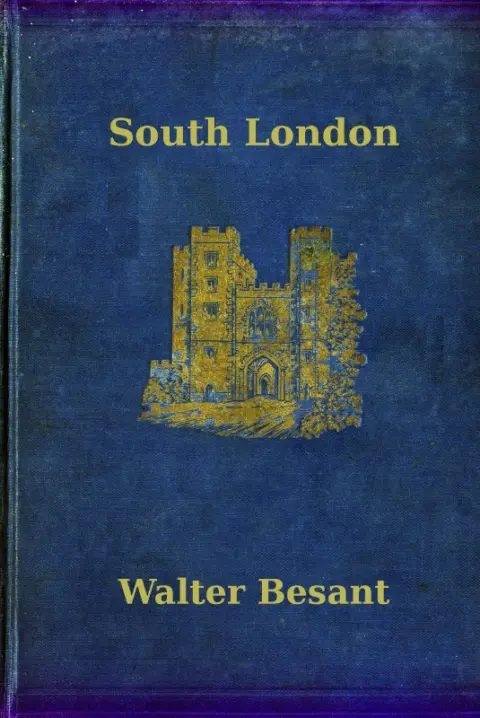
THE CLASSIC COLLECTION · 1898
"South London" by Walter Besant is a historical account written in the late 19th century. The work explores the history and evolution of South London, presenting a vivid picture of its geography, settlements, and the daily lives of its inhabitants from the earliest times through significant historical events. Through a series of episodes and characters, Besant aims to bring to life the conditions, customs, and social fabric of this area, which was characterized by its marshy landscape and rich history. At the start of the book, the author outlines the purpose of the work, clarifying that he does not intend to provide a continuous history but rather a collection of episodes that illustrate the life and character of South London. He describes the geographical boundaries of the region, which stretches from Battersea to Greenwich and emphasizes its original state as an extensive marsh. Besant traces the early settlements and trade routes that began to emerge as the land was gradually inhabited, highlighting the establishment of causeways and the first signs of human life amid the natural landscape. The writing sets a tone of exploration and admiration for the area’s history, positioning South London not just as a setting but as a dynamic entity shaped by the countless stories of its people through the ages.
Introduction adapted from the source catalogue; source summaries may be automatically generated.
Free to read · English · 91,365 words · No account needed
MAKE TIME FOR A GOOD BOOK
On by default. Untick to stop anonymous reading totals. Each page counts after 10 seconds in view. How this works.
Anonymous counting is on unless you have switched it off.
Many things were required to make a Pleasure Garden. There must be, first, abundance of trees--at first cherry trees, but these afterwards disappeared: if possible, there should be avenues of trees: aisles and dark walks of trees. There must be, next, an ornamental water with a fountain and a bridge: there must be a row of rustic bowers or retreats in which tea and supper could be served: there must be a platform for open-air dancing and promenading: there must be card-rooms: there must be a long room for dancing and for promenading, with a gallery for the orchestra and the singers. Add to these things a crowd every night including all classes and conditions of men and women. The eighteenth century was by no means a leveller of distinctions, but all classes met together without levelling. Distinctions were preserved: each party kept to itself: the nobleman wore his star and sash: he did not pretend to be on a level with the people around him: they liked him to keep up the dignity of aristocratic separation: he brought Ladies to the Gardens, sometimes in domino, sometimes not. They were not expected to speak to the ladies outside their set: they danced together in the minuets: after the minuets they withdrew. The main point about the company of the Gardens was that each party was separate and kept separate. In the Park, either in the morning or the afternoon, it was not difficult to make acquaintances. The reason was that in the Park were only to be found in the morning or the afternoon those people who were not engaged in earning their livelihood. Accordingly, all professional men--lawyers, physicians, attorneys, surgeons, artists, architects, literary people: all those engaged in trade, from the greatest merchant to the smallest shopkeeper, were excluded: they were occupied elsewhere. Therefore, the servants and footmen not being allowed in the Park, but compelled to wait outside, the people of position had the place to themselves, and access was easy. In the Gardens it was different: all could enter who paid the shilling for an entrance fee. Among them were the gentlemen in the red coat who bore His Majesty's Commission: the young fellows about town, a noisy disreputable band with noisy and disreputable companions: the plain citizen with his wife and daughter, the young fellow who was courting her: the young tradesman taking a holiday for once: the highwayman: the common pickpocket, and whole troops of the customary courtesan. All were here enjoying together--but separated into tiny groups of two or three--the strings of coloured lamps, the blare of the orchestra, the songs, the dances, and the supper. As for the last, it seems to have been always a cold collation: it generally consisted of chicken and a thin slice of ham, with a bowl of punch and a bottle of Port. There was no affectation of fine or polite behaviour; everybody behaved exactly as he pleased: the citizen was not gêné by the presence of the great lady: he prattled his vulgar commonplaces without being abashed: nor did the great lady put on 'side,' or behave among her own company with any affectation of dignity or reserve in the presence of the mercer of Ludgate Hill in the next box. Perhaps the recognition of rank made them all behave more naturally. After all, the mercer had his own rank. He could look forward to becoming Alderman, Sheriff, and Lord Mayor: he understood very well that he was already a good way up the ladder: the social precedence which belongs to the possession of money and the employment of many servants had already placed him in front of a vast crowd of inferiors: he was perfectly satisfied with his own position, although he could certainly never become a noble earl or wear a star upon his breast, or hope to consort on equal terms with the jewelled lady in silks which he knew (professionally) to be beyond all price, with her rouged face and high-dressed head, who laughed so loud and talked so fast with the noble lords her companions, one of whom was blind drunk and the other was a little mincing beau who walked on his toes with bent knees and carried his hat under his arm, and spoke under his breath as if every word was to be listened to. Do you think the honest mercer was indignant at the manners of the great? Not he: he called for another bowl of punch and tied his handkerchief over his wig to keep off the damp. In the box on the other side of the citizen from Ludgate Hill was a party also taking supper and punch, with plenty of the latter. They were under the lead of an extremely fine gentleman: his white coat was covered with gold lace: his hat was laced in the same way: his waistcoat was of flowered silk: his ruffles were of white lace--lace of Valenciennes. The ladies with him were dressed with a corresponding splendour. Everybody knew that the gentleman was a highwayman: his face was perfectly well known: he had been going on so long that his time must soon be up. In a few months at most he would take that fatal journey in the cart to Tyburn, there to meet the end common to his kind. A good many people in the Gardens knew, besides, that the ladies with him--ladies of St. Giles in the Fields--were dressed from the stores of a receiving house for stolen goods. Perhaps the consciousness of this cheap and easy way of getting one's clothes made the ladies so buoyantly and extravagantly happy, with their sprightly sallies and their high-bred courtesy of adjectives. But the mercer troubled himself not at all about them.
Your reading position is saved on this browser. Take it to another device with a library code. Reading pages adapt to text, rather than matching a printed edition.
Walter Besant
Walter Besant

Walter Besant

Walter Besant
BEHIND THE BOOK
This eBook is for the use of anyone anywhere in the United States and most other parts of the world at no cost and with almost no restrictions whatsoever. You may copy it, give it away or re-use it under the terms of the Project Gutenberg License included with this eBook or online at www.gutenberg.org. If you are not located in the United States, you will have to check the laws of the country where you are located before using this eBook. Read the source licence.
The original source file, including credits and licence, is retained by this library. Request an original-format copy at no charge. Please include the book title and Project Gutenberg identifier #44683.
KEEP YOUR CURIOSITY GOING
Wilfrid Scawen Blunt
Wilfrid Scawen Blunt

E. W. (Edgar Watson) Howe
Cécile Tormay

Moritz Busch
John L. Ransom