The Stark Munro Letters Being series of twelve letters written by J. Stark Munro, M.B., to his friend and former fellow-student, Herbert Swanborough, of Lowell, Massachusetts, during the years 1881-1884
Arthur Conan Doyle

THE CLASSIC COLLECTION · 1898
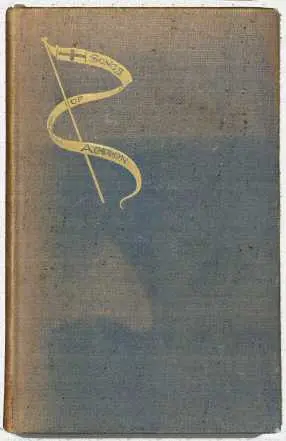
"Songs of Action" by Arthur Conan Doyle is a collection of poems written during the early 20th century. This work predominantly explores themes of bravery, adventure, and the camaraderie of soldiers, reflecting the spirit of wartime valor and heroism. The poems conjure images of historical battles, military life, and the landscape of the British countryside, tapping into the chivalric traditions and the natural beauty that often serves as a backdrop to personal and collective struggles. The book is organized into various poems, each telling its own tale or encapsulating moments of action and reflection. In "The Song of the Bow," for example, the narrator celebrates the English longbow as a symbol of freedom and strength. Other pieces convey stories of military exploits and the emotional undercurrents of soldiering, such as the harrowing courage of Corporal Dick or the comradely spirit among soldiers highlighted in "A Ballad of the Ranks." With vivid imagery and rhythmic cadence, Doyle’s work immerses readers in the joys, sorrows, and triumphs of those who lived for adventure and loyalty, making it a compelling read for anyone interested in poetry steeped in historical and military narrative.
Introduction adapted from the source catalogue; source summaries may be automatically generated.
Free to read · English · 12,492 words · No account needed
MAKE TIME FOR A GOOD BOOK
On by default. Untick to stop anonymous reading totals. Each page counts after 10 seconds in view. How this works.
Anonymous counting is on unless you have switched it off.
He snatched the pistol up,
He pressed it to his ear;
But a sudden sound broke in,
And his skin was raw with fear.
He took the hunting knife,
He tried to raise the blade;
It glimmered cold and white,
And he was sore afraid.
He poured the potion out,
But it was thick and brown;
His throat was sealed against it,
And he could not drain it down.
He looked to her for help,
And when he looked—behold!
His love was there before him
As in the days of old.
He saw the drooping head,
He saw the gentle eyes;
He saw the same shy grace of hers
He had been wont to prize.
She pointed and she smiled,
And lo! he was aware
Of a half-lit bedroom chamber
And a silent figure there.
A silent figure lying
A-sprawl upon a bed,
With a silver-mounted pistol
Still clotted to his head.
And as he downward gazed,
Her voice came full and clear,
The homely tender voice
Which he had loved to hear:
‘The key is very certain,
The door is sealed to none.
You did it, oh, my darling!
And you never knew it done.
‘When the net was broken,
You thought you felt its mesh;
You carried to the spirit
The troubles of the flesh.
‘And are you trembling still, dear?
Then let me take your hand;
And I will lead you outward
To a sweet and restful land.
‘You know how once in London
I put my griefs on you;
But I can carry yours now—
Most sweet it is to do!
‘Most sweet it is to do, love,
And very sweet to plan
How I, the helpless woman,
Can help the helpful man.
‘But let me see you smiling
With the smile I know so well;
Forget the world of shadows,
And the empty broken shell.
‘It is the worn-out garment
In which you tore a rent;
You tossed it down, and carelessly
Upon your way you went.
‘It is not you, my sweetheart,
For you are here with me.
That frame was but the promise of
The thing that was to be—
‘A tuning of the choir
Ere the harmonies begin;
And yet it is the image
Of the subtle thing within.
‘There’s not a trick of body,
There’s not a trait of mind,
But you bring it over with you,
Ethereal, refined,
‘But still the same; for surely
If we alter as we die,
You would be you no longer,
And I would not be I.
‘I might be an angel,
But not the girl you knew;
You might be immaculate,
But that would not be you.
Your reading position is saved on this browser. Take it to another device with a library code. Reading pages adapt to text, rather than matching a printed edition.
Arthur Conan Doyle
Arthur Conan Doyle
Arthur Conan Doyle
Arthur Conan Doyle
BEHIND THE BOOK
This eBook is for the use of anyone anywhere in the United States and most other parts of the world at no cost and with almost no restrictions whatsoever. You may copy it, give it away or re-use it under the terms of the Project Gutenberg License included with this eBook or online at www.gutenberg.org. If you are not located in the United States, you will have to check the laws of the country where you are located before using this eBook. Read the source licence.
The original source file, including credits and licence, is retained by this library. Request an original-format copy at no charge. Please include the book title and Project Gutenberg identifier #4295.
KEEP YOUR CURIOSITY GOING

Eric Mackay
Edmund Gosse
Sophia Margaretta Hensley
Gilbert Parker
George MacDonald

Elizabeth Bibesco

