THE CLASSIC COLLECTION✦It Never Can Happen AgainCLASSIC FREE BOOKS
It Never Can Happen Again
William De Morgan
THE CLASSIC COLLECTION · 1908
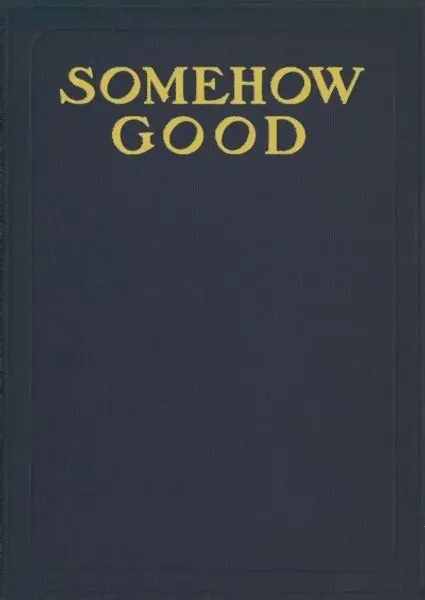
"Somehow Good" by William De Morgan is a novel written in the early 20th century. The story begins with an unnamed man who has just returned from a sea voyage and finds himself in London without any clear memory of his past. The protagonist, described as an exceptionally well-built man, navigates the city while grappling with his sudden amnesia and an unexpected encounter that hints at a more tumultuous backstory involving violence and intrigue. At the start of the narrative, the man attempts to secure the funds he believes are waiting for him at a bank. However, he faces the harsh reality of having no credit as he finds himself drawn into a chaotic scene involving a domestic violence incident in a slum. This confrontation reveals his instinct to help, leading to a physical altercation with a drunken aggressor. The opening chapters not only set up his mysterious circumstances but also introduce potential key characters, including the Nightingale family, who play a significant role in his journey to reclaim both his identity and place in society amidst the unfolding drama.
Introduction adapted from the source catalogue; source summaries may be automatically generated.
Free to read · English · 216,676 words · No account needed
MAKE TIME FOR A GOOD BOOK
On by default. Untick to stop anonymous reading totals. Each page counts after 10 seconds in view. How this works.
Anonymous counting is on unless you have switched it off.
"What do you really think about ghosts?" said his wife to him one day, when Sally wasn't there to come in with her chaff.
"Ghosts belong in titled families. Middle-class ghosts are a poor lot. Those in the army and navy cut the best figure, on the whole--Junior United Service ghosts...."
"Gerry, be serious, or I'll have a divorce!" This was a powerful grip on a stinging-nettle. Rosalind felt braced by the effort. "Did you ever see a ghost, old man?"
"Not in the present era, sweetheart. I can't say about B.C." He used to speak of his life in this way, but his wife always felt sorry when he alluded to it. It seldom happened. "No, I have never seen one to my knowledge. I've been seen as a ghost, though, which is very unpleasant, I assure you."
Rosalind's mind went back to the fat Baron at Sonnenberg. She supposed this to be another case of the same sort. "When was that?" she said.
"Monday. I took a hansom from Cornhill to our bonded warehouse. It's under a mile, and I asked the driver to change half-a-crown; I hadn't a shilling. He got out a handful of silver, and when he had picked out the two shillings and sixpence he looked at me for the first time, and started and stared as if I was a ghost in good earnest."
"Oh, Gerry, he must have seen you before--before it happened!" Remember that this was, in the spirit of it, a fib, seeing that the tone of voice was that of welcome to a possible revelation. To our thinking, the more honour to her who spoke it, considering the motives. Gerry continued:
"So I thought at first. But listen to what followed. As soon as his surprise, whatever caused it, had toned down to mere recognition point, he spoke with equanimity. 'I've driven you afore now, mister,' said he. 'You won't call me to mind. Parties don't, not when fares; when drivers, quite otherwise. I'm by way of taking notice myself. You'll excuse me?' Then he said, 'War-r-r-p,' to the horse, who was trying to eat himself and dig the road up. When they were friends again, I asked, Where had he seen me? Might I happen to call to mind Livermore's Rents, and that turn-up?--that was his reply. I said I mightn't; or didn't, at any rate. I had never been near Livermore's Rents, nor any one else's rents, that I could recall the name of. 'Try again, guv'nor,' said he. 'You'll recall if you try hard enough. He recollects it, I'll go bail. My Goard! you did let him have it!' Was it a fight? I asked. Well, do you know, darling, that cabby addressed me seriously; took me to task for want of candour. 'That ain't worthy of a guv'nor like you,' he said. 'Why make any concealments? Why not treat me open?' I gave him my most solemn honour that I was utterly at a loss to guess what he was talking about, on which he put me through a sort of retrospective catechism, broken by reminders to the horse. 'You don't rec'lect goin' easy over the bridge for to see the shipping? Nor yet the little narrer court right-hand side of the road, with an iron post under an arch and parties hollerin' murder at the far end? Nor yet the way you held him in hand and played him? Nor yet what you sampled him out at the finish? My Goard!' He slapped the top of the cab in a sort of ecstasy. 'Never saw a neater thing in my life. No unnecessary violence, no agitation! And him carried off the ground as good as dead! Ah! I made inquiry after, and that was so.' I then said it must have been some one else very like me, and held out my half-crown. He slipped back his change into his own pocket, and when he had buttoned it over ostentatiously addressed me again with what seemed a last appeal. 'I take it, guv'nor,' said he, 'you may have such a powerful list of fighting fixtures in the week that you don't easy recollect one out from the other. But now, do, you, mean to say your memory don't serve you in this?--I drove you over to Bishopsgate, 'cross London Bridge. Very well! Then you bought a hat--white Panama--and took change, seein' your own was lost. And you was going to pay me, and I drove off, refusin' to accept a farden under the circumstances. Don't you rec'lect that?' I said I didn't. 'Well, I did,' said he. 'And, with your leave, I'll do the same thing now. I'll drive you most anywhere you'd like to name in reason, but I won't take a farden.' And, do you know, he was off before my surprise allowed me to say a word."
Your reading position is saved on this browser. Take it to another device with a library code. Reading pages adapt to text, rather than matching a printed edition.
BEHIND THE BOOK
This eBook is for the use of anyone anywhere in the United States and most other parts of the world at no cost and with almost no restrictions whatsoever. You may copy it, give it away or re-use it under the terms of the Project Gutenberg License included with this eBook or online at www.gutenberg.org. If you are not located in the United States, you will have to check the laws of the country where you are located before using this eBook. Read the source licence.
The original source file, including credits and licence, is retained by this library. Request an original-format copy at no charge. Please include the book title and Project Gutenberg identifier #28345.
KEEP YOUR CURIOSITY GOING
Coulson Kernahan

Maurice Baring
Frances Wright
Cécile Tormay

Frederic Jesup Stimson

W. H. P. (William Henry Pope) Jarvis