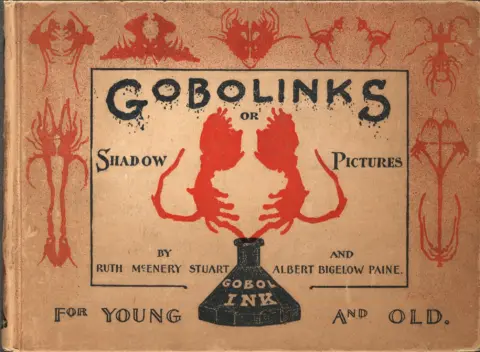
Gobolinks; or, Shadow Pictures for Young and Old
Ruth McEnery Stuart & Albert Bigelow Paine
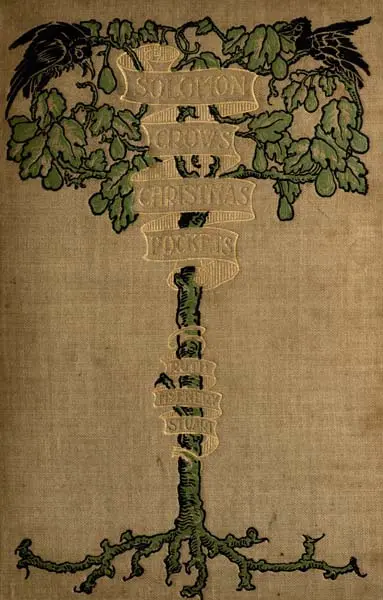
THE CLASSIC COLLECTION · 1896
"Solomon Crow's Christmas Pockets and Other Tales" by Ruth McEnery Stuart is a collection of short stories written in the late 19th century. The book features the character of Solomon Crow, a young black boy whose upbringing influences his perception of honesty and morality as he navigates his childhood experiences against a backdrop of social and familial complexities. Through his narrative, the collection explores themes of innocence, temptation, and the search for redemption, particularly in the context of the Christmas spirit. The opening of the tale introduces us to Solomon Crow, a ten-year-old boy who is acutely aware of his mother's love as well as her shortcomings. His mother, Tempest, struggles with her own moral failings, which impact Crow’s understanding of honesty and integrity. As he ventures into various schemes to earn money for his family, he grapples with the temptation to cut corners, leading to a series of misadventures that culminate in a critical moment of consequence involving old Mr. Cary, a kind but stern figure in the community. This moment marks a turning point where Solomon begins to confront the repercussions of his actions and the true meaning of love and trust.
Introduction adapted from the source catalogue; source summaries may be automatically generated.
Free to read · English · 37,252 words · No account needed
MAKE TIME FOR A GOOD BOOK
On by default. Untick to stop anonymous reading totals. Each page counts after 10 seconds in view. How this works.
Anonymous counting is on unless you have switched it off.
"An' eve'body'd think you was a walkin' sperit, an' run away f'om yer."
So the protests had come in, though the gleaming eyes of the little negroes had shown their delight in the fantastic idea.
"But I'd walk on a cloud, like the saint in the picture," Idyl had insisted. "And my feet wouldn't touch the mud, and when the runaways looked into my face, they'd try to be good and go back to their masters. Nobody would hurt me. Tired horses would be glad to see my light, and everybody would love me."
So, first laughingly, and then as a matter of habit, she had come to be
known as "Saint Idyl."
As she stands quite still, with face uplifted, out on the levee this evening, one is reminded in looking at her of the "Maid of Domremi" listening to the voices.
Idyl was in truth listening to voices--voices new, strange, and solemn--voices of heavy, distant cannon.
It was the 23d of April, 1862. A few miles below Bijou Plantation Farragut's fleet was storming the blockade at Fort Jackson. All along the lower Mississippi it was a time of dread and terror.
The negroes, for the most part awed and terror-stricken, muttered prayers as they went about, and all night long sang mournfully and shouted and prayed in the churches or in groups in their cabins, or even in the road.
The war had come at last. Its glare was upon the sky at night, and all day long reiterated its persistent staccato menace:
"Boom-m-m! Gloom-m-m! Tomb-b-b! Doom-m-m!"
The air had never seemed to lose the vibratory tremor, "M-m-m!" since the first gun, nearly six days ago.
It was as if the lips of the land were trembling. And the trembling lips of the black mothers, as they pressed their babes to their bosoms, echoed the wordless terror.
Death was in the air. Had they doubted it? In a field near by a shell had fallen, burying itself in the earth, and, exploding, had sent two men into the air, killing one and returning the other unhurt.
Now the survivor, saved as by a miracle, was preaching "The Wrath to
Come."
To quote from himself, he had "been up to heaven long enough to get 'ligion." He had "gone up a lost sinner and come down a saved soul. Bless Gord!"
Regarding his life as charmed, the blacks followed him in crowds, while he descanted upon the text: "Then two shall be in the field. One shall be taken and the other left."
A great revival was in progress.
But this afternoon the levee at Bijou had been the scene of a new panic.
Your reading position is saved on this browser. Take it to another device with a library code. Reading pages adapt to text, rather than matching a printed edition.
Ruth McEnery Stuart & Albert Bigelow Paine
Ruth McEnery Stuart
Ruth McEnery Stuart
Ruth McEnery Stuart
BEHIND THE BOOK
This eBook is for the use of anyone anywhere in the United States and most other parts of the world at no cost and with almost no restrictions whatsoever. You may copy it, give it away or re-use it under the terms of the Project Gutenberg License included with this eBook or online at www.gutenberg.org. If you are not located in the United States, you will have to check the laws of the country where you are located before using this eBook. Read the source licence.
The original source file, including credits and licence, is retained by this library. Request an original-format copy at no charge. Please include the book title and Project Gutenberg identifier #27779.
KEEP YOUR CURIOSITY GOING
Coulson Kernahan

Maurice Baring
Frances Wright
Cécile Tormay

Frederic Jesup Stimson

W. H. P. (William Henry Pope) Jarvis