
Switch off
Oliver Optic
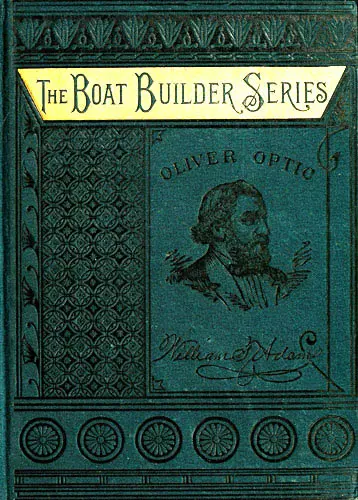
THE CLASSIC COLLECTION · 1883
"Snug Harbor; or, The Champlain Mechanics" by Oliver Optic is a children's adventure novel written in the late 19th century. The story is set around Lake Champlain and revolves around Dory Dornwood, a young hero who is presented with a series of adventures and challenges as he prepares to join the Beech-Hill Industrial School. The narrative combines elements of sailing, teamwork among boys, and the spirit of learning practical skills in mechanics. The opening of the novel introduces a thrilling incident on the lake where Dory saves a young man named Bolingbroke Millweed from drowning after his sloop is sunk by a steamer. This encounter leads to a deeper story involving a conspiracy, accusations of theft, and Dory’s determination to help his new acquaintance navigate the turbulent waters of both the lake and the challenges he faces after being mistakenly accused of a crime. Dory’s character is marked by his skill in sailing and a knack for adventure, setting the stage for an engaging story about friendship, courage, and the pursuit of practical education.
Introduction adapted from the source catalogue; source summaries may be automatically generated.
Free to read · English · 63,104 words · No account needed
MAKE TIME FOR A GOOD BOOK
On by default. Untick to stop anonymous reading totals. Each page counts after 10 seconds in view. How this works.
Anonymous counting is on unless you have switched it off.
“I don’t know,--half an inch from each, perhaps. I give it up. I was
wrong, sir.”
“Not half an inch, with such clear, finish-lumber as this board: that would be shameful. Call it an eighth of an inch; and from the four sides you will take off half an inch, besides the sixteenth cut out by the saw. Your shelves would be less than five and three-quarters wide, which is not six inches. When we want any stock to be of a certain width, it won’t do to make it a quarter of an inch less than that. You might waste the whole board in that way.”
“I give it up, and it was stupid on my part,” added Ben.
“Such mistakes are to be expected from beginners. Now let us look at the board we have. In the length we have six inches to spare, which is abundant. Now let us see if the ends of the board are sound. Are there any checks or splits in it?”
None of any consequence were found.
“Now, boys, laying out the work is quite as important as doing it. If you make blunders in your calculations, the job will not come out as you expect. We must first cut the board into six lengths.”
“We are to take out six-sixteenths of an inch for the saw-cuts,”
suggested Steve Baxter.
“Why six?”
“Because the board is to be sawed into six lengths.”
“How many cuts do you make in order to get six pieces?”
“Six, sir.”
“Do you think so? Look it over a little more.”
The rest of the boys, or most of them, looked upon the problem as a puzzle; and they were interested in it, though none appeared to have made up their minds.
“Of course you have to cut six times to get six pieces,” said Phil Gawner. “I think Steve Baxter is right.”
“Let us look at it, and see. When I have made one cut with the saw, how many pieces do I get?” asked Mr. Brookbine.
“One,” shouted half a dozen of the pupils.
“The second cut?”
“Two pieces.”
“Right; and the third, three, and the fourth, four,” continued the instructor. “When I cut the fifth time, how many have I?”
“Five!” shouted the boys triumphantly.
“But what is there left?” asked the instructor, astonished at the
answer.
“The rest of the board,” answered Steve Baxter.
“Isn’t the rest of the board the sixth piece?” demanded the carpenter.
The students looked rather blankly at each other; and Mr. Brookbine saw that they were not convinced, simple as the problem was.
Your reading position is saved on this browser. Take it to another device with a library code. Reading pages adapt to text, rather than matching a printed edition.
BEHIND THE BOOK
This eBook is for the use of anyone anywhere in the United States and most other parts of the world at no cost and with almost no restrictions whatsoever. You may copy it, give it away or re-use it under the terms of the Project Gutenberg License included with this eBook or online at www.gutenberg.org. If you are not located in the United States, you will have to check the laws of the country where you are located before using this eBook. Read the source licence.
The original source file, including credits and licence, is retained by this library. Request an original-format copy at no charge. Please include the book title and Project Gutenberg identifier #50678.
KEEP YOUR CURIOSITY GOING
Coulson Kernahan

Maurice Baring
Frances Wright
Cécile Tormay

Frederic Jesup Stimson

W. H. P. (William Henry Pope) Jarvis
