THE CLASSIC COLLECTION✦An American tragedy, v. 2CLASSIC FREE BOOKS
An American tragedy, v. 2
Theodore Dreiser
THE CLASSIC COLLECTION · 1900
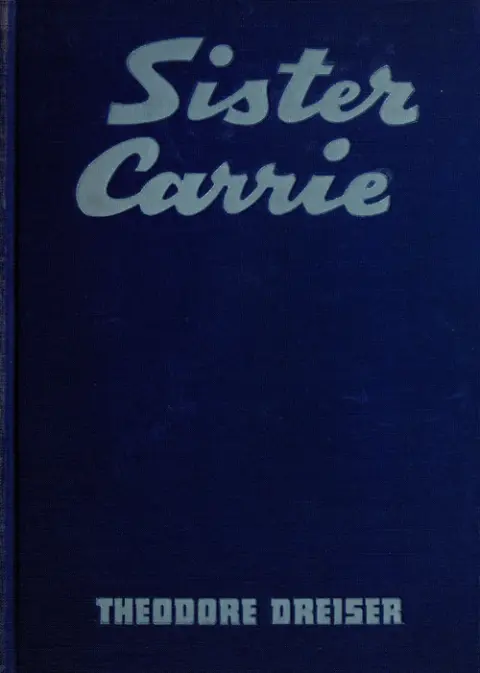
"Sister Carrie: A Novel" by Theodore Dreiser is a novel published in 1900. It follows eighteen-year-old Caroline Meeber, who leaves small-town Wisconsin for Chicago seeking a better life. In the big city, she becomes involved with two men—a charming salesman and a married bar manager—while discovering her talent for acting. As Carrie rises toward fame and fortune, those around her face vastly different fates. The novel explores ambition, desire, and the pursuit of the American Dream in urban America.
Introduction adapted from the source catalogue; source summaries may be automatically generated.
Free to read · English · 159,686 words · No account needed
MAKE TIME FOR A GOOD BOOK
On by default. Untick to stop anonymous reading totals. Each page counts after 10 seconds in view. How this works.
Anonymous counting is on unless you have switched it off.
Now the mystic scenery merged queerly and the place was by waters she had never seen. They were upon some board or ground or something that reached far out, and at the end of this was Carrie. They looked about, and now the thing was sinking, and Minnie heard the low sip of the encroaching water.
“Come on, Carrie,” she called, but Carrie was reaching farther out. She seemed to recede, and now it was difficult to call to her.
“Carrie,” she called, “Carrie,” but her own voice sounded far away, and the strange waters were blurring everything. She came away suffering as though she had lost something. She was more inexpressibly sad than she had ever been in life.
It was this way through many shifts of the tired brain, those curious phantoms of the spirit slipping in, blurring strange scenes, one with the other. The last one made her cry out, for Carrie was slipping away somewhere over a rock, and her fingers had let loose and she had seen her falling.
“Minnie! What’s the matter? Here, wake up,” said Hanson, disturbed, and shaking her by the shoulder.
“Wha—what’s the matter?” said Minnie, drowsily.
“Wake up,” he said, “and turn over. You’re talking in your sleep.”
A week or so later Drouet strolled into Fitzgerald and Moy’s, spruce in
dress and manner.
“Hello, Charley,” said Hurstwood, looking out from his office door.
Drouet strolled over and looked in upon the manager at his desk. “When do you go out on the road again?” he inquired.
“Pretty soon,” said Drouet.
“Haven’t seen much of you this trip,” said Hurstwood.
“Well, I’ve been busy,” said Drouet.
They talked some few minutes on general topics.
“Say,” said Drouet, as if struck by a sudden idea, “I want you to come out some evening.”
“Out where?” inquired Hurstwood.
“Out to my house, of course,” said Drouet, smiling.
Hurstwood looked up quizzically, the least suggestion of a smile hovering about his lips. He studied the face of Drouet in his wise way, and then with the demeanour of a gentleman, said: “Certainly; glad to.”
“We’ll have a nice game of euchre.”
“May I bring a nice little bottle of Sec?” asked Hurstwood. “Certainly,” said Drouet. “I’ll introduce you.”
Your reading position is saved on this browser. Take it to another device with a library code. Reading pages adapt to text, rather than matching a printed edition.
Theodore Dreiser
Theodore Dreiser
Theodore Dreiser
Theodore Dreiser
BEHIND THE BOOK
This eBook is for the use of anyone anywhere in the United States and most other parts of the world at no cost and with almost no restrictions whatsoever. You may copy it, give it away or re-use it under the terms of the Project Gutenberg License included with this eBook or online at www.gutenberg.org. If you are not located in the United States, you will have to check the laws of the country where you are located before using this eBook. Read the source licence.
The original source file, including credits and licence, is retained by this library. Request an original-format copy at no charge. Please include the book title and Project Gutenberg identifier #233.
KEEP YOUR CURIOSITY GOING
Coulson Kernahan

Maurice Baring
Frances Wright
Cécile Tormay

Frederic Jesup Stimson

W. H. P. (William Henry Pope) Jarvis