THE CLASSIC COLLECTION✦An American tragedy, v. 2CLASSIC FREE BOOKS
An American tragedy, v. 2
Theodore Dreiser
THE CLASSIC COLLECTION · 1900
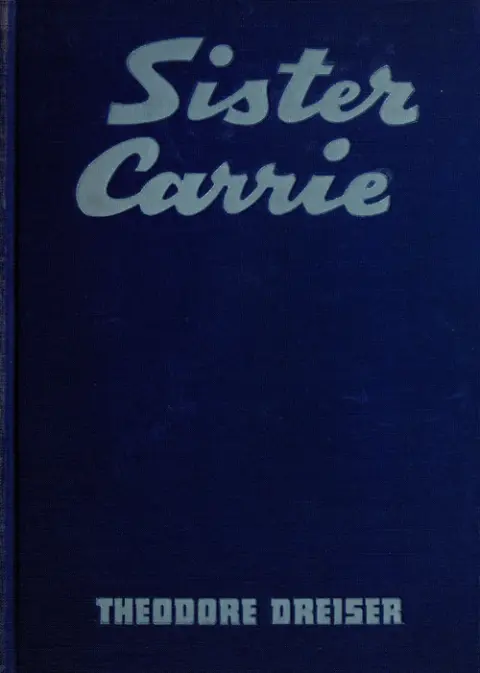
"Sister Carrie: A Novel" by Theodore Dreiser is a novel published in 1900. It follows eighteen-year-old Caroline Meeber, who leaves small-town Wisconsin for Chicago seeking a better life. In the big city, she becomes involved with two men—a charming salesman and a married bar manager—while discovering her talent for acting. As Carrie rises toward fame and fortune, those around her face vastly different fates. The novel explores ambition, desire, and the pursuit of the American Dream in urban America.
Introduction adapted from the source catalogue; source summaries may be automatically generated.
Free to read · English · 159,686 words · No account needed
MAKE TIME FOR A GOOD BOOK
On by default. Untick to stop anonymous reading totals. Each page counts after 10 seconds in view. How this works.
Anonymous counting is on unless you have switched it off.
“That’s the thing,” he said.
Carrie turned before the glass. She could not help feeling pleased as she looked at herself. A warm glow crept into her cheeks.
“That’s the thing,” said Drouet. “Now pay for it.”
“It’s nine dollars,” said Carrie.
“That’s all right—take it,” said Drouet.
She reached in her purse and took out one of the bills. The woman asked if she would wear the coat and went off. In a few minutes she was back and the purchase was closed.
From Partridge’s they went to a shoe store, where Carrie was fitted for shoes. Drouet stood by, and when he saw how nice they looked, said, “Wear them.” Carrie shook her head, however. She was thinking of returning to the flat. He bought her a purse for one thing, and a pair of gloves for another, and let her buy the stockings.
“To-morrow,” he said, “you come down here and buy yourself a skirt.”
In all of Carrie’s actions there was a touch of misgiving. The deeper she sank into the entanglement, the more she imagined that the thing hung upon the few remaining things she had not done. Since she had not done these, there was a way out.
Drouet knew a place in Wabash Avenue where there were rooms. He showed Carrie the outside of these, and said: “Now, you’re my sister.” He carried the arrangement off with an easy hand when it came to the selection, looking around, criticising, opining. “Her trunk will be here in a day or so,” he observed to the landlady, who was very pleased.
When they were alone, Drouet did not change in the least. He talked in the same general way as if they were out in the street. Carrie left her things.
“Now,” said Drouet, “why don’t you move to-night?”
“Oh, I can’t,” said Carrie.
“Why not?”
“I don’t want to leave them so.”
He took that up as they walked along the avenue. It was a warm afternoon. The sun had come out and the wind had died down. As he talked with Carrie, he secured an accurate detail of the atmosphere of the flat.
“Come out of it,” he said, “they won’t care. I’ll help you get along.”
She listened until her misgivings vanished. He would show her about a little and then help her get something. He really imagined that he would. He would be out on the road and she could be working.
“Now, I’ll tell you what you do,” he said, “you go out there and get whatever you want and come away.”
Your reading position is saved on this browser. Take it to another device with a library code. Reading pages adapt to text, rather than matching a printed edition.
Theodore Dreiser
Theodore Dreiser
Theodore Dreiser
Theodore Dreiser
BEHIND THE BOOK
This eBook is for the use of anyone anywhere in the United States and most other parts of the world at no cost and with almost no restrictions whatsoever. You may copy it, give it away or re-use it under the terms of the Project Gutenberg License included with this eBook or online at www.gutenberg.org. If you are not located in the United States, you will have to check the laws of the country where you are located before using this eBook. Read the source licence.
The original source file, including credits and licence, is retained by this library. Request an original-format copy at no charge. Please include the book title and Project Gutenberg identifier #233.
KEEP YOUR CURIOSITY GOING
Coulson Kernahan

Maurice Baring
Frances Wright
Cécile Tormay

Frederic Jesup Stimson

W. H. P. (William Henry Pope) Jarvis