THE CLASSIC COLLECTION✦An American tragedy, v. 2CLASSIC FREE BOOKS
An American tragedy, v. 2
Theodore Dreiser
THE CLASSIC COLLECTION · 1900
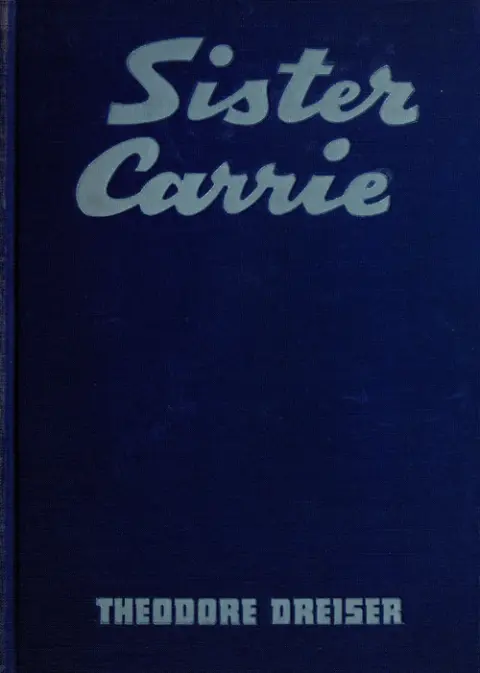
"Sister Carrie: A Novel" by Theodore Dreiser is a novel published in 1900. It follows eighteen-year-old Caroline Meeber, who leaves small-town Wisconsin for Chicago seeking a better life. In the big city, she becomes involved with two men—a charming salesman and a married bar manager—while discovering her talent for acting. As Carrie rises toward fame and fortune, those around her face vastly different fates. The novel explores ambition, desire, and the pursuit of the American Dream in urban America.
Introduction adapted from the source catalogue; source summaries may be automatically generated.
Free to read · English · 159,686 words · No account needed
MAKE TIME FOR A GOOD BOOK
On by default. Untick to stop anonymous reading totals. Each page counts after 10 seconds in view. How this works.
Anonymous counting is on unless you have switched it off.
A cynical grin lit up the face of his youthful opponent. When the chips were laid out, Hurstwood met the raise.
“Five again,” said the youth.
Hurstwood’s brow was wet. He was deep in now—very deep for him. Sixty dollars of his good money was up. He was ordinarily no coward, but the thought of losing so much weakened him. Finally he gave way. He would not trust to this fine hand any longer.
“I call,” he said.
“A full house!” said the youth, spreading out his cards.
Hurstwood’s hand dropped.
“I thought I had you,” he said, weakly.
The youth raked in his chips, and Hurstwood came away, not without first stopping to count his remaining cash on the stair.
“Three hundred and forty dollars,” he said.
With this loss and ordinary expenses, so much had already gone.
Back in the flat, he decided he would play no more.
Remembering Mrs. Vance’s promise to call, Carrie made one other mild protest. It was concerning Hurstwood’s appearance. This very day, coming home, he changed his clothes to the old togs he sat around in.
“What makes you always put on those old clothes?” asked Carrie.
“What’s the use wearing my good ones around here?” he asked.
“Well, I should think you’d feel better.” Then she added: “Some one
might call.”
“Who?” he said.
“Well, Mrs. Vance,” said Carrie.
“She needn’t see me,” he answered, sullenly.
This lack of pride and interest made Carrie almost hate him.
“Oh,” she thought, “there he sits. ‘She needn’t see me.’ I should think he would be ashamed of himself.”
The real bitterness of this thing was added when Mrs. Vance did call. It was on one of her shopping rounds. Making her way up the commonplace hall, she knocked at Carrie’s door. To her subsequent and agonising distress, Carrie was out. Hurstwood opened the door, half-thinking that the knock was Carrie’s. For once, he was taken honestly aback. The lost voice of youth and pride spoke in him.
“Why,” he said, actually stammering, “how do you do?”
“How do you do?” said Mrs. Vance, who could scarcely believe her eyes. His great confusion she instantly perceived. He did not know whether to invite her in or not.
“Is your wife at home?” she inquired.
“No,” he said, “Carrie’s out; but won’t you step in? She’ll be back
shortly.”
Your reading position is saved on this browser. Take it to another device with a library code. Reading pages adapt to text, rather than matching a printed edition.
Theodore Dreiser
Theodore Dreiser
Theodore Dreiser
Theodore Dreiser
BEHIND THE BOOK
This eBook is for the use of anyone anywhere in the United States and most other parts of the world at no cost and with almost no restrictions whatsoever. You may copy it, give it away or re-use it under the terms of the Project Gutenberg License included with this eBook or online at www.gutenberg.org. If you are not located in the United States, you will have to check the laws of the country where you are located before using this eBook. Read the source licence.
The original source file, including credits and licence, is retained by this library. Request an original-format copy at no charge. Please include the book title and Project Gutenberg identifier #233.
KEEP YOUR CURIOSITY GOING
Coulson Kernahan

Maurice Baring
Frances Wright
Cécile Tormay

Frederic Jesup Stimson

W. H. P. (William Henry Pope) Jarvis