THE CLASSIC COLLECTION✦An American tragedy, v. 2CLASSIC FREE BOOKS
An American tragedy, v. 2
Theodore Dreiser
THE CLASSIC COLLECTION · 1900
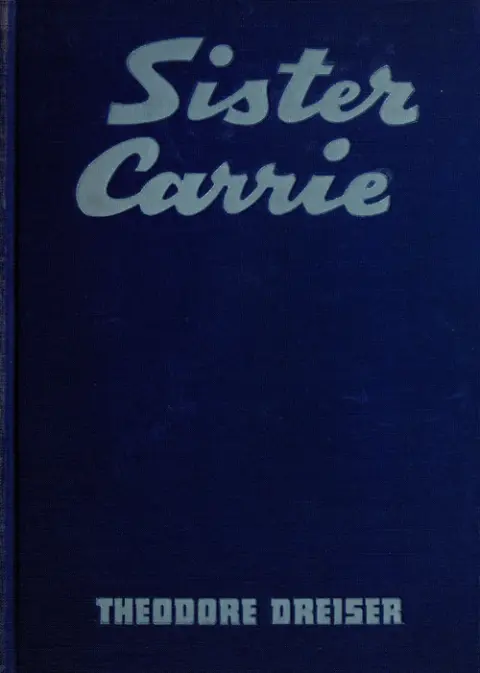
"Sister Carrie: A Novel" by Theodore Dreiser is a novel published in 1900. It follows eighteen-year-old Caroline Meeber, who leaves small-town Wisconsin for Chicago seeking a better life. In the big city, she becomes involved with two men—a charming salesman and a married bar manager—while discovering her talent for acting. As Carrie rises toward fame and fortune, those around her face vastly different fates. The novel explores ambition, desire, and the pursuit of the American Dream in urban America.
Introduction adapted from the source catalogue; source summaries may be automatically generated.
Free to read · English · 159,686 words · No account needed
MAKE TIME FOR A GOOD BOOK
On by default. Untick to stop anonymous reading totals. Each page counts after 10 seconds in view. How this works.
Anonymous counting is on unless you have switched it off.
Carrie was surprised to see him at a quarter of three.
“It’s a miserable day out,” was all he said. Then he took off his coat and changed his shoes.
That night he felt a cold coming on and took quinine. He was feverish until morning, and sat about the next day while Carrie waited on him. He was a helpless creature in sickness, not very handsome in a dull-coloured bath gown and his hair uncombed. He looked haggard about the eyes and quite old. Carrie noticed this, and it did not appeal to her. She wanted to be good-natured and sympathetic, but something about the man held her aloof.
Toward evening he looked so badly in the weak light that she suggested
he go to bed.
“You’d better sleep alone,” she said, “you’ll feel better. I’ll open your bed for you now.”
“All right,” he said.
As she did all these things, she was in a most despondent state.
“What a life! What a life!” was her one thought.
Once during the day, when he sat near the radiator, hunched up and reading, she passed through, and seeing him, wrinkled her brows. In the front room, where it was not so warm, she sat by the window and cried. This was the life cut out for her, was it? To live cooped up in a small flat with some one who was out of work, idle, and indifferent to her. She was merely a servant to him now, nothing more.
This crying made her eyes red, and when, in preparing his bed, she
lighted the gas, and, having prepared it, called him in, he noticed the
fact.
“What’s the matter with you?” he asked, looking into her face. His voice was hoarse and his unkempt head only added to its grewsome quality.
“Nothing,” said Carrie, weakly.
“You’ve been crying,” he said.
“I haven’t, either,” she answered.
It was not for love of him, that he knew.
“You needn’t cry,” he said, getting into bed. “Things will come out all
right.”
In a day or two he was up again, but rough weather holding, he stayed in. The Italian newsdealer now delivered the morning papers, and these he read assiduously. A few times after that he ventured out, but meeting another of his old-time friends, he began to feel uneasy sitting about hotel corridors.
Every day he came home early, and at last made no pretence of going anywhere. Winter was no time to look for anything.
Your reading position is saved on this browser. Take it to another device with a library code. Reading pages adapt to text, rather than matching a printed edition.
Theodore Dreiser
Theodore Dreiser
Theodore Dreiser
Theodore Dreiser
BEHIND THE BOOK
This eBook is for the use of anyone anywhere in the United States and most other parts of the world at no cost and with almost no restrictions whatsoever. You may copy it, give it away or re-use it under the terms of the Project Gutenberg License included with this eBook or online at www.gutenberg.org. If you are not located in the United States, you will have to check the laws of the country where you are located before using this eBook. Read the source licence.
The original source file, including credits and licence, is retained by this library. Request an original-format copy at no charge. Please include the book title and Project Gutenberg identifier #233.
KEEP YOUR CURIOSITY GOING
Coulson Kernahan

Maurice Baring
Frances Wright
Cécile Tormay

Frederic Jesup Stimson

W. H. P. (William Henry Pope) Jarvis