THE CLASSIC COLLECTION✦An American tragedy, v. 2CLASSIC FREE BOOKS
An American tragedy, v. 2
Theodore Dreiser
THE CLASSIC COLLECTION · 1900
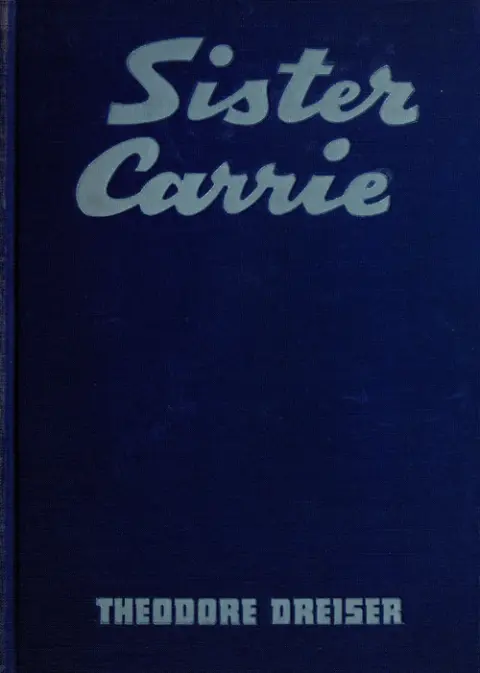
"Sister Carrie: A Novel" by Theodore Dreiser is a novel published in 1900. It follows eighteen-year-old Caroline Meeber, who leaves small-town Wisconsin for Chicago seeking a better life. In the big city, she becomes involved with two men—a charming salesman and a married bar manager—while discovering her talent for acting. As Carrie rises toward fame and fortune, those around her face vastly different fates. The novel explores ambition, desire, and the pursuit of the American Dream in urban America.
Introduction adapted from the source catalogue; source summaries may be automatically generated.
Free to read · English · 159,686 words · No account needed
MAKE TIME FOR A GOOD BOOK
On by default. Untick to stop anonymous reading totals. Each page counts after 10 seconds in view. How this works.
Anonymous counting is on unless you have switched it off.
Carrie saw things were wrong with him. He was not so handsome when gloomy. The lines at the sides of the eyes were deepened. Naturally dark of skin, gloom made him look slightly sinister. He was quite a disagreeable figure.
Carrie set the table and brought in the meal.
“Dinner’s ready,” she said, passing him for something.
He did not answer, reading on.
She came in and sat down at her place, feeling exceedingly wretched.
“Won’t you eat now?” she asked.
He folded his paper and drew near, silence holding for a time, except
for the “Pass me’s.”
“It’s been gloomy to-day, hasn’t it?” ventured Carrie, after a time.
“Yes,” he said.
He only picked at his food.
“Are you still sure to close up?” said Carrie, venturing to take up the subject which they had discussed often enough.
“Of course we are,” he said, with the slightest modification of
sharpness.
This retort angered Carrie. She had had a dreary day of it herself.
“You needn’t talk like that,” she said.
“Oh!” he exclaimed, pushing back from the table, as if to say more, but letting it go at that. Then he picked up his paper. Carrie left her seat, containing herself with difficulty. He saw she was hurt.
“Don’t go ’way,” he said, as she started back into the kitchen. “Eat
your dinner.”
She passed, not answering.
He looked at the paper a few moments, and then rose up and put on his
coat.
“I’m going downtown, Carrie,” he said, coming out. “I’m out of sorts
to-night.”
She did not answer.
“Don’t be angry,” he said. “It will be all right to-morrow.”
He looked at her, but she paid no attention to him, working at her
dishes.
“Good-bye!” he said finally, and went out.
This was the first strong result of the situation between them, but with the nearing of the last day of the business the gloom became almost a permanent thing. Hurstwood could not conceal his feelings about the matter. Carrie could not help wondering where she was drifting. It got so that they talked even less than usual, and yet it was not Hurstwood who felt any objection to Carrie. It was Carrie who shied away from him. This he noticed. It aroused an objection to her becoming indifferent to him. He made the possibility of friendly intercourse almost a giant task, and then noticed with discontent that Carrie added to it by her manner and made it more impossible.
Your reading position is saved on this browser. Take it to another device with a library code. Reading pages adapt to text, rather than matching a printed edition.
Theodore Dreiser
Theodore Dreiser
Theodore Dreiser
Theodore Dreiser
BEHIND THE BOOK
This eBook is for the use of anyone anywhere in the United States and most other parts of the world at no cost and with almost no restrictions whatsoever. You may copy it, give it away or re-use it under the terms of the Project Gutenberg License included with this eBook or online at www.gutenberg.org. If you are not located in the United States, you will have to check the laws of the country where you are located before using this eBook. Read the source licence.
The original source file, including credits and licence, is retained by this library. Request an original-format copy at no charge. Please include the book title and Project Gutenberg identifier #233.
KEEP YOUR CURIOSITY GOING
Coulson Kernahan

Maurice Baring
Frances Wright
Cécile Tormay

Frederic Jesup Stimson

W. H. P. (William Henry Pope) Jarvis