THE CLASSIC COLLECTION✦An American tragedy, v. 2CLASSIC FREE BOOKS
An American tragedy, v. 2
Theodore Dreiser
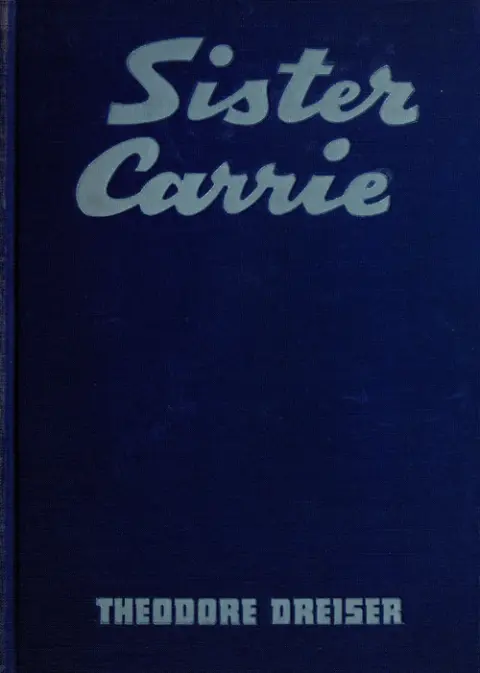
THE CLASSIC COLLECTION · 1900
"Sister Carrie: A Novel" by Theodore Dreiser is a novel published in 1900. It follows eighteen-year-old Caroline Meeber, who leaves small-town Wisconsin for Chicago seeking a better life. In the big city, she becomes involved with two men—a charming salesman and a married bar manager—while discovering her talent for acting. As Carrie rises toward fame and fortune, those around her face vastly different fates. The novel explores ambition, desire, and the pursuit of the American Dream in urban America.
Introduction adapted from the source catalogue; source summaries may be automatically generated.
Free to read · English · 159,686 words · No account needed
MAKE TIME FOR A GOOD BOOK
On by default. Untick to stop anonymous reading totals. Each page counts after 10 seconds in view. How this works.
Anonymous counting is on unless you have switched it off.
Carrie remembered her triumph in the room. She tried to think she could
to it.
“What’s next?” he said, looking at her part, which she had been
studying.
“Why, the scene between Ray and me when I refuse him.”
“Well, now you do that lively,” said the drummer. “Put in snap, that’s the thing. Act as if you didn’t care.”
“Your turn next, Miss Madenda,” said the prompter.
“Oh, dear,” said Carrie.
“Well, you’re a chump for being afraid,” said Drouet. “Come on now, brace up. I’ll watch you from right here.”
“Will you?” said Carrie.
“Yes, now go on. Don’t be afraid.”
The prompter signalled her.
She started out, weak as ever, but suddenly her nerve partially returned. She thought of Drouet looking.
“Ray,” she said, gently, using a tone of voice much more calm than when she had last appeared. It was the scene which had pleased the director at the rehearsal.
“She’s easier,” thought Hurstwood to himself.
She did not do the part as she had at rehearsal, but she was better. The audience was at least not irritated. The improvement of the work of the entire company took away direct observation from her. They were making very fair progress, and now it looked as if the play would be passable, in the less trying parts at least.
Carrie came off warm and nervous.
“Well,” she said, looking at him, “was it any better?”
“Well, I should say so. That’s the way. Put life into it. You did that about a thousand per cent. better than you did the other scene. Now go on and fire up. You can do it. Knock ’em.”
“Was it really better?”
“Better, I should say so. What comes next?”
“That ballroom scene.”
“Well, you can do that all right,” he said.
“I don’t know,” answered Carrie.
“Why, woman,” he exclaimed, “you did it for me! Now you go out there and do it. It’ll be fun for you. Just do as you did in the room. If you’ll reel it off that way, I’ll bet you make a hit. Now, what’ll you bet? You do it.”
The drummer usually allowed his ardent good-nature to get the better of his speech. He really did think that Carrie had acted this particular scene very well, and he wanted her to repeat it in public. His enthusiasm was due to the mere spirit of the occasion.
Your reading position is saved on this browser. Take it to another device with a library code. Reading pages adapt to text, rather than matching a printed edition.
Theodore Dreiser
Theodore Dreiser
Theodore Dreiser
Theodore Dreiser
BEHIND THE BOOK
This eBook is for the use of anyone anywhere in the United States and most other parts of the world at no cost and with almost no restrictions whatsoever. You may copy it, give it away or re-use it under the terms of the Project Gutenberg License included with this eBook or online at www.gutenberg.org. If you are not located in the United States, you will have to check the laws of the country where you are located before using this eBook. Read the source licence.
The original source file, including credits and licence, is retained by this library. Request an original-format copy at no charge. Please include the book title and Project Gutenberg identifier #233.
KEEP YOUR CURIOSITY GOING
Coulson Kernahan

Maurice Baring
Frances Wright
Cécile Tormay

Frederic Jesup Stimson

W. H. P. (William Henry Pope) Jarvis