THE CLASSIC COLLECTION✦An outlaw’s diary: the CommuneCLASSIC FREE BOOKS
An outlaw’s diary: the Commune
Cécile Tormay
THE CLASSIC COLLECTION · 1898
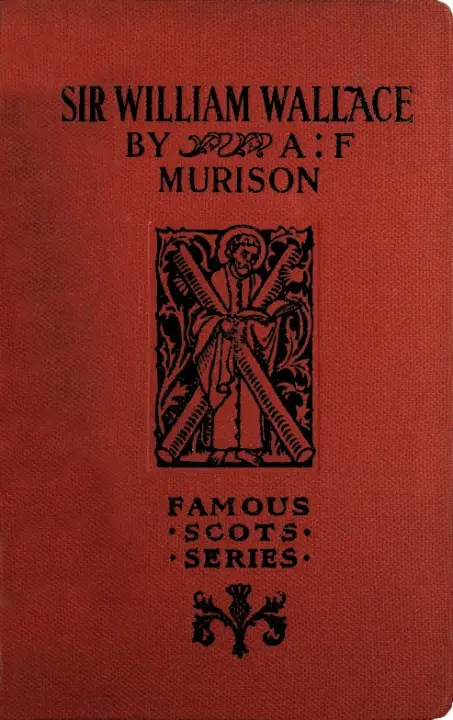
“Sir William Wallace” by Alexander Falconer Murison is a historical account written in the late 19th century. The book delves into the life and legacy of Sir William Wallace, a national hero and freedom fighter in Scotland, detailing his contributions to the fight against English aggression during the Wars of Scottish Independence. The opening of the book establishes a somber historical backdrop, focusing on the political turmoil in Scotland following the death of King Alexander III. It describes the precarious state of the Scottish monarchy and the turmoil that ensues as various factions vie for power, setting the stage for the rise of William Wallace. The narrative introduces the struggles faced by the Scots under English rule and hints at Wallace's eventual emergence as a symbol of resistance. This portion primes the reader for an exploration of Wallace's early life, motivations, and the socio-political challenges he faced, all essential to understanding his role in Scotland's quest for independence.
Introduction adapted from the source catalogue; source summaries may be automatically generated.
Free to read · English · 52,492 words · No account needed
MAKE TIME FOR A GOOD BOOK
On by default. Untick to stop anonymous reading totals. Each page counts after 10 seconds in view. How this works.
Anonymous counting is on unless you have switched it off.
Somewhere about this time, moreover, Bruce passed from speculation to action. Balliol, in his pleadings before Edward in 1291, averred that, in violation of their oath of fealty to Queen Margaret, 'Sir Robert Bruce and the Earl of Carrick, his son, attacked the castle of Dumfries with fire and arms, and banners displayed, and against the peace expelled the forces of the Queen, who held the same. Hence Sir Robert advanced to the castle of Buittle. He then caused a proclamation to be made by one Patrick M'Guffock, within the bailiary of the said castle,' with the result that good subjects were driven from the land. 'Furthermore,' the allegation ran, 'the Earl of Carrick, by the assent and power of his father, took the Lady of Scotland's castle of Wigton, and killed several of her people there.' A number of entries in the Exchequer Rolls combine to support Balliol's charge, and even to show that the wave of disturbance was felt on the eastern seaboard. How Bruce was brought back to peaceable ways does not appear.
The temporary stir occasioned by Bruce's eagerness was the only ripple on the face of affairs for some three years. Early in 1289, however, Edward seems to have made up his mind to strengthen his hold on Scotland by a marriage between the young Queen and Prince Edward of Wales. The proposed parties, being cousins-german, were within the degrees prohibited by the canon law; and on May 8, Edward despatched Sir Otho de Grandison to Rome, with letters from himself and a petition from the Prince, soliciting from Pope Nicholas IV. the necessary dispensation. The idea may have presented itself to Edward's mind two years earlier; for on May 27, 1287, he had obtained a Bull from Pope Honorius IV. permitting him to marry his children to relatives in the fourth degree of affinity or consanguinity. However this may be, in April and May 1289, envoys passed to and fro between Edward and Eric on 'certain affairs,' which were no doubt affairs tending in the direction of the marriage. On November 6, commissioners representing the three countries concerned met at Salisbury, and concluded a treaty. Eric was to send the Queen to England or to Scotland by November 1 next year, free from matrimonial engagement. If she came to England, Edward would, on the establishment of security and peace in Scotland, and on the demand of the Scots nation, send her to Scotland, in like manner free from matrimonial engagement, provided 'the good nation of Scotland' gave 'sufficient and good security' to Edward not to marry her without the appointment and advice of himself and the assent of the King of Norway. The Scots envoys engaged to establish such order as to secure the Queen in the quiet enjoyment of her realm. The preamble of the treaty is framed so as to convey that Eric was the prime mover in the business. He is represented as having applied to Edward for aid and advice, the object being to secure for Edward's niece the obedience of her subjects and the free exercise and enjoyment of her royal powers, after the manner of other kings in their own kingdoms. On receiving this appeal, Edward, in his zeal for the peace of Scotland, and for the establishment of his niece in her rightful position, invited the Guardians to send commissioners to the Salisbury convention. But there can be no doubt that Edward himself was the prime mover. Eric certainly was loth to part with his child; he had made no representation on her behalf to the Scots Guardians, nor had they indicated any wish to have her in Scotland. On the other hand, Edward's project of marriage would naturally require her presence on this side of the North Sea; and his influence with Eric was backed by a recent loan of 2000 marks with easy arrangements for repayment, which seems not to have been yet discharged. It may be greatly doubted whether Edward was taking all this trouble out of disinterested anxiety for the welfare and royal status of his niece, or for the security of peace on the English border. The treaty gives no hint that the Salisbury commissioners had before them the marriage contemplated by Edward; the terms of the engagement of the Scots, as well as the absence of an express statement, would seem to negative the idea. Sufficient reason may be found in the fact that the dispensation had not then been granted, as well as in Edward's desire to proceed with most cautious steps. It is to be remarked that not only in the treaty, but also in the Prince's petition to the Pope, and in a communication of Edward's addressed to the Scottish people on the same day as the treaty was made, and counselling the obedience of all to the Guardians, the great object of the peace and reformation of Scotland is dwelt on with suspicious emphasis. Sir Otho de Grandison returned to London on December 31. With the irony of fate, the dispensation, which had been granted (and acknowledged handsomely in gold florins) on November 16, did not arrive in the form of a Bull till October 9, 1290, almost simultaneously with the arrival of the rumour of the Queen's death.
Your reading position is saved on this browser. Take it to another device with a library code. Reading pages adapt to text, rather than matching a printed edition.
BEHIND THE BOOK
This eBook is for the use of anyone anywhere in the United States and most other parts of the world at no cost and with almost no restrictions whatsoever. You may copy it, give it away or re-use it under the terms of the Project Gutenberg License included with this eBook or online at www.gutenberg.org. If you are not located in the United States, you will have to check the laws of the country where you are located before using this eBook. Read the source licence.
The original source file, including credits and licence, is retained by this library. Request an original-format copy at no charge. Please include the book title and Project Gutenberg identifier #45035.
KEEP YOUR CURIOSITY GOING
Cécile Tormay

Moritz Busch
John L. Ransom
Frances Wright
Cécile Tormay

Mabel Potter Daggett