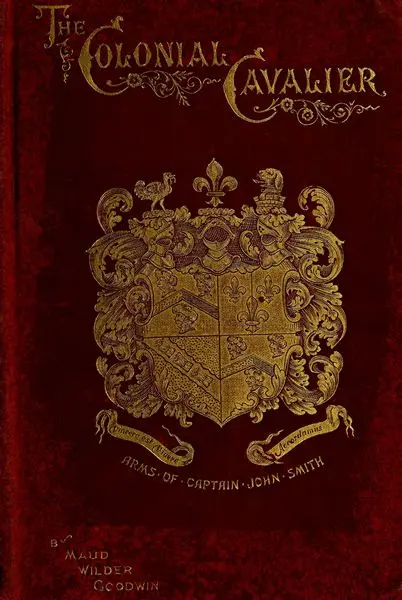
The Colonial Cavalier; or, Southern Life before the Revolution
Maud Wilder Goodwin
THE CLASSIC COLLECTION · 1901
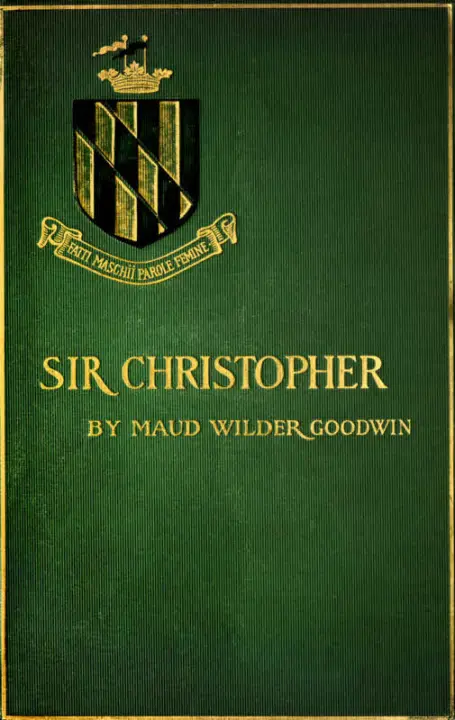
"Sir Christopher: A Romance of a Maryland Manor in 1644" by Maud Wilder Goodwin is a historical novel written in the late 19th century. The story unfolds in the context of the 17th-century Maryland colony, amidst the feuds between Catholics and Protestants and the conflicts between various colonial figures. The plot centers around the characters of Elinor Calvert, her son Cecil, and Sir Christopher Neville, as they navigate personal relationships and socio-political tensions of the time. The opening of the novel introduces us to a wintry evening at St. Gabriel's Manor, where we meet young Cecil Calvert, who is playfully engaging his mother, Elinor, and a priest, as they gather by the fire. Elinor, recently widowed and a grant owner of the manor known as "Robin Hood's Barn," is confronted with the arrival of Sir Christopher Neville, a gentleman seeking to become her tenant. Through conversations and reflections, we learn about her struggles as a widow in a new land, her memories of her late husband, and her burgeoning emotions regarding Neville, who has long held affections for her. The dynamic established in this first chapter sets the stage for the unfolding romance and drama, interwoven with the complexities of 17th-century life in Maryland.
Introduction adapted from the source catalogue; source summaries may be automatically generated.
Free to read · English · 88,740 words · No account needed
MAKE TIME FOR A GOOD BOOK
On by default. Untick to stop anonymous reading totals. Each page counts after 10 seconds in view. How this works.
Anonymous counting is on unless you have switched it off.
"To Master and Mistress Huntoon, the kindest hostess and the noblest host, and--" here she stretched out her hand to Romney, "to the hero of the night, the best comrade in the world!"
A chorus of "Long life to them all!" greeted the toast, and the goblets clinked merrily; but to Romney it might have been water or wine or poison they were drinking, for all he knew or cared.
At last, when supper was ended Sir William Berkeley rose in his place, and with a solemnity quite different from his jovial manner of the evening hitherto he said, "One last toast, and we will, if you please, drink it standing. The King, God bless him!"
Fifty men sprang to their feet, fifty goblets flashed in air. Then utter silence fell. It was as if the shadow of the scaffold at Whitehall already cast its gloom over the loyal hearts of the colonial cavaliers.
The guests broke up into little groups of two and three and wandered back to the dancing-hall, where the fiddles were still working away for dear life at the strains of "The Jovial Beggar" and "Joan's Ale is New." The long lines of reel and brantle formed again, and the dancers refused to give over their merry-making till the gray dawn came peeping in at the window, turning the yellow candlelight to an insignificant glimmer, and hinting of the approaching day and its humdrum duties.
As the guests, one by one, came up to bid their hosts a good-night, which might more appropriately have been a good-morning, Master Claiborne drew Huntoon aside a moment, asking,--
"Will you be at home to-morrow--I mean to-day?"
"Ay."
"Then I may come to see you?"
"Why not stay now, since 'tis already day?"
"Because there be others I must see first, but I will be back before
noon."
"And I glad as always to see you, but too sleepy, I fear, to give heed
to any business."
"Then get your sleep before, for it is business of moment touching which we need your aid and counsel."
Before Huntoon could answer, another guest claimed his attention, and he followed to the door to help the ladies, who had donned their hoods and safeguards, to mount their horses or embark in the boats.
As they rode or sailed away into the gray dawn, Peggy, wrapped in her red cloak, stood with Romney watching them from the porch.
"It has been such a beautiful ball!" she sighed.
"You think so?"
"Of course I do; but then, you see, I never saw a real, big ball before. Do you think they are all like that?"
Your reading position is saved on this browser. Take it to another device with a library code. Reading pages adapt to text, rather than matching a printed edition.
Maud Wilder Goodwin
Maud Wilder Goodwin
Maud Wilder Goodwin
BEHIND THE BOOK
This eBook is for the use of anyone anywhere in the United States and most other parts of the world at no cost and with almost no restrictions whatsoever. You may copy it, give it away or re-use it under the terms of the Project Gutenberg License included with this eBook or online at www.gutenberg.org. If you are not located in the United States, you will have to check the laws of the country where you are located before using this eBook. Read the source licence.
The original source file, including credits and licence, is retained by this library. Request an original-format copy at no charge. Please include the book title and Project Gutenberg identifier #48294.
KEEP YOUR CURIOSITY GOING
Cécile Tormay

Moritz Busch
Coulson Kernahan
John L. Ransom

Maurice Baring
Frances Wright