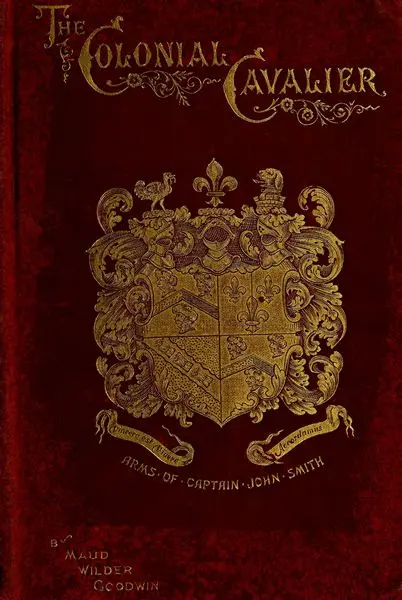
The Colonial Cavalier; or, Southern Life before the Revolution
Maud Wilder Goodwin
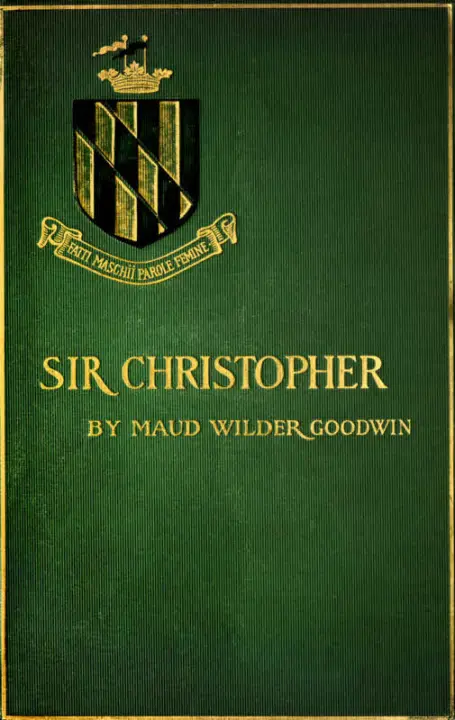
THE CLASSIC COLLECTION · 1901
"Sir Christopher: A Romance of a Maryland Manor in 1644" by Maud Wilder Goodwin is a historical novel written in the late 19th century. The story unfolds in the context of the 17th-century Maryland colony, amidst the feuds between Catholics and Protestants and the conflicts between various colonial figures. The plot centers around the characters of Elinor Calvert, her son Cecil, and Sir Christopher Neville, as they navigate personal relationships and socio-political tensions of the time. The opening of the novel introduces us to a wintry evening at St. Gabriel's Manor, where we meet young Cecil Calvert, who is playfully engaging his mother, Elinor, and a priest, as they gather by the fire. Elinor, recently widowed and a grant owner of the manor known as "Robin Hood's Barn," is confronted with the arrival of Sir Christopher Neville, a gentleman seeking to become her tenant. Through conversations and reflections, we learn about her struggles as a widow in a new land, her memories of her late husband, and her burgeoning emotions regarding Neville, who has long held affections for her. The dynamic established in this first chapter sets the stage for the unfolding romance and drama, interwoven with the complexities of 17th-century life in Maryland.
Introduction adapted from the source catalogue; source summaries may be automatically generated.
Free to read · English · 88,740 words · No account needed
MAKE TIME FOR A GOOD BOOK
On by default. Untick to stop anonymous reading totals. Each page counts after 10 seconds in view. How this works.
Anonymous counting is on unless you have switched it off.
"Ay, and he beginneth with their toes. Therefore I dare not kneel alone to say my Hail Maries. The Dark Bear is not like God, for God careth only for the heart. Thir Chrithtopher, why doth God care more for the heart than for the head and legs?"
"Come, Cecil," said Elinor's warning voice, "thou art chattering as loud as a tree-toad, and the ten minutes are more than passed. Run up and hide those cold toes of thine under the counterpane!"
"If I go, wilt thou come up after supper to see me?"
"If I can be spared."
"Nay, no ifs--ay or no?"
Father Mohl smiled, and his smile was not good to see.
"Is this the flower of that confidence through love which you so much
admire, Sir Christopher?"
"No," answered Neville, "only the thorns on its stem; the blossoms are
not yet out."
"Ay or no?" repeated the child, oblivious of the discussion going on
around him.
"Oh, ay, and get thee gone!" cried his mother, thoroughly out of patience with the child and herself and every one else.
Cecil ran round to her seat, hugged her in a stifling embrace, and then pattered out of the room and up the stair, reassuring his timid little heart by saying aloud as he went, "Bearth come not into houtheth! Bearth come not into houtheth!"
Father Mohl sat with bent head, the enigmatic smile still playing round his lips. At length, making the sign of the cross, he spoke aside to Father White,--
"Have I leave to depart?"
"Go--and pax tibi!"
The company rose.
"Father, must thou be gone so soon?" Mary Brent asked, with hospitable
entreaty in her tones.
"I must, my daughter."
"This very night?"
"This very night."
"But the road to St. Mary's is dark and rough."
"Ay, but our feet are used to treading rough roads, and the moon will show the blazed path as clearly as the sun itself."
"Farewell," said Father White. "Bear my greetings to my brothers at St. Inigo's, and charge them that they cease not from their labors till I come."
When Father Mohl passed Neville, Sir Christopher, moved by a sudden compunction, held out his hand. "Hey for St. Mary's!" he exclaimed, with a note of cordiality which if a trifle forced was at least civil.
Father Mohl ignored the outstretched hand, and with his own grasped the crucifix at his breast. The sneer in his smile deepened, and one heard the breath of scorn in his nostrils as he answered, with a meaning glance at Elinor, "The latter part of the Marylanders' battle-cry were perchance honester. Why not make it 'Wives for us all'?"
Your reading position is saved on this browser. Take it to another device with a library code. Reading pages adapt to text, rather than matching a printed edition.
Maud Wilder Goodwin
Maud Wilder Goodwin
Maud Wilder Goodwin
BEHIND THE BOOK
This eBook is for the use of anyone anywhere in the United States and most other parts of the world at no cost and with almost no restrictions whatsoever. You may copy it, give it away or re-use it under the terms of the Project Gutenberg License included with this eBook or online at www.gutenberg.org. If you are not located in the United States, you will have to check the laws of the country where you are located before using this eBook. Read the source licence.
The original source file, including credits and licence, is retained by this library. Request an original-format copy at no charge. Please include the book title and Project Gutenberg identifier #48294.
KEEP YOUR CURIOSITY GOING
Cécile Tormay

Moritz Busch
Coulson Kernahan
John L. Ransom

Maurice Baring
Frances Wright